Samsung EHS Mono Review
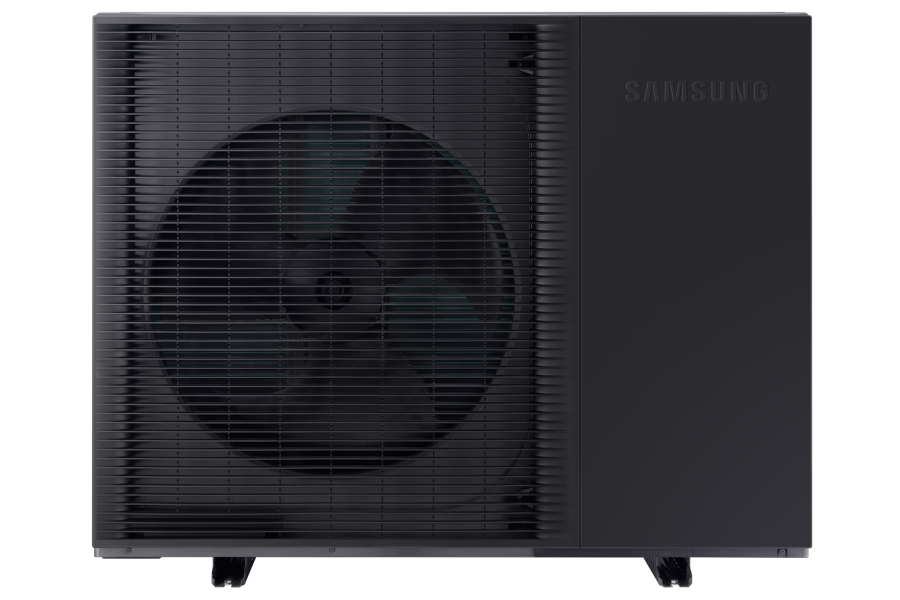
Here's the thing about the Samsung EHS Mono that nobody really wants to say plainly: it's the best value heat pump on the UK market right now. Not the cheapest thing you can buy — the budget brands exist for a reason — but the best balance of performance, price, and brand credibility. If you're working with a realistic budget, this is where to start.
The price difference is real
At £7,000–£10,000 installed, the Samsung EHS Mono typically comes in £2,000–£4,000 cheaper than the Vaillant Arotherm Plus for a comparable installation. Against the Boiler Upgrade Scheme's £7,500 grant, that arithmetic gets very interesting very quickly. Some households will find themselves with a net cost under £500 after the grant. That's not a typo.
| Spec | Detail |
|---|---|
| Refrigerant | R32 |
| COP (A7/W35) | Up to 4.6 |
| Noise level | 52 dB(A) |
| Capacities | 5–16kW |
| Installed price | £7,000–£10,000 |
| Warranty | 5 years |
The Samsung question
Most people's first reaction to "Samsung heat pump" is confusion. Samsung makes phones and TVs. Why would you trust them with your heating?
The honest answer: Samsung has been manufacturing HVAC equipment since the 1970s. They're one of the largest air conditioning manufacturers in the world. The domestic heat pump range is a commercial division staffed by serious engineers, not a side project. The EHS Mono draws on decades of refrigeration and compressor expertise. It's not a stretch product.
That said — the brand perception issue is real. If you ask a neighbour whether they'd recommend their heating system, "it's a Samsung" lands differently than "it's a Mitsubishi". It's irrational, but human beings aren't always rational.
Performance in practice
A COP of 4.6 at A7/W35 matches the Mitsubishi Ecodan and is meaningfully lower than the Vaillant or Daikin at the top end. In real-world terms, this is still very good — a well-installed Samsung system will cut your heating bills substantially versus a gas boiler. The gap to a Vaillant won't show up as a huge difference on your annual electricity bill for most households.
At 52 dB(A), it's also quieter than several of its competitors — better than the Mitsubishi Ecodan's larger units and the Grant Aerona3.
The 5–16kW range is among the widest on this list, making it suitable for both smaller properties and larger homes with higher heat loss.
The support network
This is the genuine weak point. The Mitsubishi Ecodan has a network built over 20+ years in the UK market. Samsung's heat pump support infrastructure is newer and thinner. If something goes wrong — especially outside a major city — you may wait longer for a qualified engineer than you would with Mitsubishi.
That situation is improving. More installers are getting Samsung-trained as the brand grows market share. But it's a real consideration today.
Who should buy this
- Anyone on a tighter budget who still wants a heat pump from a recognisable manufacturer.
- Anyone maximising the BUS grant — the lower installed cost means the grant covers a much higher proportion.
- Anyone in an urban area with good installer access where the thinner support network matters less.
- Anyone who's done the research and understands the Samsung HVAC pedigree — the brand perception concern doesn't affect the hardware.
Who should look elsewhere
- If you're in a rural area where installer access is already limited, the Mitsubishi's larger network is genuinely valuable.
- If you want the best possible long-term efficiency and can budget for it, the Vaillant Arotherm Plus has a higher ceiling.
- If brand confidence matters to you or your household, the Mitsubishi or Vaillant badge carries more weight in the UK.
The Samsung EHS Mono is the budget champion. Not a compromise — a smart choice for anyone who's done the maths. See our best heat pumps UK roundup for how it compares, and our heat pump costs guide for the full financial breakdown including the £7,500 BUS grant.