Tesla Powerwall 3 Review
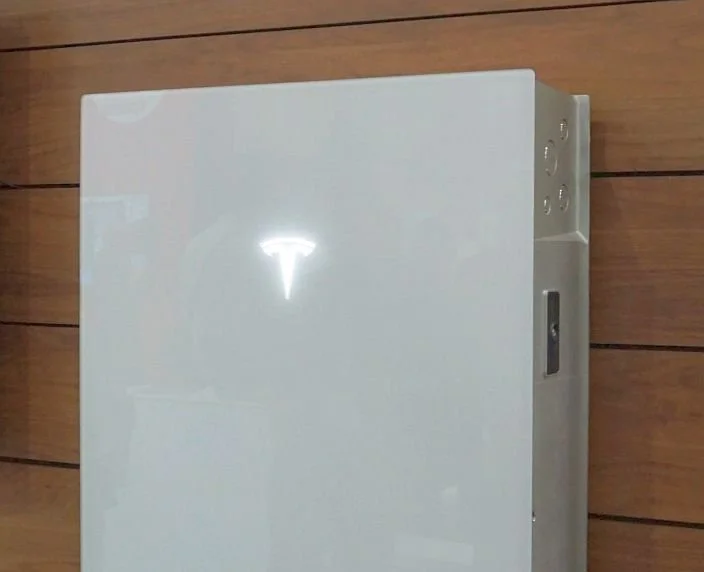
Let's be honest about the Tesla Powerwall. It's a premium product with a premium price, and a lot of what you're paying for is the badge. That's not a reason not to buy it — plenty of people buy premium products for good reasons — but you should go in with your eyes open.
What you're actually getting
The Powerwall 3 is a 13.5kWh all-in-one unit with a built-in hybrid inverter. It's a single, wall-mounted unit with a genuinely sleek design — matte black, clean lines, the kind of thing that looks intentional on your garage wall rather than like a piece of industrial kit bolted up in a hurry.
| Spec | Detail |
|---|---|
| Capacity | 13.5 kWh |
| Inverter | Built-in (Powerwall 3) |
| Backup power | Yes — whole-home backup capability |
| Installed price | ~£8,000–£9,000 |
| App | Tesla app |
The Tesla app is excellent. Clean interface, good visualisation of energy flows, easy to understand at a glance. This has been a consistent strength of Tesla's energy products.
The backup power case
This is the Powerwall's strongest genuine advantage. When the grid goes down, the Powerwall 3 can switch to island mode and power your home — lights, sockets, even some EV charging depending on load. GivEnergy offers backup capability on some configurations, but Tesla's implementation is more seamless and more fully developed.
If you live somewhere with unreliable grid supply — rural areas prone to outages, coastal locations with weather-related disruption — the Powerwall's backup mode has real, practical value. For most UK homes with a reliable grid, it's a nice-to-have rather than a necessity.
Where the numbers don't add up
The GivEnergy All-In-One at 13.5kWh comes in at around £5,000–£6,000 installed. The Powerwall 3 at the same 13.5kWh comes in at £8,000–£9,000. That's a £2,000–£3,000 premium for comparable storage capacity.
What do you get for that premium? A better-looking unit. A slightly more mature backup power implementation. The Tesla brand. Honestly, that's most of it. The core function — store solar energy, discharge when needed, work with time-of-use tariffs — is performed just as well by GivEnergy.
The support and installer network
Tesla's support can be slow. This is a well-documented complaint in the UK solar battery community. Tesla Energy operates on a different model to traditional heating and solar companies — fewer local installers, more centralised support, and response times that can frustrate when something needs fixing quickly.
Finding a Tesla-certified installer in some parts of the UK requires more legwork than finding a GivEnergy or Mitsubishi-trained installer. That's a practical consideration, not just a theoretical one.
The modular question
The Powerwall isn't truly modular in the way GivEnergy is. You can install multiple Powerwalls if you need more than 13.5kWh, but you're adding entire units rather than battery modules. If you want to start small and expand, GivEnergy's modular architecture is more cost-effective.
Who should buy this
- Anyone for whom money genuinely isn't a primary concern and who values the Tesla design aesthetic.
- Anyone with a specific backup power requirement where Tesla's mature implementation justifies the premium.
- Tesla EV owners who want full integration within the Tesla ecosystem.
- Anyone who wants the Tesla badge — no judgement, it's a real thing people value.
Who should look elsewhere
- Anyone comparing on value: GivEnergy gives you 90% of the functionality at roughly 60% of the price. That's a large gap to justify.
- Anyone who wants modular expansion without buying whole additional units.
- Anyone who needs fast, local support when something goes wrong.
- Anyone on a tight budget maximising the value of their solar installation.
The Tesla Powerwall is a good product. It is not a £2,000–£3,000 better product than the GivEnergy All-In-One for most households. Be honest about why you want it, and if those reasons hold up for you, buy it with confidence. If you're primarily motivated by performance per pound, look at GivEnergy first. For the full breakdown, see our GivEnergy vs Tesla Powerwall comparison and our solar battery storage guide.