
Solar Battery Storage: Is It Worth the Cost in 2026?
The Short Answer
At today's prices, a retrofit battery bolted onto an existing solar system does not pay for itself inside its warranty. The maths is simple and unforgiving: a battery earns you the gap between what you'd pay to import a kWh (26.32p) and what you'd have been paid to export it (12p on the best open tariff). That's 14.32p a kWh. A 13.5 kWh Powerwall 3 at £9,500 that shifts an extra 1,400 kWh a year saves about £200, which is a 47-year payback on a 10-year warranty.
So buy a battery for one of three reasons, not for the payback: you're having solar installed anyway and adding storage on the same visit costs far less than retrofitting later; you want backup power when the grid goes down; or you're an engaged tariff optimiser who'll actively trade cheap overnight electricity. Treat time-of-use tariff income as upside, not as part of the business case, because the best of them (Intelligent Octopus Flux) is temporarily closed to new customers as of 18 September 2026.
September 2026: Where the UK Battery Market Stands
Two things worth knowing before you shop. GivEnergy Ltd (company number 11571089) is listed by Companies House as "In Administration", checked 18 September 2026, so warranty cover, firmware updates and spare parts on a new purchase are an open question even though the products are still listed for sale. And Intelligent Octopus Flux, the tariff that made batteries look genuinely lucrative, is temporarily unavailable to new customers (octopus.energy, checked 18 September 2026, citing volatile wholesale prices). Standard Octopus Flux is still open. The practical result is that the Tesla Powerwall 3 is the safest mainstream buy, and that nobody should be selling you a battery on the back of a Flux saving right now.
Batteries are the most oversold product in UK home energy. The hardware is good, the technology works, and installers love them because they roughly double the value of a solar job. What doesn't work is the payback arithmetic, and the rest of this guide shows you exactly why, so you can tell the difference between a quote worth taking and a quote built on a spreadsheet you're not allowed to see.
How Solar Battery Storage Works
A home battery stores surplus solar electricity generated during the day for use at other times, typically in the evening when solar generation has dropped but household demand remains high. Without a battery, this surplus would be exported to the grid at the Smart Export Guarantee rate (4–6p on most open tariffs, 12p on Octopus Outgoing). With a battery, you use it yourself at the full avoided import rate (26.32p/kWh under the Ofgem cap for 1 October to 31 December 2026), increasing the value of every kilowatt-hour you generate.
In practical terms, a solar-only system in a typical UK home self-consumes about 45% of its generation. A 10 kWh battery takes that to roughly 75%, significantly reducing the amount you purchase from the grid. Those are the two figures used in every calculation on this site.
Battery Costs in 2026
Battery prices have fallen significantly over the past five years, though they remain a substantial addition to the total system cost. Prices vary by capacity (measured in kilowatt-hours, kWh), technology, and brand:
| Battery System | Capacity | Usable Capacity | Typical Installed Cost | Warranty |
|---|---|---|---|---|
| Tesla Powerwall 3 | 13.5 kWh | 13.5 kWh | £8,500 – £10,500 | 10 years / 80% capacity / unlimited cycles (UK) |
| GivEnergy All-in-One 9.5 kWh (admin: see note above) | 9.5 kWh | 8.8 kWh | £4,500 – £6,000 | 12 years (company in administration, see note above) |
| GivEnergy All-in-One 5 kWh (admin: see note above) | 5.2 kWh | 4.8 kWh | £3,000 – £4,000 | 12 years (company in administration, see note above) |
| Fox ESS EP Series / H3 Hybrid | 10.1 kWh | 9.1 kWh | £4,000 – £5,500 | 10 years |
| Fox ESS EP Series / H3 Hybrid | 5 kWh | 4.5 kWh | £2,500 – £3,500 | 10 years |
| Sunsynk 5.32 (stackable) | 5.32 kWh | ~5 kWh | £2,800 – £3,800 | 10 years |
| Sungrow SBR | 9.6 kWh | 9.1 kWh | £3,500 – £4,500 | 10 years |
These prices include installation by a qualified electrician. 0% VAT applies to all battery storage in the UK (whether installed alongside solar or standalone) under the Energy Saving Materials relief, valid until March 2027. Standalone battery installations became VAT-free in February 2024.
Top Battery Systems Reviewed
Tesla Powerwall 3: Our Top Pick in 2026
With GivEnergy in administration, the Powerwall 3 is now the clearest mainstream recommendation. 13.5 kWh of usable storage, a built-in hybrid solar inverter (3 MPPTs, up to 20 kW DC input), whole-home backup with automatic grid-outage switchover, and a class-leading 97.5% round-trip efficiency. Tesla's 10-year UK warranty guarantees 80% capacity retention with unlimited cycles. Most competitors cap at 6,000–10,000 cycles.
The Powerwall 3 has native integration with Intelligent Octopus Flux, which matters for the day that tariff reopens. It's temporarily unavailable to new customers as of 18 September 2026, so don't pay a premium for the integration today; buy the Powerwall for the capacity, the whole-home backup and the unlimited-cycle warranty, and treat Flux as a bonus if it comes back. A third-party Home Assistant integration also allows Octopus Agile pricing in the meantime.
Downside: Premium pricing. At £8,500–£10,500 installed it's the most expensive of the mainstream options, and Tesla requires installation through a certified installer, which can be thin on the ground in rural areas. See our full Tesla Powerwall 3 review with interactive payback calculator.
GivEnergy All-in-One: Recommendation Paused
GivEnergy was the default UK value choice until the company entered administration. Companies House still lists GIVENERGY LTD (11571089) as "In Administration" when we checked on 18 September 2026, while the product pages on givenergy.com remain live. The hardware itself is good (LFP chemistry, solid Octopus integration, historically strong UK support), but a 12-year warranty is only as good as the company standing behind it, and that's the open question.
Our current advice: if you already own a GivEnergy product, keep it. The hardware works independently of the company's status. If you're buying new storage now, treat the headline warranty as uncertain: either pay the Tesla premium for a warranty you can rely on, or knock the value of the warranty off the GivEnergy price in your head and decide whether it's still the better buy. Ask your installer, in writing, who honours the warranty if the manufacturer doesn't. For the full detail, see our GivEnergy review.
Fox ESS: Best Budget Hybrid Option
Fox ESS (manufactured by a Chinese company with strong European distribution) offers hybrid inverter-battery systems at competitive prices. The EP series battery modules are modular and stackable; the H3 hybrid inverter handles both solar and battery management in one unit. Reviews from UK users are generally positive, and the installer network is reasonable if thinner than Tesla's.
Best for: Cost-conscious buyers who want decent capacity at a lower entry price. Particularly good value in the 5–10 kWh range.
Sunsynk: DIY-Friendly, Growing Installer Base
Sunsynk has grown rapidly in the UK, particularly among self-builders and DIY-ambitious households. The 5.32 kWh modules are stackable and the hybrid inverters are well-regarded. Certified installer coverage is growing but still patchy outside major urban areas.
Best for: Tech-comfortable buyers prioritising low cost and flexibility over a fully turnkey experience.
How Much Does a Battery Increase Self-Consumption?
The improvement in self-consumption depends on system sizing, household demand patterns, and battery capacity. As a rough guide for a typical UK household with a 4 kWp solar system:
- Without battery: about 45% of solar generation
- With 5 kWh battery: about 65%
- With 10 kWh battery: about 75%
- With 13.5 kWh battery: about 80%, and that's where it stops climbing
The law of diminishing returns applies: the first 5 kWh of storage gives the greatest proportional improvement in self-consumption. Beyond 10 kWh, each additional kWh of storage makes progressively smaller gains for a typical household, because you will saturate storage on most summer days regardless.
Battery Payback: The Honest Numbers
Here's the bit installers skip. A solar battery doesn't generate anything. All it does is move a kWh you'd have exported into a kWh you'd have imported. So every kWh it shifts is worth the difference between the two rates, not the full import price:
| Value per kWh shifted | |
|---|---|
| Import price avoided (Ofgem cap, 1 Oct – 31 Dec 2026) | 26.32p |
| Export income given up (Octopus Outgoing, the best open rate) | −12p |
| What the battery actually earns | 14.32p |
| On a legacy 4p export tariff, the same kWh is worth | 22.32p |
Now run a real system. A 13.5 kWh Tesla Powerwall 3 at £9,500 installed, retrofitted to existing panels, typically shifts an extra 1,400 kWh a year from export to self-use:
- 1,400 kWh × 14.32p = £200/year. £9,500 ÷ £200 is a 47-year payback, against a 10-year warranty. The battery will be scrap long before it breaks even.
- On a legacy 4p export tariff the same battery earns 1,400 × 22.32p = £312/year, so 30 years. Still far beyond the warranty. And you'd be better off switching to a 12p export tariff than buying a battery.
- A cheaper battery helps more than a better tariff. A 10 kWh Fox ESS or Sungrow unit at £4,000 shifting 1,100 kWh earns £158/year, which is 25 years. Better, still not good.
- There is no set of honest inputs that gets a retrofit battery inside its warranty at a 26.32p import and 12p export. If a quote shows you one, ask to see the import rate, the export rate, the kWh shifted and the division.
Two things would change this, and neither is something you can buy today. One is a much wider import-export gap, which is what time-of-use tariffs used to deliver. The other is battery prices falling by roughly half. Both are plausible in a few years. Neither is a reason to spend £9,500 now.
For a proper payback estimate with your own numbers, use the interactive calculator in our Tesla Powerwall 3 review.
The one case where the maths does work
Add the battery at the same time as the panels. You're already paying for the scaffolding, the electrician, the DNO notification and the hybrid inverter, and fitting storage on day one avoids a second set of all of those plus a possible inverter swap. The marginal cost of a 5 kWh battery added to a new install is £2,500 – £4,000 rather than the £4,000 – £6,000 a standalone retrofit tends to run to, and you get 0% VAT on the lot.
It still doesn't pay back on its own. On our 4 kW worked example in the solar panel costs guide, a 5 kWh battery lifts the annual benefit from £701 to £810, which is £109/year for £2,500 – £4,000 of kit, and over 25 years the with-battery and without-battery systems land within about £1,200 of each other before you allow for replacing the battery. What you're buying with that £109/year is a system that shrugs off a power cut and is ready for a time-of-use tariff the day one becomes available again. That's a real thing to want. It just isn't a return.
Time-of-Use Tariffs: The Game-Changer for Batteries
Time-of-use tariffs widen the gap the battery trades on, which is the only thing that meaningfully improves the numbers above. They're also the part of the case you currently can't buy, so treat everything in this section as upside rather than as a reason to sign.
Intelligent Octopus Flux: temporarily unavailable
This is the one that made batteries look good. Octopus manages the battery for you on dynamic pricing: charge ahead of the 4–7pm peak from solar first and then cheap grid electricity, then discharge into the peak to power the house or export at the high rate. Octopus advertises up to £300/year of profit, meaning you can be paid more for your exports than you spend on imports.
As of 18 September 2026 it is temporarily unavailable to new customers. Octopus's own page says: energy prices are particularly volatile right now, so this tariff is temporarily unavailable, and it will update the page when it's back. There's no published reopening date. If an installer's payback figure leans on Flux, that figure is not currently buyable.
Octopus Flux (still open)
The non-intelligent version is available now. It's a three-rate import and export tariff with a cheap window in the early hours, a standard day rate, and a premium 4–7pm peak on both import and export. You schedule the battery yourself rather than handing control to Octopus, which suits people who enjoy that and frustrates people who don't. Rates are regional and Octopus doesn't publish a single national figure, so get a quote for your postcode before you model anything.
Intelligent Octopus Go
8p/kWh from 23:30 to 05:30, verified on octopus.energy on 18 September 2026. Charge the battery overnight for 8p and use it through the day instead of paying 26.32p, and each kWh cycled is worth 18.32p. A 10 kWh battery cycling 8 usable kWh a day, 300 days a year, would be 2,400 kWh at 18.32p, about £440/year, which is genuinely the best case for a battery today. It assumes you actually use 8 kWh every day between 05:30 and 23:30 and that you don't also need the battery for solar, so treat it as a ceiling rather than a forecast. It's a much stronger case if you have an EV, because you're on the tariff anyway.
Octopus Agile
Half-hourly pricing tied to wholesale prices. With smart battery management the battery charges at the cheapest half-hours and discharges or exports at the dearest. For a Powerwall this runs through a third-party Home Assistant integration rather than a native one. The returns can beat everything else here, but only for people who'll tinker with it, and the downside risk is real: Agile prices spike as well as dip.
See if a battery pays off for your home
Battery payback depends on your tariff, usage pattern, and panel size. Get personalised quotes from MCS-certified installers to see the numbers for your setup. Free, no obligation.
Get free solar and battery quotesWhen Battery Storage IS Worth It
- You're having solar installed anyway. The single best reason. Adding storage on the same visit costs £2,500 – £4,000 rather than £4,000 – £6,000 later, and you avoid a second inverter.
- You're already on Intelligent Octopus Go for an EV. Cycling the battery on an 8p overnight rate is worth up to about £440/year on a 10 kWh unit, the strongest number in this guide, and you're paying nothing extra for the tariff.
- You genuinely want resilience. If your supply is flaky, or you work from home, or someone in the house depends on powered medical kit, a battery with whole-home backup is worth buying the way a generator is worth buying. Not every model does backup, so check.
- You'll actively optimise. Agile plus Home Assistant plus someone who enjoys it beats every passive setup. Be honest about whether that's you.
When Battery Storage Is NOT Worth It
- You're retrofitting one to existing panels purely to save money. At 26.32p import and 12p export it will not pay back inside its warranty, whatever the quote says.
- You haven't switched export tariff yet. Moving from a 4p legacy SEG rate to Octopus Outgoing at 12p is free, takes an afternoon, and on a 4 kW system exporting about 2,090 kWh is worth around £167/year. Do that before you spend £9,500.
- You're primarily home during the day and already consume most of your solar directly.
- You have a large array (6 kWp+) but a small household, so you're saturating the battery on most summer days and it sits idle through winter.
- You're on a standard single-rate tariff and won't move to time-of-use pricing.
Bottom line: solar panels pay back. Retrofit batteries don't, not at a 26.32p import and a 12p export, and not on any honest set of numbers. Buy one at install time if you want the resilience and the option value, buy one if you're already on an 8p overnight EV tariff, and otherwise put the money into more panels or a hybrid inverter that leaves the door open. Storage will get cheaper, and the time-of-use tariffs that made it lucrative may well come back. You can wait.
For a full comparison of solar panel system costs, see our guide to solar panel costs in the UK. For details on combining solar with a heat pump, see our solar and heat pump guide.
Monitor Your Solar and Battery Performance
An energy monitor helps you see exactly how much solar you are generating, storing, and exporting, so you can optimise your self-consumption.
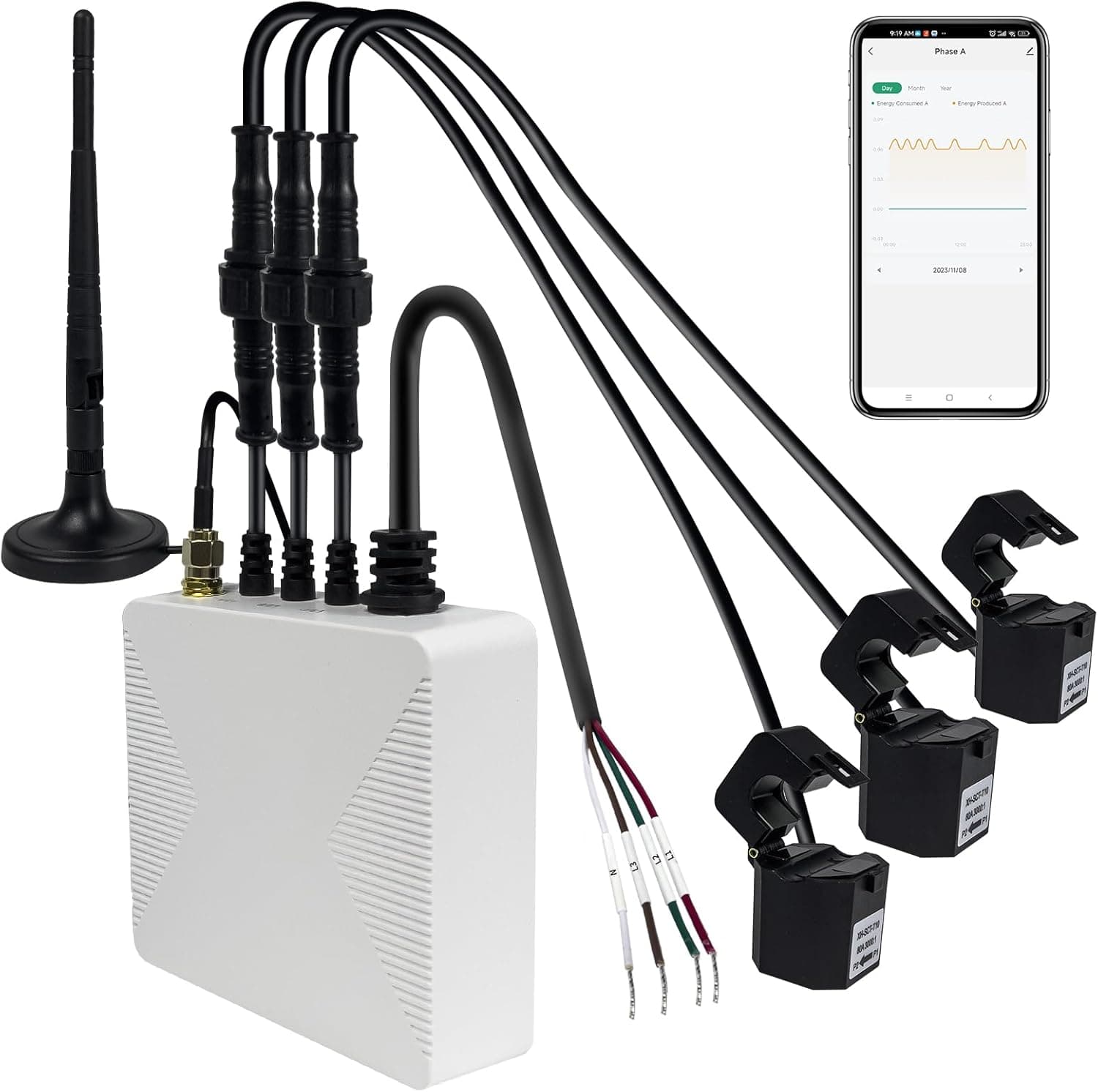
OWON WiFi Smart Energy Monitor
£53.54See exactly how much electricity your heat pump or home uses in real time, essential for tracking savings.
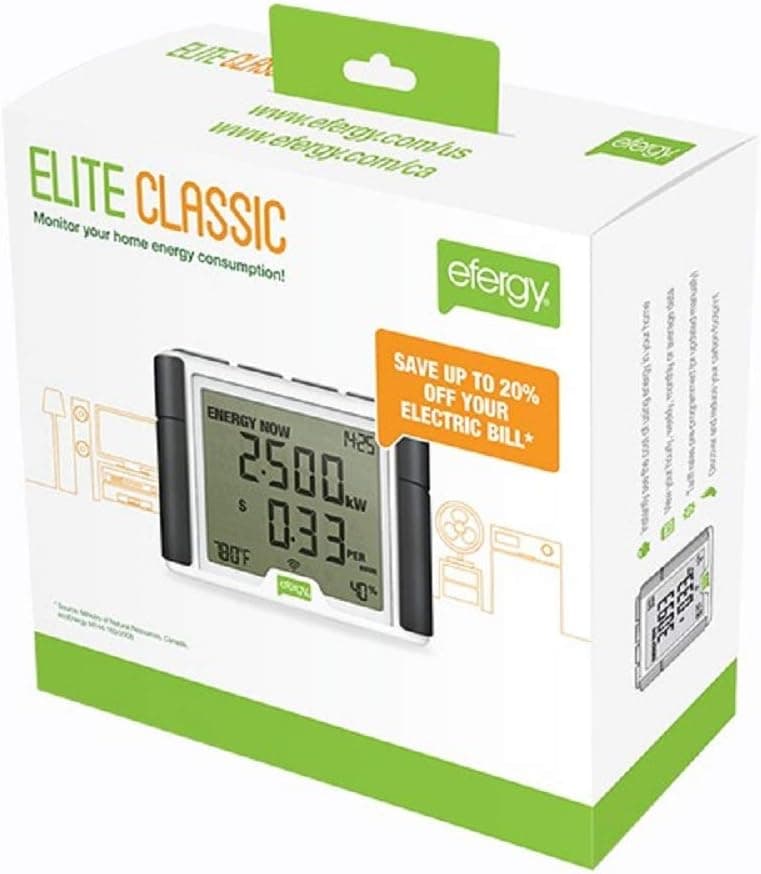
Efergy Elite Classic 4.0 Energy Monitor
£75–£85Track your heat pump electricity consumption with a dedicated display you can put anywhere in the house.
As an Amazon Associate we earn from qualifying purchases. Prices and stock are checked against Amazon every few hours and may have changed since.
