Radiator Booster Fans: Do They Work? (Honest UK Review)
A £25 fan that sits on your radiator and pushes warm air into the room. Here's whether it actually works.
The Short Answer
Yes, radiator booster fans work — but they're not magic. They push warm air off the top of the radiator and into the room, instead of letting it rise straight to the ceiling. The effect is most noticeable in rooms with high ceilings or radiators positioned under windows. The RadFan is the original and best; budget alternatives do a similar job for less. Expect to save £10–£25 per radiator per year, which means they pay for themselves within 1–2 winters.
How They Work
When a radiator heats up, warm air rises straight off the top in a convection current. In a room with 2.4m ceilings, that's fine — the warm air fills the room fairly evenly. But in rooms with higher ceilings, or where the radiator sits under a window, a lot of that heat rises to the ceiling or gets pulled straight into the cold glass above. You end up with a warm ceiling and cold ankles.
A radiator booster fan sits on top of the radiator (or clips to the back) and blows the rising warm air forward into the room at a lower level. Instead of rising to the ceiling, the heat goes where you actually feel it. The room reaches your thermostat's target temperature faster, so the heating system runs for shorter periods — which saves energy.
The fans are thermostat-controlled: they switch on automatically when the radiator heats up and switch off when it cools down. They use 2–6 watts of electricity, which is basically nothing — a few pence per month.
When They're Worth It
- Radiators under windows — this is where boosters make the biggest difference. Warm air rising off the radiator hits the cold glass, loses heat, and drops back down as a cold draught. A fan pushes the air into the room before it reaches the window.
- Rooms with high ceilings — Victorian houses, conversions with vaulted ceilings, or any room where heat pools above head height.
- Rooms that take ages to warm up — if you've got a room that always feels cold even though the radiator is hot, a fan can help distribute the heat more evenly.
- Heat pump systems — heat pumps run at lower radiator temperatures, so the convection current is weaker. A fan compensates by actively distributing the gentler warmth.
When They're NOT Worth It
- Rooms with standard 2.4m ceilings and well-positioned radiators — if the room heats up fine already, a fan won't make a noticeable difference.
- If the radiator itself is undersized — a fan can't create heat that isn't there. If the radiator is too small for the room, you need a bigger radiator, not a fan on top of a small one.
- Rooms with underfloor heating — no radiator, no fan needed.
Our Picks
Best Overall: RadFan
The RadFan is the original radiator booster and the one most commonly reviewed and tested. It sits on top of the radiator on rubber feet, uses just 4 watts, and switches on/off automatically via a built-in thermostat. The build quality is good — it's a proper product, not a gimmick — and it's quiet enough that you'll forget it's there.
It comes in different sizes to suit different radiator depths. The standard model fits most UK radiators. At £25–£40 it's the pricier option, but it's well-made and comes with a decent warranty.
Best Budget: 3-Fan Clip-On Unit
If you want to try the concept without spending £35, the generic 3-fan clip-on boosters do a solid job for £20–£35. They clip to the top of the radiator with adjustable brackets, and the triple-fan design covers a wider area than the single RadFan. They're also thermostat-controlled.
Build quality is a step down from the RadFan — the plastic is thinner and the fans are a touch noisier — but they move air effectively and the maths on energy savings is the same. If you want to test one on a single radiator before committing to more, this is the way to go.
Realistic Savings
The Energy Saving Trust doesn't publish specific data on radiator fans, so let's work from first principles. If a fan helps your room reach its target temperature 15–20 minutes faster, the heating system runs for less time. For a room that runs its radiator for 8 hours a day in winter, saving 15–20 minutes per heating cycle across 2–3 cycles is roughly a 5–10% reduction in that radiator's energy use.
For a typical radiator consuming 1kW, that's 0.5–1.0 kWh per day saved, or roughly £10–£25 per radiator per year at current electricity/gas prices. It's not transformative, but at a product cost of £20–£40, the payback is within two winters for most situations.
The more valuable benefit is often comfort rather than pure savings. A room that used to have a warm ceiling and cold floor feeling more evenly heated is worth something, even if it doesn't show up as a dramatic number on your bill.
For other ways to get more from your radiators, see our guides to radiator reflector panels and bleeding your radiators. For the full energy efficiency picture, read our complete guide.
Our Top Picks
The original RadFan and a solid budget alternative.
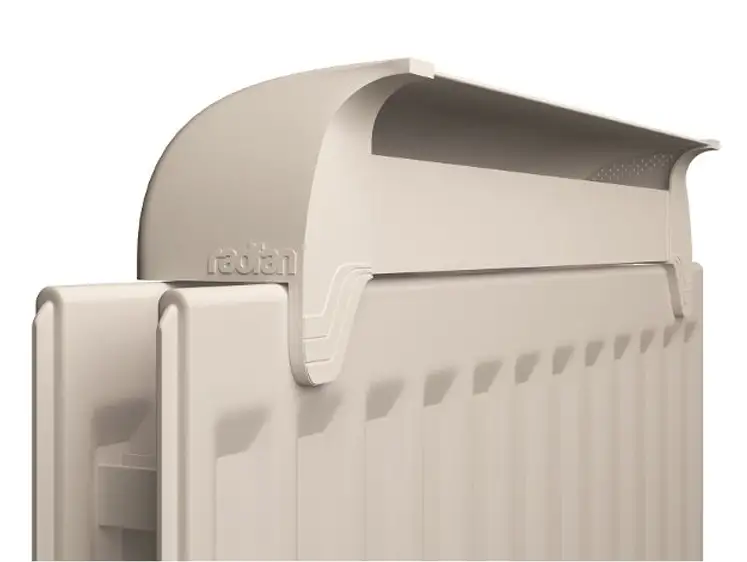
RadFan Original Radiator Booster Fan
£25–£40Pushes warm air off the radiator and into the room. Most effective on radiators below windows where heat rises and escapes.
Radiator Booster Fan (3-Fan Unit)
£20–£35Budget alternative to the RadFan. Triple fans cover a wider radiator. Auto-thermostat switches on/off with the heating.
As an Amazon Associate we earn from qualifying purchases. Product prices and availability are accurate as of the date of publication and may change.