
The Short Answer
Yes, they work, but only behind radiators on uninsulated external walls. If your radiator sits on a wall that faces outside and that wall has no cavity fill or internal insulation, a reflector panel genuinely reduces heat loss by bouncing warmth back into the room instead of letting it soak through the wall. The Energy Saving Trust agrees with that much and says reflectors "can produce the most benefit when installed on uninsulated solid walls", but it publishes no saving figure at all.
The only real number comes from Radflek, the main brand, and it is a manufacturer's figure: up to 83 kWh a year per radiator on a solid uninsulated wall with a normal heating cycle. At the current gas cap rate of 7.97p/kWh that is about £6.60 a radiator a year, or nearer £7.30 once you allow for a 90% efficient boiler burning the gas. At £7–£10 a radiator, call the payback a year to eighteen months.
If your walls are already insulated, reflector panels make almost no difference. Don't bother.
How They Work
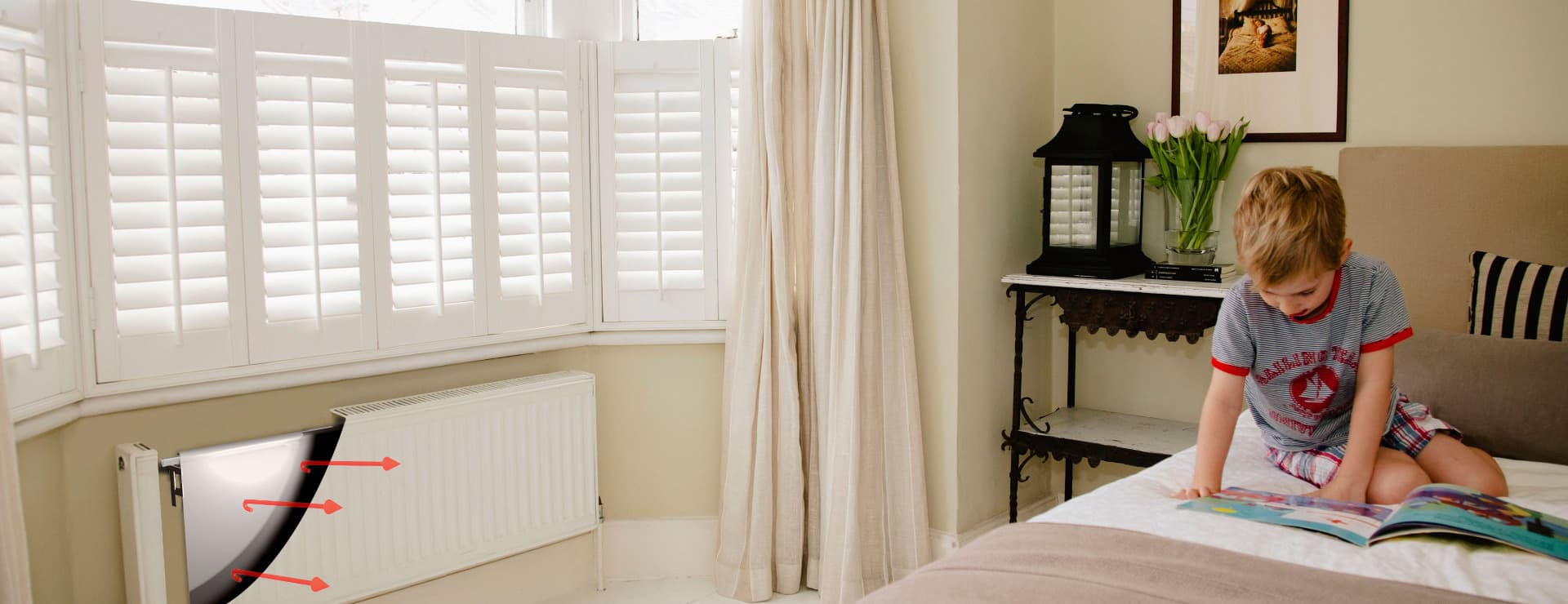
When a radiator heats up, roughly half its heat goes forward into the room (useful) and half goes backward into the wall behind it (wasted, if that wall faces outside). A reflector panel (basically a sheet of foil-faced foam) sits in the gap between the radiator and the wall and bounces that backward heat back into the room.
It's simple physics and it does work. On the numbers, be careful who you're quoting. Radflek's own website says "tests carried out by the BBA and verified by the BRE" show its product reduces heat transfer through the wall by 45%. That is a manufacturer's claim about a manufacturer-commissioned test, not an independent finding, and it is about heat through that patch of wall, not about your bill. No UK public body publishes a percentage for radiator reflectors, and the Energy Saving Trust, which does cover them, publishes no saving at all.
When They're Worth It
- Solid-walled Victorian/Edwardian houses: these have no cavity to fill and external wall insulation is expensive. Reflector panels are the cheapest way to reduce heat loss through the wall behind the radiator.
- Homes with unfilled cavity walls: if you haven't had cavity wall insulation done yet (or can't for some reason), reflectors are a stopgap that costs almost nothing.
- Rented properties: if you can't modify the building, reflector panels are one of the few things you can do. They peel off without damage when you move out.
When They're NOT Worth It
- Insulated cavity walls: if your walls already have cavity fill, the insulation is doing the job. A reflector panel on top adds negligible benefit.
- Internal walls: if the radiator is on a wall between two heated rooms, heat going into the wall isn't wasted; it's heating the next room. No point reflecting it.
- Modern homes built after 2000: these are built to insulation standards that make reflectors unnecessary.
What to Buy
The Radflek brand is the best-known option and the only one publishing any test data. A 3-pack costs about £20–£30 and covers three average-sized radiators. The material is a multi-layer reflective foil that's easy to cut to size with scissors. Radflek also claims it is "at least 23% more efficient than louvered or saw toothed radiator reflector panels", which is again its own figure, though it does at least match the direction of travel: the cheap crinkly stuff performs worse.
You can also buy generic radiator reflector foil from builders' merchants for a bit less, but Radflek's adhesive tabs make installation easier; you stick it to the wall behind the radiator without having to remove the radiator from the wall.
Avoid the ultra-cheap silver foil sheets that are essentially just kitchen foil. They crinkle, fall down, and don't have the insulating foam layer that makes proper reflectors effective.
How to Fit Them
- Measure the width and height of each radiator
- Cut the reflector panel to size (slightly smaller than the radiator so it's hidden behind it)
- Slide it behind the radiator, reflective side facing into the room
- Attach with the adhesive tabs to the wall (or use Blu Tack if you're renting)
It takes about 5 minutes per radiator. You don't need to remove the radiator or drain anything.
Realistic Savings
| Scenario | Radiators Fitted | Cost | Annual Saving |
|---|---|---|---|
| 3-bed solid wall terrace | 5–6 | £35–£60 | £33–£44 |
| Semi with unfilled cavities | 4–5 | £28–£50 | £26–£37 |
| Modern insulated home | Don't bother | Nothing | Negligible |
Those savings columns are our arithmetic, not anyone's measurement: Radflek's 83 kWh a radiator, multiplied out at 7.97p/kWh gas plus a 90% boiler, so roughly £6.60–£7.30 a radiator. They aren't life-changing sums. But for a product that costs less than a takeaway and takes five minutes to fit, the return is good, especially in solid-walled homes where every bit of help counts. Just don't put them behind radiators on internal walls or on insulated cavities, where they do close to nothing.
For more on reducing heat loss, see our insulation costs guide. If you're considering a heat pump, our insulate-first guide covers the priority order for upgrades.
What to Buy
Radflek is the best-known brand and the one tested in most energy studies.
Radflek Radiator Reflector Panels (3-Pack)
£24.49Reflects heat from the wall back into the room. Most effective behind radiators on uninsulated external walls.
As an Amazon Associate we earn from qualifying purchases. Prices and stock are checked against Amazon every few hours and may have changed since.
