Solar Panels and Heat Pumps Together: Complete UK Guide
How combining solar panels with a heat pump can slash your energy bills.
Solar Panels and Heat Pumps Together: Complete UK Guide
Solar panels and heat pumps are one of the most powerful combinations in home energy. On their own, each technology makes a strong case — but together, they interact in ways that significantly improve the financial return of both investments. This guide explains how the combination works, how to size a combined system, and what the real-world numbers look like for UK homeowners.
Why Solar Panels and Heat Pumps Work so Well Together
The logic of pairing solar with a heat pump comes down to timing and temperature. Heat pumps work most efficiently at moderate outdoor temperatures — typically in spring and autumn, and on mild winter days. Solar panels generate their best output on bright spring and summer days. These two facts create a partial but meaningful overlap that makes the combination more valuable than either technology alone.
More importantly, both technologies are electricity-based. A heat pump is essentially a very efficient electric heater, and solar panels generate electricity. Every kilowatt-hour of solar electricity that directly powers your heat pump means:
- You avoid paying for that electricity at the grid rate (typically 24p/kWh in 2026)
- You are not exporting it at the Smart Export Guarantee rate (typically 10–15p/kWh), which is a lower value
- Your heat pump is running on near-zero carbon electricity
The more solar electricity you can self-consume through your heat pump (rather than exporting to the grid), the better your financial return from both systems.
Understanding Heat Pump Electricity Demand
The average UK home heated by an air-source heat pump uses approximately 3,000–5,000 kWh of electricity per year for space heating and hot water, depending on home size, insulation quality, and temperature settings. A well-insulated 3-bedroom semi-detached home might use 3,200 kWh/year; a larger, older 4-bedroom detached property might use 5,500 kWh/year or more.
The electricity demand is not evenly distributed through the year. Rough seasonal breakdown for a heat pump heating a typical UK home:
- Winter (Dec–Feb): 40–50% of annual heating demand
- Spring/Autumn (Mar–May, Sep–Nov): 40–45% of annual heating demand
- Summer (Jun–Aug): 10–15% (mainly hot water, minimal space heating)
Solar panels in the UK generate the inverse pattern — maximum output in summer, minimal output in winter. However, the spring and autumn shoulder seasons are where the greatest overlap occurs, and this is where the combination delivers the most direct value.
System Sizing for a Combined Solar and Heat Pump Setup
When sizing solar for a home with a heat pump, you should aim for a larger system than you would for a home with a gas boiler. The additional electricity demand from the heat pump justifies more generation capacity. As a general guide:
| Home Type | Heat Pump Size | Annual HP Demand | Recommended Solar Size | Estimated System Cost |
|---|---|---|---|---|
| 2-bed flat / small terrace | 5 kW ASHP | 2,500 kWh/year | 4 kWp solar | £5,000 – £7,000 (solar only) |
| 3-bed semi-detached | 7 kW ASHP | 3,500 kWh/year | 5–6 kWp solar | £6,500 – £9,000 (solar only) |
| 4-bed detached | 10 kW ASHP | 5,000 kWh/year | 6–8 kWp solar | £8,000 – £12,000 (solar only) |
Note that the Boiler Upgrade Scheme provides a £7,500 grant toward the cost of an air-source or ground-source heat pump. This is entirely separate from the solar installation cost, and the two grants (BUS for heat pump, 0% VAT for solar) can be claimed simultaneously. For more details on the BUS, see our guide to solar panel grants and financial support.
How Much Solar Offsets Heat Pump Running Costs?
The practical benefit depends on how much of your solar generation directly coincides with heat pump operation. In the UK, heat pump controls can typically be programmed to run during daylight hours when solar generation is highest — this is particularly effective for heating a hot water cylinder (a "thermal battery") during the day rather than in the evening.
Estimates for how much solar can directly offset heat pump electricity costs:
- Without battery storage: A 5 kWp solar system might offset 800–1,200 kWh of heat pump electricity per year, saving approximately £190–£290/year on heating bills
- With battery storage: Adding a 10 kWh battery allows solar surplus from midday to be stored and used in the evening when the heat pump may be running to maintain temperature, potentially increasing the offset to 1,500–2,000 kWh/year
- With smart diversion to hot water: Devices like the Eddi solar diverter can direct surplus solar into a hot water immersion heater, effectively storing solar energy thermally. This costs around £400–£600 and significantly improves self-consumption
The Role of Battery Storage
A battery storage system sits between your solar panels and your home's electrical system, storing surplus solar generation that would otherwise be exported to the grid. For homes with heat pumps, battery storage is particularly valuable because it allows solar electricity generated during the sunniest part of the day to be used during early morning or evening heat pump operation.
A typical 10 kWh battery paired with a 5 kWp solar array in a heat pump home can increase self-consumption from approximately 50% to 75–80%. This means less electricity is purchased from the grid and less is wasted on low-value exports. For more on battery costs and payback, see our guide to solar battery storage.
Should You Install Solar First or Heat Pump First?
This is one of the most common questions from homeowners planning both technologies. There is no single right answer, but the following considerations are relevant:
Arguments for Installing the Heat Pump First
- The Boiler Upgrade Scheme grant for heat pumps requires MCS-certified installation, and some installers have long waiting lists. Getting on the list sooner avoids delay.
- You will have real data on your heat pump's electricity consumption before sizing the solar system, allowing more accurate specification.
- Heating system works are often more disruptive than solar. Completing the heat pump installation first allows any teething problems to be resolved before adding solar.
Arguments for Installing Solar First
- If your roof needs any remedial work, it is sensible to do this before mounting panels.
- You start earning SEG income and reducing bills immediately, even before the heat pump is installed.
- Solar installers can design the system with future heat pump integration in mind (specifying a hybrid inverter that supports battery addition, for example).
In practice, the best approach for most households is to plan both systems together and, if possible, install them in close succession with the same or closely coordinated contractors. A good solar installer will ensure the inverter and consumer unit are specified to accommodate the additional load from a heat pump.
Case Study: 4-Bedroom Detached Home in Oxfordshire
To illustrate the real-world numbers, consider a typical scenario:
- Property: 4-bedroom detached, 1980s build, well insulated following recent cavity and loft insulation work
- Previous heating: Gas boiler, annual gas bill approximately £1,400
- Installation: 8 kW air-source heat pump + 6 kWp solar + 10 kWh battery
- Total installed cost: £27,000 (before BUS grant)
- BUS grant received: £7,500 (for heat pump)
- Net cost: £19,500
First full year of operation results:
- Heat pump electricity consumption: 4,800 kWh
- Solar generation: 5,200 kWh
- Solar directly offsetting HP and other usage: 3,100 kWh (saving approx. £744 vs grid rate)
- Solar exported to grid (SEG at 15p/kWh): 2,100 kWh = £315
- Grid electricity purchased for HP (overnight/winter): 1,700 kWh at 24p = £408
- Total annual saving vs previous gas+grid baseline: approximately £1,950
At this saving rate, the net £19,500 investment pays back in approximately 10 years. For a system with a combined lifespan of 20–25 years, the long-term return is substantial — with all heating and most domestic electricity costs essentially eliminated for the latter part of the system's life.
Combined Annual Savings: What to Expect
For households with both a heat pump and solar panels, combined annual savings of £1,500–£2,500 per year compared with a gas boiler and grid electricity baseline are achievable. The exact figure depends on:
- Home size and insulation quality
- System sizes and orientation
- Whether battery storage is included
- Your electricity tariff (time-of-use tariffs like Octopus Intelligent can reduce heat pump running costs significantly)
- How much you shift usage to take advantage of off-peak rates
Key takeaway: Solar panels and heat pumps are not just compatible — they are complementary. The combination reduces your dependence on grid electricity, lowers carbon emissions substantially, and offers the best long-term financial return of any home energy technology combination available in 2026.
Optimise Your Solar + Heat Pump System
Getting the most from solar and a heat pump together means monitoring generation and controlling when your heating runs.
OWL Intuition-e Energy Monitor
£50–£80See exactly how much electricity your heat pump or home uses in real time — essential for tracking savings.
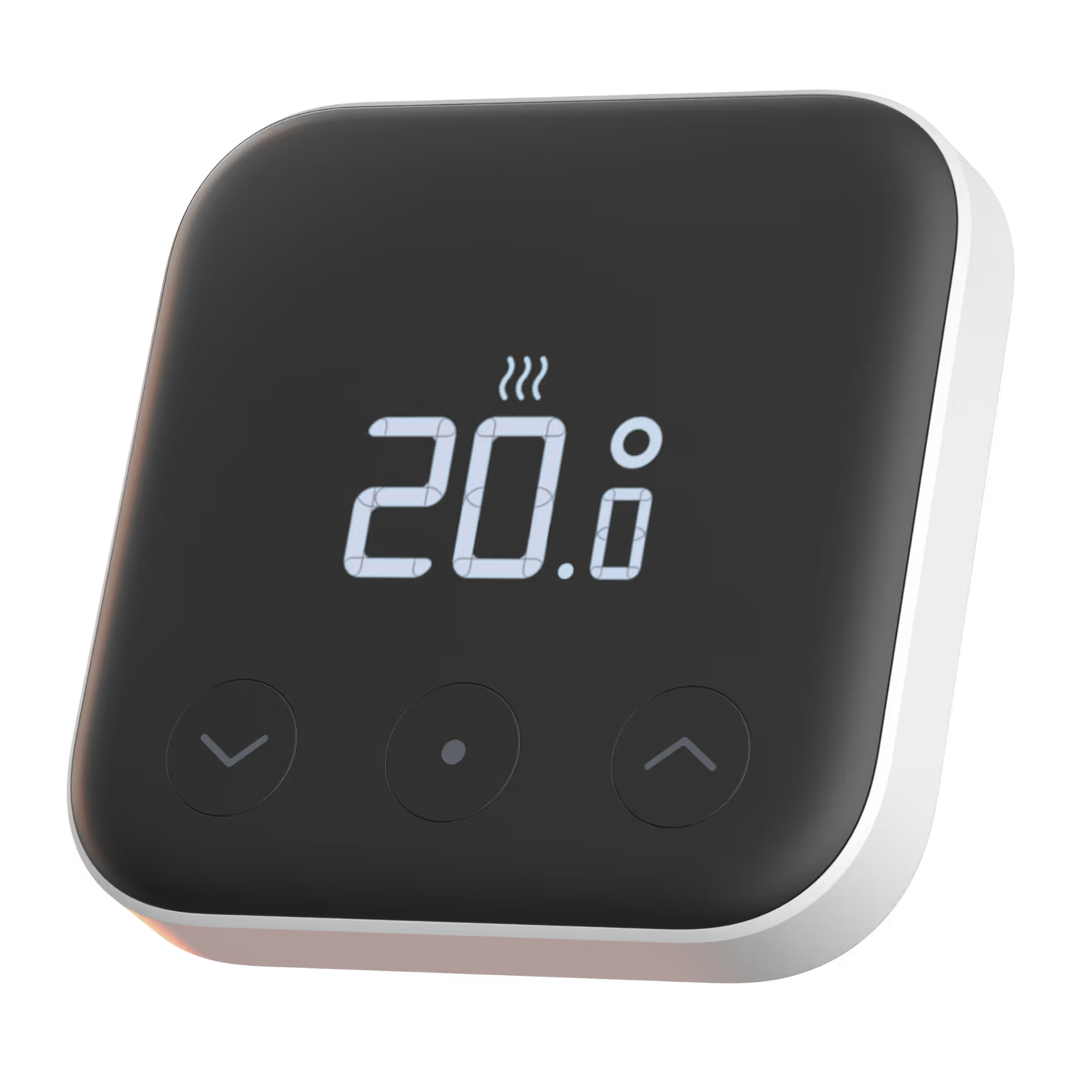
tado° Smart Thermostat Starter Kit V3+
£130–£170Works with heat pumps via OpenTherm for weather compensation — reduces running costs by 10–20%.

Solar Panel Cleaning Kit with Extension Pole
£30–£50Dirty panels lose 5–15% output. Cleaning twice a year keeps generation at its peak.
As an Amazon Associate we earn from qualifying purchases. Product prices and availability are accurate as of the date of publication and may change.