
The Short Answer
A typical 4 kW solar panel system costs £5,000 – £7,000 installed (0% VAT). It generates around 3,800 kWh a year on a south-facing, unshaded roof in central England, and on a standard home that uses about 45% of what it makes it's worth £701/year: £450 off your bill plus £251 of export income. That's a payback of 7 – 10 years, or about 8.6 years on a mid-priced £6,000 install. After that you get 15+ years of near-free electricity, and roughly £10,700 of profit over 25 years. A heat pump or EV charger pushes self-consumption to 70%, which lifts the annual benefit to about £837 and pulls payback down to around 7 years. A battery does the same thing to your self-consumption but costs enough that it barely moves the 25-year profit.
Last reviewed: 18 September 2026
Prices, export rates and VAT rules change often, so we re-check the figures on this page against primary sources each time we update it. Verified 18 September 2026 on ofgem.gov.uk, octopus.energy and gov.uk: the electricity unit rate for 1 October to 31 December 2026 is 26.32p/kWh with no VAT on domestic electricity until 31 March 2027, Octopus Outgoing still pays 12p/kWh (cut from 15p on 1 March 2026), and the 0% VAT rate on installations runs to 31 March 2027 before reverting to 5%. Every saving and payback figure in the text below comes from the same model as the calculator on this page, so the two can't drift apart: 950 kWh per kWp per year for a south-facing, unshaded roof in central England, 45% of it used at home, the rest exported.
How Much Do Solar Panels Cost in 2026?
The single biggest factor in your total cost is system size, measured in kilowatts peak (kWp). Pick a size and battery option below for an instant estimate. All figures include panels, inverter, mounting, scaffolding, labour and MCS certification at 0% VAT. For help working out what you need, see our guide to how many solar panels you need.
1. What size system?
Most UK homes fit 4-6 kW. Bigger systems need more roof area.
2. Panel type
Standard panels are far cheaper. Solar tiles look tidier but cost roughly double.
3. Battery storage
A battery stores spare daytime solar to use at night, lifting self-consumption from 45% to 70-85%.
Estimated installed cost
£5,000 – £7,000
Including 0% VAT, panels, inverter, mounting, scaffolding, labour and MCS certification.
Cost breakdown
- Solar panels + installation
- £5,000 – £7,000
- Battery storage
- None
- Total (0% VAT)
- £5,000 – £7,000
Bill savings
£450 / year
1,710 kWh self-used at 26.32p
SEG export income
£251 / year
2,090 kWh exported at 12p
Total annual benefit
£701 / year
Payback period
7.1–10.0 years
25-year net profit
+£10,722
Want a real quote for your home?
These are estimates. Get free quotes from MCS-certified installers to see exact costs for your roof. Takes 2 minutes, no obligation.
Based on the Ofgem price cap for 1 October to 31 December 2026 (26.32p/kWh) and Octopus Outgoing SEG rate (12p/kWh), south-facing roof in central England. 25-year profit deducts an £800 inverter replacement around year 12. For a region- and orientation-aware estimate, use our full solar ROI calculator.
Solar Panel System Costs by Size
Fully installed price at 0% VAT (residential solar)
1–2 bed flat or terrace
Most popular system size
Larger detached homes
Prices include panels, inverter, mounting, scaffolding and installation. Battery storage adds £2,500–£6,000 depending on capacity.
Generation figures assume 950 kWh per kWp per year, which is the yield a south-facing, unshaded roof in central England gets. That's the single yield assumption used everywhere on this site. South-west homes generate ~10% more; Scotland ~10–15% less. East or west-facing roofs generate about 15% less than south-facing. A 4 kW system on that basis makes about 3,800 kWh a year.
How prices have changed: panel prices have fallen a long way over the last decade and a half, and installed prices have followed more slowly because labour, scaffolding, inverters and the grid connection don't shrink at the same rate. We're not going to put a percentage on it, because we can't find one published by a source we'd stand behind. What we can say is that the trend is still gently downward and the savings from installing now (years of free electricity) far outweigh waiting for another small price drop.
What's Included in the Price?
A proper solar quote should include all of the following. If a quote seems unusually cheap, check what's been left out:
- Solar panels: £2,000 – £3,500 for a 4 kW system (40–50% of total). Mid-range brands like Longi, Canadian Solar or Trina. There's very little left above that tier worth paying for in the UK. See our best solar panels guide.
- Inverter: £500 – £1,200 for a string inverter. Microinverters (Enphase) or optimisers (SolarEdge) add £500 – £1,500 but perform better with partial shading.
- Mounting and racking: £300 – £600 for standard tiled roofs. Flat roofs, slate, or in-roof systems cost more.
- Scaffolding: £400 – £800. Usually included in the quote, so confirm this.
- Labour: £800 – £1,500 for a standard 1–2 day installation. Higher in London and the South East.
- MCS certification: Included by reputable installers. Essential for SEG payments, so never skip this.
- Electrical work: £200 – £500 for connecting to your consumer unit. Older properties may need more.
What Drives Price Differences?
Prices can vary 20–30% between installers for the same job. The main reasons:
- Panel brand: budget panels (JA Solar) versus better-warranted mid-range (Longi, Canadian Solar, Trina, REC). The difference is £500 – £1,500 on a 4 kW system, and what you're buying is a longer product warranty and slightly slower degradation.
- Inverter choice: String inverter vs microinverters. £500 – £1,500 difference. Microinverters are worth it if you have shading.
- Your location: London and the South East are 15–25% more expensive than the North or Wales for labour.
- Roof complexity: Standard pitched tile roof is cheapest. Flat roofs, slate, multiple roof faces, or dormer windows all add cost.
- Installer size: National companies with big marketing budgets charge more than local MCS-certified installers. Both can be good, so check reviews regardless.
0% VAT: The Hidden Saving
Since April 2022, solar panel installations have been charged at 0% VAT instead of the standard 20%. On a £7,000 system, that's a saving of £1,400 compared to the old rate, already included in every price on this page.
The zero rate isn't permanent. VAT Notice 708/6 says the relief covers installations made between 1 May 2023 and 31 March 2027, and that "from 1 April 2027 onwards, supplies of installations of energy-saving materials will revert to the reduced rate of VAT of 5%" (gov.uk, checked 18 September 2026). It won't jump back to 20%, but a 5% charge on a £7,000 system is still £350 you'd avoid by installing before the deadline, so there's a genuine reason to act sooner rather than later. A 2024 change widened the relief to cover battery storage added on its own, as well as installations in charitable buildings. The zero rate applies across the whole UK, Northern Ireland included.
The 0% rate applies to panels, batteries, inverters, and associated installation work. It does not apply to purely electrical work billed separately, so watch for installers who split quotes, as the "electrical upgrade" portion may still attract 20% VAT.
Solar Panels With Battery: Is It Worth the Extra?
Without a battery, you'll only use about 45% of the electricity your panels generate. The rest gets exported to the grid for a modest SEG payment. A battery stores surplus for evening use, pushing self-consumption to around 65% on 5 kWh and 75% on 10 kWh. Here's what that's actually worth on a 4 kW system generating 3,800 kWh, valuing every self-consumed kWh at 26.32p and every exported kWh at 12p:
| Solar Only (4 kW) | Solar + 5 kWh Battery | Solar + 10 kWh Battery | |
|---|---|---|---|
| Installed cost | £5,000 – £7,000 | £7,500 – £11,000 | £9,500 – £13,000 |
| Self-consumption | 45% | 65% | 75% |
| Bill saving | £450 | £650 | £750 |
| Export income | £251 | £160 | £114 |
| Total annual benefit | £701 | £810 | £864 |
| Payback | 7 – 10 years | 9 – 14 years | 11 – 15 years |
| 25-year profit | £10,722 | £10,193 | £9,553 |
Look at the bottom two rows rather than the annual saving. A battery does lift your annual benefit, by £109/year for 5 kWh and £163/year for 10 kWh, but it costs £2,500 – £6,000 to do it. Over 25 years the three options land within about £1,200 of each other, the battery versions take longer to get there, and that's before you allow for replacing the battery itself somewhere around year 15. On the money alone, the battery is a wash at best.
That doesn't make batteries pointless, it just means you should buy one for a reason other than payback: backup power in a cut, a time-of-use tariff you can actually get on, or an EV and heat pump that make your evening demand much bigger than the average. If you're having solar fitted anyway, adding the battery on the same day is much cheaper than retrofitting one later, which is the strongest financial argument for it. For the full analysis, see our solar battery storage guide.
Smart Export Guarantee: Get Paid for Surplus
The Smart Export Guarantee (SEG) requires large energy suppliers to pay you for electricity you export to the grid. Rates vary by supplier and change often, and most suppliers don't publish them anywhere you can find without an account. Here are the rates we could verify on the suppliers' own sites on 18 September 2026:
| Supplier | Tariff | Export Rate | Notes |
|---|---|---|---|
| Octopus Energy | Outgoing Octopus | 12p/kWh flat | Open to anyone with an MCS install and a smart meter. Cut from 15p on 1 March 2026. |
| Octopus Energy | Prime Outgoing | 16p (4–7pm) / 9p rest of day | Only beats the flat 12p if you have a battery that can hold export back for the evening peak. |
| Good Energy | Solar Savings | 12p/kWh | Variable rate, quoted on Good Energy's own solar savings page. |
| Most other suppliers | Standard SEG | 4 – 6p/kWh | The legacy open tariffs. Roughly a third of what Octopus pays. |
Some suppliers run much higher "exclusive" export rates for customers who buy the installation through them, tied to a 12-month fixed term. Those rates aren't published openly and they change for new customers, so don't take a number off a comparison site: ask the installer to put the rate, the term and what happens when it ends in writing before you sign.
The gap matters. A 4 kW system without a battery exports about 2,090 kWh a year. On a 4p legacy tariff that's £84/year; on Octopus Outgoing at 12p it's £251. Over 20 years, £1,670 versus £5,020 for a switch that costs you nothing and takes an afternoon. Pick your export tariff carefully, and re-check it every year.
Worked Example: 25-Year Return
Here's the full maths for the most common setup: a 4 kW system on a 3-bed semi with a south-facing, unshaded roof in central England, no battery, at the mid-point of the £5,000 – £7,000 price range. These are exactly the numbers the calculator above produces for 4 kW, standard panels, no battery:
| Amount | |
|---|---|
| Installed cost | £6,000 |
| Annual generation (4 kWp × 950 kWh/kWp) | 3,800 kWh |
| Self-consumed (45%): 1,710 kWh × 26.32p | £450/yr saved |
| Exported (55%): 2,090 kWh × 12p (Octopus Outgoing) | £251/yr income |
| Total annual benefit | £701/yr |
| Payback period | 8.6 years (£6,000 ÷ £701) |
| Gross benefit over 25 years: £701 × 25 | £17,522 |
| Inverter replacement (year 12) | −£800 |
| 25-year total return | £16,722 |
| 25-year profit (after the £6,000 cost) | £10,722 |
At the bottom of the price range (£5,000) payback is 7.1 years; at the top (£7,000) it's 10.0 years. That's where the 7 – 10 year headline comes from, and the only lever that really moves it is how much of the generation you use yourself rather than export.
Which is why a heat pump or an EV charger is worth more to your solar than a battery is. Push self-consumption to 70% and the annual benefit rises to £837, payback on a £6,000 install drops to 7.2 years, and 25-year profit lands at £14,123. Use our solar ROI calculator to model your specific scenario.
Get real solar costs for your home
Every roof is different. Get personalised quotes from MCS-certified installers to see what solar will actually cost you. Free, no obligation.
Get free solar quotesMaintenance and Ongoing Costs
Solar panels are close to maintenance-free, but they're not zero-maintenance. Here's what to budget:
- Panel cleaning: £100–£200 a visit if you pay someone, or a one-off spend on a DIY telescopic kit that pays for itself in a single clean. Panels lose 5–15% output when dirty. If your roof is steep and gets plenty of rain, you may only need annual cleaning.
- Inverter replacement: String inverters last 10–15 years. Budget £500 – £1,200 for a replacement around year 12. Enphase microinverters carry a 25-year UK warranty, though only if they stay permanently connected to the internet through an IQ Gateway (see the inverter guide for the conditions).
- Bird proofing: a DIY mesh-and-clips kit runs to well under a hundred pounds, against £200–£400 for a professional install. Worth doing proactively; see our solar panel cleaning guide for the full pigeon-proofing section.
- Insurance: Most home insurance policies cover solar panels automatically. Check your policy. If they're not covered, adding them typically costs £20 – £40/year extra.
- Monitoring: Most modern inverters include free app-based monitoring. If yours doesn't, standalone monitors cost £50 – £150 one-off.
Total ongoing costs are roughly £100 – £200/year averaged over the system's life, a fraction of the annual savings.
Does Solar Increase Your Property Value?
Yes, if you own them, though nobody publishes an authoritative figure for how much. The most-cited work is an academic analysis of UK transaction data by economists at Swansea University and the University of Birmingham, which put the premium on solar homes at around 6–7%. We could not re-verify that number against the published paper on 18 September 2026, so treat it as the top of a range rather than a fact. A sensible planning figure is a 3–7% uplift on a system you own outright. Part of that value comes through the EPC rating, which solar typically lifts by about a band. Leased panels are a different story and add little. For the full breakdown, and for why the "adds 14%" and "adds £90,000" claims aren't worth anything, see our guide on whether solar panels add value to your home.
The caveat: panels need to be well-installed and in good condition. A poorly installed system with no MCS certification can actually deter buyers. Make sure you keep all warranty documents and MCS certificates, as they transfer to the new owner.
Questions to Ask Your Installer
Before signing a contract, get clear answers to these:
- Are you MCS-certified? Can I see your certificate number? (Non-negotiable: you need this for SEG.)
- What panels and inverter are you proposing, and what are the product and performance warranties?
- Does the quote include everything? Scaffolding, electrical connection, building notification, MCS registration?
- What annual generation do you estimate for my specific roof, and what assumptions are you using?
- Do you carry public liability insurance? (Ask for proof.)
- What monitoring system is included? Can I see real-time generation on an app?
- What happens if something goes wrong? What's your warranty process and typical response time?
For more on available financial support, see our solar panel grants guide. Once installed, see our cleaning and maintenance guide and solar accessories guide for bird proofing, cleaning kits, and monitoring.
Frequently Asked Questions
Protect and Maintain Your Solar Investment
These accessories help you keep your panels performing at their best for decades.

Solar Panel Cleaning Kit with Extension Pole
£38.66Dirty panels lose 5–15% output. Cleaning twice a year keeps generation at its peak.
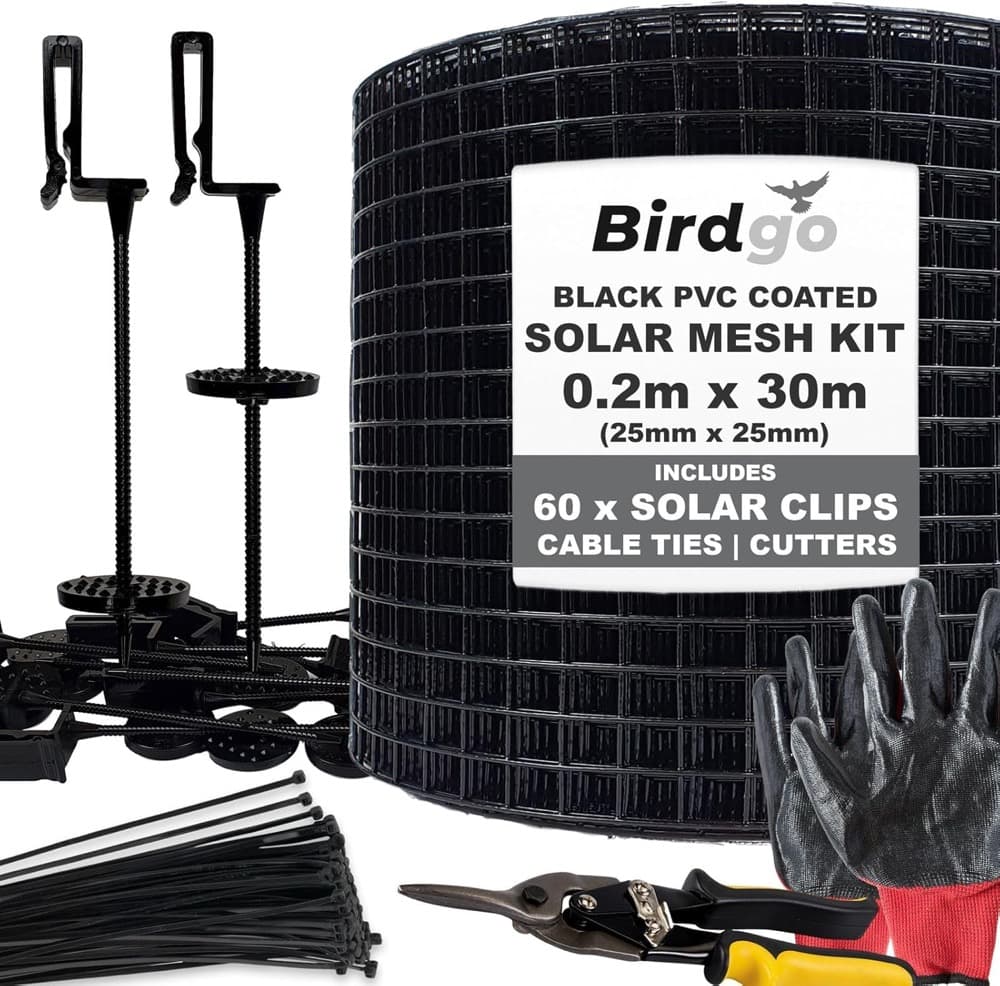
Solar Panel Bird Proofing Mesh Kit (30m)
£40–£65Pigeons nesting under panels cause damage and reduce output. Much cheaper than paying someone to remove nests later.
As an Amazon Associate we earn from qualifying purchases. Prices and stock are checked against Amazon every few hours and may have changed since.
