My Boiler Is Old: Should I Replace It with a Heat Pump?
A practical guide for when your boiler dies — repair, replace, or switch to a heat pump?
Replace Your Boiler With a Heat Pump: The Complete Decision Guide
Your boiler is playing up — or it has failed entirely. You have three options in front of you, and the right one depends on your circumstances, your budget, and how long you plan to stay in your home. This guide gives you the honest numbers for each path so you can make an informed choice under pressure.
Your Three Options
Option 1: Repair the Existing Boiler
If your boiler is repairable and not too old, a repair buys time. Typical repair costs range from £150 to £500 depending on the fault — a new pump or diverter valve sits at the lower end; a heat exchanger or PCB failure at the top. A repaired boiler realistically gives you one to three more years before the next breakdown.
This makes sense if: you are mid-way through a major renovation and want to delay the decision, or if your home is not yet ready for a heat pump (poor insulation, very small outdoor space) and you need time to prepare.
It does not make sense if: the boiler is over 15 years old and has already had multiple repairs, you want to claim the BUS grant before the current funding round closes, or you are paying very high gas bills and want to start saving now.
Option 2: New Gas Boiler
A new condensing gas boiler costs £2,500 to £3,500 installed and has a typical lifespan of 15 years. It is a known quantity: quick to install (usually one day), well understood by installers, and compatible with your existing radiators and hot water cylinder.
The case for a new gas boiler is weakening. Gas prices are expected to remain high relative to historical norms. The UK government's gas boiler phase-out trajectory means servicing and parts may become less available after 2035. And critically, you will not be eligible for the £7,500 BUS grant once you have installed a new gas boiler — you need to be replacing a fossil fuel system to qualify.
A new boiler still makes sense if: you have a very small outdoor space with no viable location for a heat pump unit, your home is listed and external works are restricted, or your home is so poorly insulated that a heat pump would be impractical and expensive to run until major works are done.
Option 3: Heat Pump
A heat pump costs £8,000 to £14,000 installed before any grants. With the £7,500 Boiler Upgrade Scheme (BUS) grant, that reduces to £500 to £6,500 — which is directly comparable to, or cheaper than, a new gas boiler for many homes.
The BUS grant is applied by your installer: they deduct it from your invoice and claim it from Ofgem. You never handle the grant money directly. The key eligibility requirements are that you are replacing a fossil fuel heating system, your property has a valid EPC with no outstanding loft or cavity wall insulation recommendations, and your installer is MCS-certified.
10-Year Cost Comparison
The table below shows the total expected spend over ten years for a typical three-bedroom semi-detached house currently spending around £1,500 per year on gas heating. Heat pump running costs assume average electricity rates and a Coefficient of Performance (COP) of 3 — meaning 1 unit of electricity produces 3 units of heat.
| Option | Upfront Cost | Annual Running Cost | 10-Year Running Total | 10-Year Total Spend |
|---|---|---|---|---|
| Repair boiler | £300 | £1,500 | £15,000 | £15,300 |
| New gas boiler | £3,000 | £1,500 | £15,000 | £18,000 |
| Heat pump (no grant) | £11,000 | £1,100 | £11,000 | £22,000 |
| Heat pump (with £7,500 grant) | £3,500 | £1,100 | £11,000 | £14,500 |
With the BUS grant, a heat pump costs less over ten years than a new gas boiler for this typical home — and you can model your own numbers with our heat pump savings calculator — and that gap widens if gas prices rise or electricity unit rates fall (as is broadly expected as the grid decarbonises). The heat pump also has a longer expected lifespan of 20 to 25 years versus 15 for a gas boiler, improving its long-run economics further.
Step-by-Step: How to Replace Your Boiler With a Heat Pump
Step 1: Get Your EPC
You need a valid Energy Performance Certificate (EPC) to apply for the BUS grant. If yours is more than ten years old, you will need a new one. An EPC costs £60 to £120 and is conducted by an accredited energy assessor. Check the EPC register at gov.uk to see your current certificate. Critically, if your EPC shows outstanding recommendations for loft or cavity wall insulation, you must address these before your installer can apply for the grant.
Step 2: Commission a Heat Loss Survey
A heat loss survey is a room-by-room assessment of how much heat your home loses on the coldest design day. It determines the correct heat pump size, identifies which radiators need upgrading, and is a requirement for any properly designed installation. It usually costs £150 to £300, though some installers include it in their quote. Never accept a quote from an installer who has not done this.
Step 3: Get Three MCS Installer Quotes
Your installer must be certified by the Microgeneration Certification Scheme (MCS) for you to receive the BUS grant. You can find certified installers on the MCS website. Getting at least three quotes is strongly advised — prices for the same job can vary by £2,000 to £4,000 between installers. Make sure each quote includes the heat loss calculation, a system design, and specifies which radiators (if any) need replacing.
Step 4: Apply for the BUS Grant
You do not apply directly — your MCS installer applies on your behalf. They submit the application to Ofgem before installation begins and receive a voucher valid for three months. The voucher amount is deducted from your invoice. Make sure your chosen installer confirms they will handle the grant application before you sign a contract.
Step 5: Installation
A typical heat pump installation takes two to three days. The outdoor unit is fitted and connected to your internal pipework, the hot water cylinder is usually replaced with a larger model compatible with lower flow temperatures, controls and thermostats are installed (see our best smart thermostats for heat pumps), and the system is commissioned and tested. Most homes have heating and hot water restored the same day the boiler is removed.
Timeline: From Decision to Running
| Stage | Typical Duration |
|---|---|
| Get new EPC (if needed) | 1–2 weeks |
| Get three installer quotes | 2–4 weeks |
| BUS voucher application and approval | 2–4 weeks |
| Installation scheduling and completion | 1–3 weeks |
| Total from decision to running | 6–12 weeks |
If your boiler has failed and you need heat urgently, discuss interim solutions with your installer — some will provide temporary electric heaters during the wait. If your property genuinely cannot wait, a repair may be the only practical short-term option while you proceed with the heat pump application.
The Bottom Line
For most UK homeowners with a suitable property, replacing a failing boiler with a heat pump — with the £7,500 BUS grant — is now the economically rational choice. The grant has fundamentally changed the maths. A new gas boiler at £3,000 upfront with £1,500 annual running costs will cost more over ten years than a heat pump at the same net upfront cost with lower annual bills.
The key question is whether your home is ready. See our guide to heat pumps in old houses if your property was built before 1980, or our radiator upgrade guide to understand whether your existing radiators will work. For a full cost breakdown, visit our heat pump costs guide.
Get Ready for Your Heat Pump
While you wait for installation, these products help you understand your home's energy use and prepare for the switch.
OWL Intuition-e Energy Monitor
£50–£80See exactly how much electricity your heat pump or home uses in real time — essential for tracking savings.
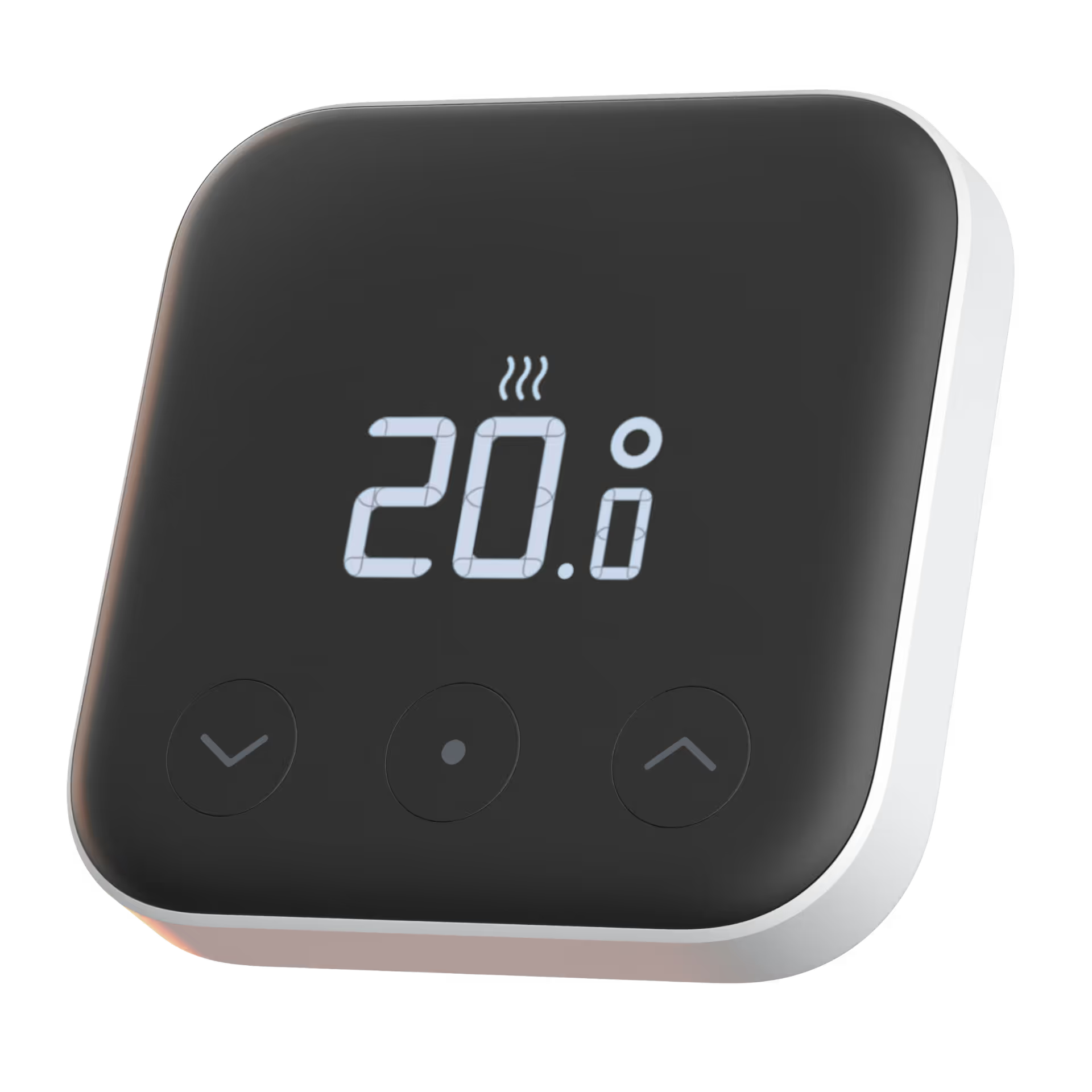
tado° Smart Thermostat Starter Kit V3+
£130–£170Works with heat pumps via OpenTherm for weather compensation — reduces running costs by 10–20%.
Adey MagnaClean Professional2 Magnetic Filter
£80–£120Sludge in old radiator systems can damage heat pump heat exchangers. A magnetic filter catches it before it reaches the pump.
As an Amazon Associate we earn from qualifying purchases. Product prices and availability are accurate as of the date of publication and may change.