Air Source Heat Pump Running Costs: Real Data from UK Homes
Real running cost data from UK heat pump owners, not manufacturer estimates.
Heat Pump Running Costs UK 2026: The Honest Numbers
Running cost comparisons for heat pumps are often misleading. Some manufacturers cherry-pick ideal conditions; some critics focus on worst-case scenarios. This guide gives you the actual maths, the real-world data from organisations including the Energy Saving Trust, and the factors that will determine whether your heat pump bills come in at the cheaper or more expensive end of the range.
Annual Running Cost Comparison
For a typical three-bedroom semi-detached home in the UK with reasonable insulation, here is what you can expect to spend on heating and hot water each year:
| Heating System | Annual Running Cost | Based On |
|---|---|---|
| Air source heat pump | £800 – £1,200 | Electricity at 24.5p/kWh, COP 3.0 |
| Gas boiler (modern condensing) | £900 – £1,400 | Gas at 5.5p/kWh, 90% efficiency |
| Oil boiler | £1,200 – £1,800 | Heating oil at approximately 6.5p/kWh equivalent, 85% efficiency |
| LPG boiler | £1,400 – £2,200 | LPG at approximately 8p/kWh equivalent, 85% efficiency |
These figures are from the Energy Saving Trust's 2025–26 modelling and assume a home with an annual heat demand of approximately 12,000 kWh. Your actual costs will depend on your home's heat demand, which is driven primarily by insulation quality.
The Maths Behind Heat Pump Economics
Understanding why heat pumps can be cheaper despite electricity costing more than gas requires understanding the coefficient of performance (COP).
What Is COP?
COP is the ratio of heat output to electricity input. A heat pump with a COP of 3.0 produces 3 kWh of heat for every 1 kWh of electricity it consumes. It achieves this by moving heat from the outside air into your home rather than generating heat by burning fuel — the same principle as a fridge working in reverse.
The Per-Unit Heat Cost Calculation
With electricity at 24.5p/kWh and a COP of 3.0:
- Cost per kWh of heat from heat pump: 24.5p ÷ 3.0 = 8.2p per kWh of heat
With gas at 5.5p/kWh and a boiler efficiency of 90%:
- Cost per kWh of heat from gas boiler: 5.5p ÷ 0.9 = 6.1p per kWh of heat
On a pure per-unit basis, gas is still cheaper. So why does the heat pump often win on total annual cost? Two reasons:
- Heat pump homes use less heat. Installing a heat pump typically coincides with improved insulation and radiator upgrades, reducing the total heat demand of the home. A home that needed 14,000 kWh of heat per year from a gas boiler may only need 10,000 kWh after insulation improvements.
- Time-of-use tariffs can cut electricity costs dramatically. See below.
Time-of-Use Tariffs: The Heat Pump Advantage
Standard electricity tariffs charge the same rate day and night. But several suppliers now offer time-of-use (TOU) tariffs specifically designed to work with heat pumps and home batteries:
| Tariff | Cheap Rate | Cheap Rate Period | Standard Rate |
|---|---|---|---|
| Octopus Cosy | 7.5p/kWh | 04:00–07:00 and 13:00–16:00 | ~27p/kWh |
| Octopus Intelligent Go | 7p/kWh | Overnight (flexible scheduling) | ~27p/kWh |
| E.ON Drive Anytime | 10p/kWh | 00:00–09:00 | ~27p/kWh |
If your heat pump runs primarily during cheap-rate hours — using thermal mass in your home and hot water cylinder as a battery — the effective electricity cost per kWh of heat drops sharply. At 7.5p/kWh overnight with a COP of 3.0, your heat cost is just 2.5p per kWh, well below gas.
Factors That Determine Your Actual Running Costs
Your COP in Practice (SCOP)
The headline COP figure is measured in a laboratory at a specific temperature. In the UK, the more useful figure is the seasonal COP (SCOP), which averages performance across a full heating season including cold winter days when COP drops. Typical real-world SCOP values range from 2.5 to 3.5 for well-installed systems. A poorly installed system, or one running at unnecessarily high flow temperatures, may achieve SCOP of only 2.0–2.2, at which point it is not cheaper than gas.
Insulation Quality
This is the single biggest variable. A detached home with solid walls and no insulation may have a heat demand of 20,000+ kWh per year. The same house with cavity wall insulation, loft insulation, and double glazing may need only 10,000 kWh. Halving the heat demand halves your running costs regardless of which system you use.
Flow Temperature Settings
Every 1°C increase in flow temperature reduces COP by approximately 2.5%. If your installer sets the flow temperature to 55°C rather than the optimal 45°C (perhaps to compensate for undersized radiators), you could be losing 20–25% of your efficiency. Getting the flow temperature right — through correct radiator sizing — is critical.
Thermostat Strategy
Heat pumps perform best when run continuously at a lower setpoint rather than cycling on and off. Setting your thermostat to 19°C all day and letting weather compensation do the rest is more efficient than turning the heating off while you are at work and cranking it up in the evening. This is a habit change for most households, but it pays off in lower bills. A smart thermostat with OpenTherm support makes this easier — see our guide to the best smart thermostats for heat pumps.
Real-World Data
The Energy Saving Trust's 2024 field trial monitoring of 742 heat pump installations found an average SCOP of 2.9 across all sites, with well-insulated homes averaging 3.4 and the bottom quartile averaging 2.3. The difference between a well-installed system in a well-insulated home and a poorly set-up system in a draughty house is substantial — both financially and in terms of comfort.
To understand whether your home is likely to sit in the high or low-performance bracket, read our guide on insulating before a heat pump installation, and use our heat pump savings calculator to model your specific costs.
Summary: Will a Heat Pump Save You Money?
- Replacing gas: modest savings of £100–£400/yr for most homes; larger savings with TOU tariffs
- Replacing oil: significant savings of £400–£700/yr are common
- Replacing LPG: very strong case — savings of £600–£1,000+/yr typical
- Homes needing insulation first: savings only materialise after insulation investment
For a detailed breakdown of upfront costs and the full financial case, see our guide on heat pump costs UK. To squeeze more savings from your system, consider smart TRVs for per-room control and radiator booster fans for rooms that are slow to warm up.
Products That Reduce Heat Pump Running Costs
The right thermostat and energy monitor can cut your heat pump bills by 10–20%. These are the products that make the biggest difference.
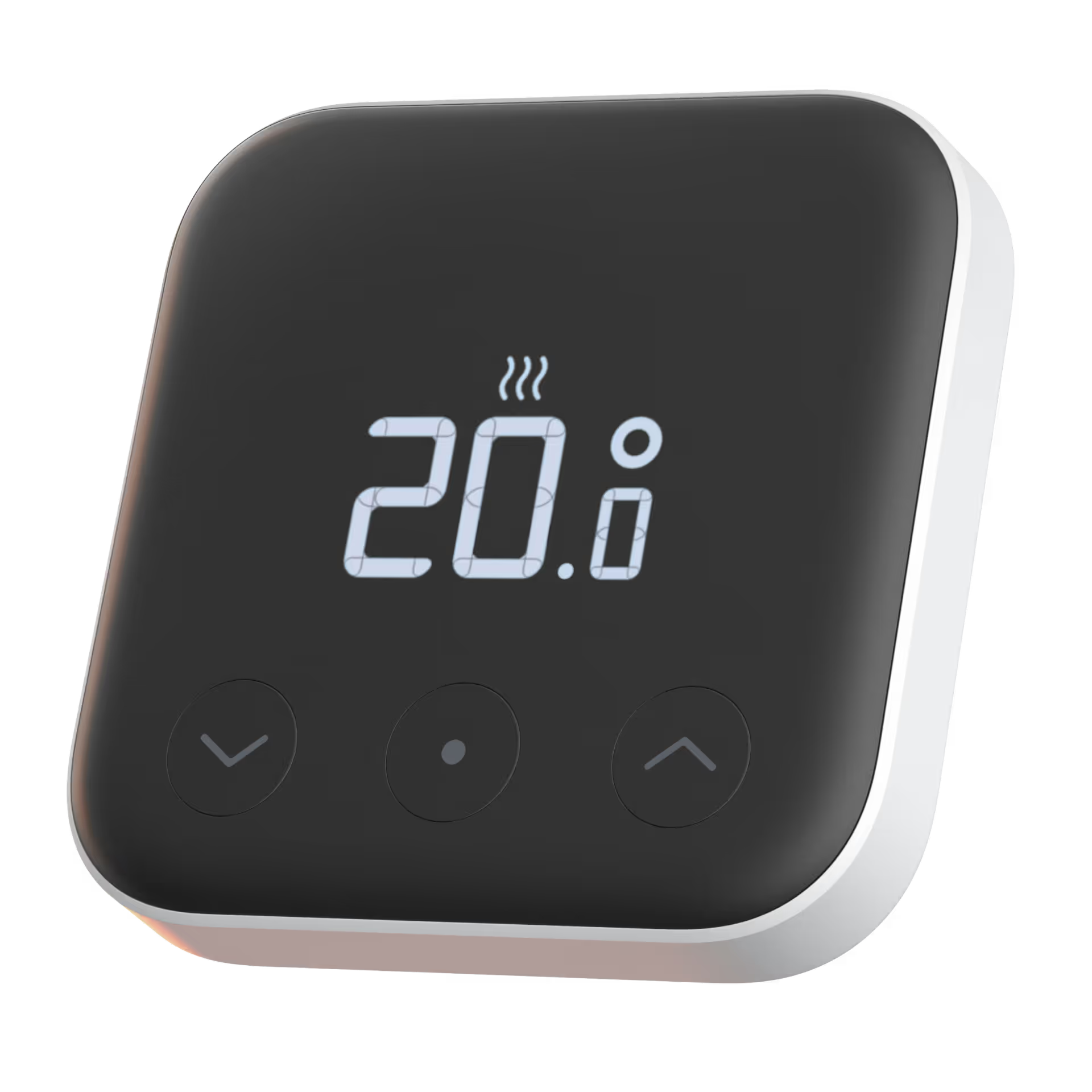
tado° Smart Thermostat Starter Kit V3+
£130–£170Works with heat pumps via OpenTherm for weather compensation — reduces running costs by 10–20%.
OWL Intuition-e Energy Monitor
£50–£80See exactly how much electricity your heat pump or home uses in real time — essential for tracking savings.
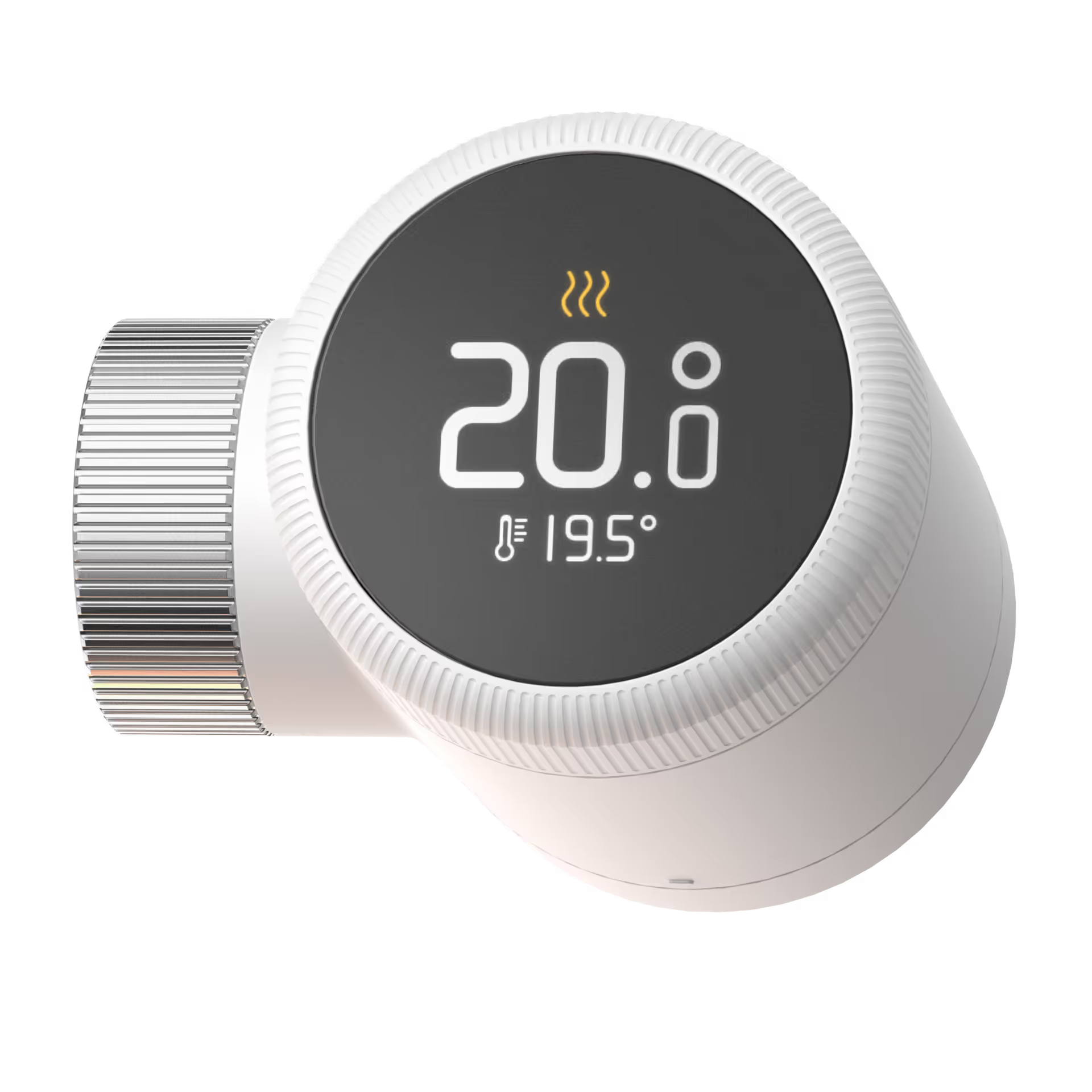
tado° Smart Radiator Thermostat (4-Pack)
£180–£250 (4-pack)Per-room temperature control reduces heat pump energy waste — only heat rooms you are using.
As an Amazon Associate we earn from qualifying purchases. Product prices and availability are accurate as of the date of publication and may change.