
The Short Answer
Buy a Powerwall 3 if you want your house to keep running when the grid doesn't, and you can live with paying around £9,500 for that. You get 13.5 kWh, the solar inverter built into the same box, whole-home backup as standard rather than an accessory, and the one manufacturer in this market nobody is worried about after GivEnergy Ltd went into administration on 9 April 2026. What it will not do is pay for itself: on our own estimator's defaults the payback runs to roughly 58 years, or about 30 even on an optimised tariff, against a ten-year warranty. It's a resilience purchase, not an investment. If that's not what you're after, a Fox ESS or Sunsynk system does the self-consumption job for thousands less.
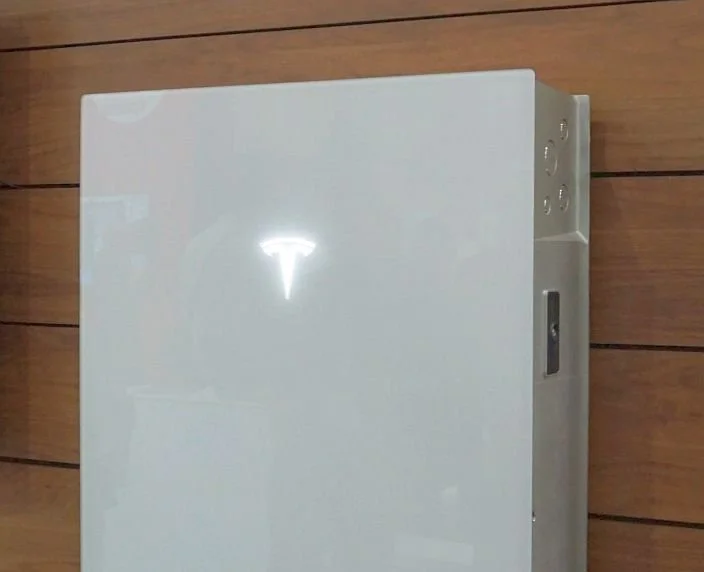
The Powerwall 3 is a 13.5 kWh all-in-one unit with a built-in hybrid solar inverter. One box on the wall, matte black, clean lines: the kind of thing that looks intentional in a utility room or garage rather than bolted together from a kit. The aesthetics are the least interesting thing about it, though. What matters is the combination of whole-home backup that works without a separate transfer switch, an inverter that doesn't need a second box, and a manufacturer whose continued existence isn't a topic of conversation on UK solar forums.
Specs at a glance
| Spec | Detail |
|---|---|
| Capacity | 13.5 kWh (expandable to 54kWh with DC expansion packs) |
| On-grid and backup power | Up to 11.04 kW, depending on local conditions |
| Motor start | 185 A LRA (locked rotor amps) |
| Built-in inverter | Hybrid, 3 solar inputs with MPPTs |
| Inverter efficiency | 97.5% solar-to-grid |
| Chemistry | LFP (lithium iron phosphate) |
| Backup power | Whole-home, automatic switchover |
| Warranty | 10 years |
| Installed price | ~£8,500–£10,500 |
| VAT | 0% (battery storage relief until March 2027) |
| App | Tesla app (iOS, Android) |
Specs are from tesla.com/en_GB/powerwall, checked 18 September 2026. Two things worth flagging, because plenty of sites (including this one, until today) get them wrong. That 97.5% is Tesla's inverter figure, solar-to-grid: it is not an AC round-trip efficiency, and Tesla doesn't publish one for the Powerwall 3. And the warranty line on Tesla's own spec table says "10 years" and nothing more, so read the capacity-retention wording in the warranty document your installer hands you rather than trusting a number you read on a blog.
Tariff integration, and the Flux caveat
The Powerwall 3's native integration with Intelligent Octopus Flux used to be the headline reason to buy one, and it's genuinely well built: no third-party bridge, no Home Assistant scripting, you sign in with your Octopus credentials in the Tesla app and the optimisation runs in the background from then on. The tariff fills the battery ahead of the 4pm to 7pm peak using solar first and cheap grid electricity second, then discharges through the peak to power the house or export at the high rate.
The problem is that you can't join it today. Octopus's own tariff page carries a banner: "Energy prices are particularly volatile right now, so this tariff is temporarily unavailable." It points you at standard Octopus Flux instead. We're leaving the description here because it's likely to come back, but it is not a reason to buy a battery this month, and any salesperson quoting you Intelligent Flux savings on a system you're buying now is quoting a tariff you cannot sign up to.
Now the bit that matters most, because this number gets quoted at people constantly. The "£250 a year" Flux bonus in our estimator further down is our assumption, not an Octopus figure. Octopus publishes no average saving for Intelligent Flux at all. What it publishes is a profit claim, "make up to £300 profit", and the substantiation is worth reading before you plan around it: between June 2024 and May 2025, 34% of Intelligent Flux customers paid less for imported energy than they earned from exporting, and the top 12% offset their whole bill and standing charge and made £314 or more on top.
Read that carefully. Two thirds of customers did not end the year in profit, and the £300 headline describes roughly the top one in eight. It's a real outcome for people with a big array, a big battery and the right consumption pattern. It is not a typical result, and it is not a saving you can subtract from the price of a Powerwall. Everything our estimator says with the bonus removed is the number we'd actually plan around.
If you want dynamic pricing today rather than whenever Flux reopens, Octopus Agile works with a Powerwall through third-party integrations. That route is more tinker-friendly than turnkey, and it's a hobby as much as a saving.
LFP chemistry, and reading the warranty properly
Powerwall 3 uses lithium iron phosphate (LFP), the same chemistry as the GivEnergy All-In-One and other high-quality home batteries. LFP is safer than NMC (less thermal runaway risk), lasts longer, and handles repeated deep cycling better. This matters enormously for a battery that cycles every day on a time-of-use tariff.
The warranty Tesla publishes on its UK Powerwall page is a flat 10 years. Every serious competitor offers ten years too, so on paper it's a draw. What differs between them is the small print: the percentage of original capacity guaranteed at the end of the term, and whether there's a cycle cap that a daily time-of-use routine would chew through. Those terms live in the warranty document, not the marketing page, and they change. Ask your installer for the current one in writing before you sign, and read the cycle clause specifically.
Where Tesla does separate itself is simpler and harder to argue with: it is not going to stop existing. After the year the UK battery market has just had, that's worth something real.
DC coupling: what it actually buys you
Every battery loses a little energy converting between AC and DC. In a conventional setup the losses stack up: solar DC becomes AC at the inverter, back to DC to charge the battery, then to AC again to run your kettle. The Powerwall 3 is DC-coupled, so your panels charge the battery directly and one conversion drops out of the chain.
That's a real advantage and it's the main technical reason to pick a Powerwall 3 over an AC-coupled battery bolted onto an existing inverter. We used to put a pound figure on it here, derived from Tesla's 97.5%. We've taken that out, because 97.5% is the solar-to-grid efficiency of the inverter, not an AC round-trip number for the battery, and turning one into the other was comparing two different measurements. Tesla doesn't publish a round-trip figure for the Powerwall 3, so we're not going to invent one.
What's safe to say: if you're installing solar and storage at the same time, DC coupling means one box rather than two and fewer conversion steps, which shows up as slightly lower losses and a simpler, cheaper install. If you already have a working solar inverter you're AC-coupling whatever you buy, and most of the advantage goes away.
Payback estimator
Plug in your solar size, electricity usage and tariff to see roughly how long a Powerwall 3 takes to pay for itself. Fair warning before you touch it: the answer is longer than the warranty, and we'd rather you heard that from us than worked it out afterwards.
Powerwall 3 payback estimator
See roughly how long a Powerwall 3 takes to pay for itself based on your solar size, household electricity use, and tariff. Uses the current price cap rates (1 October to 31 December 2026) and SEG export values.
Powerwall cost
£9,500
installed, 0% VAT
Extra self-consumed
1,140 kWh
per year
Annual saving
£163
Payback period
58 years
Show the working
A solar array typically generates ~950 kWh per year per 1 kW of panels in the UK (ranges from ~800 in Scotland to ~1,050 in the south). Without a battery, about 45% of that is self-consumed. The rest gets exported at the SEG rate (12p/kWh on Octopus Outgoing). With a Powerwall, self-consumption rises to around 75% by shifting surplus solar to evening use.
Extra self-consumption saving: each extra kWh self-consumed avoids importing at 26.32p and loses a 12p export credit, a net gain of about 14.3p/kWh.
Intelligent Octopus Flux bonus (£150/yr): a conservative placeholder, not a quoted rate. Octopus publishes no average saving for this tariff. Its headline “up to £300” is a profit figure achieved by roughly the top one in eight customers, and two thirds did not finish the year in profit at all. The tariff is also closed to new customers at the moment, so treat this row as upside rather than part of the case.
Assumptions: 13.5 kWh Powerwall 3 at £9,500 installed, Ofgem price cap for 1 October to 31 December 2026 (26.32p import), Octopus Outgoing export of 12p/kWh, single property, southern UK solar yield.
Run it on its own defaults, a 4 kW array and a typical 3,800 kWh household, and here's the working. Four kilowatts of panels generate about 3,800 kWh a year at the 950 kWh per kWp we use across the site. A battery lifts self-consumption of that from 45% to 75%, which is about 1,140 extra kilowatt-hours a year kept rather than exported. Each of those is worth the gap between the 26.32p you'd have paid to import it and the 12p you'd have earned exporting it, so call it £163 a year. Against £9,500 installed, that's a 58-year payback. Add the time-of-use optimisation the estimator assumes for Intelligent Octopus Flux and it still only comes down to about 30 years, which is three times the warranty.
We're not going to dress that up. The Powerwall 3's financial payback is comfortably longer than its ten-year warranty, on any set of assumptions we can defend. Bigger arrays and higher household usage help. A dynamic tariff helps more. Neither gets you inside a decade, and the Flux case leans on a tariff Octopus currently has closed to new customers, so treat it as the optimistic end rather than the plan.
That doesn't make it a bad buy. It makes it a different kind of buy. You are purchasing resilience, control over when you draw from the grid, and the ability to use your own generation in the evening instead of selling it for 12p. Those are worth paying for, and plenty of people happily pay more for less. Just don't let anyone sell you a Powerwall as an investment, because the arithmetic doesn't support it and you'll be annoyed in year eight.
Backup power done properly
When the grid goes down, the Powerwall 3 switches to island mode automatically, with no manual intervention and no noticeable flicker. It powers your whole home (lights, sockets, even EV charging, depending on load) using the 11.04 kW output. Storm Watch takes this further: the Tesla app monitors Met Office severe weather alerts and automatically charges the battery to 100% before a predicted storm hits.
Most UK homes have a reliable grid and won't need this often. But if you live somewhere prone to outages (rural, coastal, ex-mining areas with older network infrastructure), this is the most genuinely useful feature on any home battery.
Expansion: scaling up to 54 kWh
Tesla's DC Expansion Packs add 13.5 kWh each, up to three per Powerwall 3, for a maximum of 54 kWh. The expansion packs sit next to the main unit and connect via DC, so no second inverter is needed. That's more than enough for a family home running a heat pump, EV charging, and all-electric cooking.
Expansion isn't as granular as batteries that let you add 2.5 kWh modules one at a time, but you don't actually need that granularity. You just buy the 13.5 kWh unit, and if you want more later, you add a pack then.
What capacity do you actually need?
The Powerwall 3 is a 13.5 kWh unit. For most UK homes that's either just right or slightly oversized, which is fine. You don't lose efficiency from having extra headroom. The question is really whether 13.5 kWh is enough, or whether you should plan for expansion.
| Household profile | Recommended capacity | Why |
|---|---|---|
| 1–2 bed flat, no heat pump, no EV | Single 13.5 kWh | Oversized but smallest Tesla option; alternatives from Fox ESS start at 5 kWh |
| 3-bed semi, gas heating, ~3,800 kWh/yr | Single 13.5 kWh | Covers a full day's typical draw plus margin for cloudy days |
| 3-bed semi with an EV | Single 13.5 kWh | Charge the EV off-peak separately; battery handles home load |
| 4-bed detached, heat pump, ~6,000 kWh/yr | Single 13.5 kWh + 1 expansion pack (27 kWh) | Winter heat pump load is the dominant demand. Extra capacity lets you shift more of it |
| Large detached, heat pump + EV + all-electric | 13.5 kWh + 2–3 expansion packs (40–54 kWh) | Full electrification benefits from sized-up storage to absorb summer solar and release it in winter |
Practical advice: unless you're already committed to full electrification, a single 13.5 kWh unit is almost always the right starting point. Expansion packs can be added later if your usage changes (EV purchase, heat pump install, home extension).
The installer network: honest assessment
Tesla's UK installer network has improved a lot in the last two years but is still thinner than the GivEnergy or Sunsynk networks were at their peak. If you're in a major urban area you'll have plenty of options. If you're rural Scotland or deep in Wales, expect to wait longer for a certified installer. Tesla Energy's own support has a mixed reputation for response times, which is well-documented in UK solar forums.
Practical advice: get quotes from at least three Tesla-certified installers and check their reviews specifically for post-install support responsiveness. A cheap install from a busy company that can't answer the phone in winter is worse than a slightly dearer one from a smaller outfit that picks up.
Installation: what actually happens
A typical Powerwall 3 install takes 1–2 days. If it's paired with new solar panels, add another day or two for the roof work. Here's what to expect:
Before the install: Your installer does a site survey to agree the unit location (indoor or outdoor, garage or utility room), check your consumer unit has capacity, and verify that your home's meter and supply arrangement is compatible. DNO notification is filed with your local network operator.
Day 1: The Powerwall is wall-mounted (roughly 130 kg, so the wall needs to be appropriate. Most brick or breeze-block walls are fine). Electrical connections are run to your consumer unit, which usually needs a dedicated isolator and sometimes a small sub-board. If you're having solar installed at the same time, DC cables from the panels land directly at the Powerwall (no separate inverter needed).
Day 2: Commissioning, firmware updates, and Tesla app setup. The installer pairs the Powerwall with your Wi-Fi, walks you through the app, and configures the backup power settings (which circuits are backed up during an outage). If Intelligent Octopus Flux has reopened by the time you install, the Octopus authorisation starts at this point and takes a few days to validate.
Disruption is minimal compared to a full solar install. There's no roof work unless you're adding panels, and your electricity supply might only be off for an hour or two during the final cut-over.
Cost and value in 2026
An installed Powerwall 3 at 13.5 kWh costs £8,500–£10,500 in the UK, depending on installer, region, and any electrical work needed. That's with 0% VAT, which applies to battery storage installed with or without solar until March 2027.
Is it cheap? No. A GivEnergy All In One at the same capacity is around £4,500–£6,000 installed, and Fox ESS and Sunsynk sit in similar territory. You are paying roughly £4,000 extra, and it's worth being blunt about what that buys: whole-home backup included rather than bolted on, a DC-coupled inverter in the same box, and a manufacturer whose solvency isn't a talking point. It does not buy you a shorter payback. If none of those three things matter to you, buy the cheaper battery and spend the difference on insulation.
What about grants?
This is the question everyone asks, so it's worth answering directly: there is no national grant for battery storage in England or Wales. The £7,500 Boiler Upgrade Scheme (BUS) is heat pump only. Batteries aren't covered.
What you do get:
- 0% VAT until March 2027 under the Energy Saving Materials relief. This applies whether the battery is installed alongside solar or on its own (VAT on standalone batteries dropped to 0% in February 2024). It's already factored into the installed prices quoted above. You won't see it as a line item on your quote.
- ECO4 can, in rare cases, fund battery storage for qualifying low-income households as part of a broader energy efficiency package. Check eligibility with our grant eligibility checker.
- Nothing extra in Scotland either. The Home Energy Scotland Grant and Loan measure list doesn't include battery storage. It covers heat pumps, heat network connections, solar thermal, hybrid solar PV/water heating, biomass, wind and hydro on the renewables side, plus insulation and glazing. Standard solar PV isn't on it, and neither is a battery. If someone quotes you Scottish funding for one, ask them to point at the measure.
- Smart Export Guarantee (SEG) isn't a grant but is worth knowing: you get paid for electricity you export to the grid (Octopus Outgoing pays 12p/kWh on a flat tariff, or 16p between 16:00 and 19:00 on Prime Outgoing). A battery reduces exports but increases the value of each kWh you do use, which is the trade-off the calculator above models.
If you're weighing up solar and a battery together, do it in that order. The panels are the part with the defensible return: the Energy Saving Trust puts a typical 4.5 kWp system at around £7,600 with payback between 9 and 12 years depending where you live. The battery is what you add on top to control when you use what the panels made, and it's the part that doesn't pay for itself. Buy the panels because they're a good investment, buy the battery because you want what it does. See our solar battery storage guide for the full picture.
How the Powerwall 3 compares
Here's the Powerwall 3 against the main batteries still widely available in the UK as of September 2026:
| Tesla Powerwall 3 | Fox ESS EP Series | Sunsynk 5.32 | Duracell Energy Bank | |
|---|---|---|---|---|
| Usable capacity | 13.5 kWh (to 54 kWh) | 5.4–10.4 kWh (stackable) | 5.32 kWh (stackable) | 5–10 kWh |
| Continuous output | 11.04 kW | 5 kW | 3.6 kW | 3–5 kW |
| Chemistry | LFP | LFP | LFP | LFP |
| Built-in inverter | Yes (3 MPPT) | Separate hybrid inverter | Separate hybrid inverter | Separate hybrid inverter |
| Solar coupling | DC-coupled, one conversion step | AC-coupled unless paired with the hybrid inverter | AC or DC via hybrid inverter | AC-coupled |
| Whole-home backup | Yes, automatic | Optional (needs ATS) | Optional | Optional |
| Octopus Flux native | Yes | Partial (via API) | Third-party only | No |
| Warranty | 10 yr | 10 yr | 10 yr | 10 yr |
| Installed price (typical) | £8,500–£10,500 | £5,500–£8,500 | £4,500–£7,000 | £4,500–£7,500 |
| Best for | Whole-home backup, future-proofing | Modular, good installers | Budget, DIY-friendly | Budget branded option |
Our take: Fox ESS and Sunsynk are genuinely good value, and "good value" is a reasonable thing to optimise for when nothing in this table pays for itself inside its warranty. What the Powerwall 3 gives you that they don't is 11 kW of output, backup that works out of the box rather than needing a transfer switch, and a DC-coupled inverter in the same enclosure. Whether that's worth £4,000 depends entirely on how much you care about the lights staying on.

Ready to get quotes for a Powerwall 3?
Compare quotes from Tesla-certified battery installers in your area. MCS-accredited, free and no obligation. It helps to have a rough idea of your electricity usage and existing solar setup (if any) before you start.
Who should buy this
- Anyone who wants the lowest-risk choice after GivEnergy Ltd went into administration, and who understands they're paying a premium for that certainty rather than for performance.
- Anyone already on Intelligent Octopus Flux: the native integration is the best implementation of it on any battery. Octopus has the tariff closed to new customers at the moment, so this only applies if you're already on it.
- Anyone with a heat pump or EV who wants one battery system that can handle big loads (11.04 kW handles everything short of an oven and a heat pump at full tilt).
- Anyone with a specific backup power need: rural, coastal, or outage-prone locations, or a household where someone depends on mains-powered medical equipment. This is the reason to buy a Powerwall, and it's a good one.
- Anyone installing solar at the same time: the built-in 3-MPPT hybrid inverter means you don't need a separate solar inverter, reducing install complexity and cost.
Who should look elsewhere
- If you need less than 10 kWh of storage: Powerwall 3 starts at 13.5 kWh, which is more than a small home needs. A Fox ESS or Duracell 5–8 kWh unit may fit better.
- If you're rural and Tesla installers are 100+ miles away: pick an installer first, product second.
- If you want per-kWh granularity for future expansion (adding 2–3 kWh at a time rather than 13.5 kWh packs).
- If you're buying purely to save money. On our own estimator's defaults the payback is about 58 years, or roughly 30 on an optimised tariff. A cheaper battery won't pay back either, but it'll fail to pay back for £4,000 less.
Alternatives worth knowing about
With GivEnergy Ltd in administration, the UK's mainstream alternatives are:
- Fox ESS: solid mid-range option, good installer coverage, modular.
- Sunsynk: DIY-friendly with a growing certified installer base; popular with self-builders.
- Duracell Energy: newer to the UK market, competitive pricing, fewer installers. It's a licensed brand rather than the battery company itself, and there's no company of that name on the UK register, so ask which entity backs the warranty.
- Huawei Luna / LG Chem: available but narrower installer networks than the above.
None of these match the Powerwall 3 on backup implementation or native tariff integration, but every one of them is worth a quote if price is what's driving the decision. And since none of them pay back inside their warranty either, price driving the decision is a perfectly rational position.
For the full breakdown against the battery that used to be the default answer, see our GivEnergy vs Tesla Powerwall comparison, which now covers what GivEnergy's administration means if you own one or have been quoted one. For the complete storage buying guide, read our solar battery storage guide.