
The Short Answer
Clean your panels once or twice a year with a telescopic water-fed brush from the ground. Don't climb on the roof, don't use a pressure washer, don't use washing-up liquid. A DIY cleaning kit costs a fraction of one professional visit and pays for itself in a single season by recovering 5–15% of lost output. If pigeons are nesting underneath, fit a bird proofing mesh kit before they cause real damage. Check the live prices on the product cards rather than trusting any figure in this text, because they move.
How Much Output Are You Losing?
Dirty solar panels don't stop working. They just work less efficiently. How much less depends on what's on them:
| Type of Soiling | Output Loss | Annual Cost (4kW system) |
|---|---|---|
| Light dust and pollen | 2–5% | £14–£35 |
| General grime (typical after 6–12 months) | 5–10% | £35–£70 |
| Bird droppings (partial coverage) | 10–20% | £70–£140 |
| Heavy soiling (lichen, tree sap, guano) | 15–25% | £105–£175 |
The annual cost column assumes a typical 4 kW system worth £701 a year in bill savings and export income, which is the figure from our solar panel costs guide: 3,800 kWh generated, 45% used at home at 26.32p, the rest exported at 12p. On that basis a 10% loss costs you about £70 a year, so a one-off DIY kit pays for itself in the first clean.
The loss isn't always obvious. You won't notice a gradual 10% decline: your panels still generate, your inverter still shows numbers. It's only when you clean them and see the output jump that you realise what you were missing.
When to Clean: The UK Seasonal Schedule
UK weather actually helps: rain washes off loose dust. But it doesn't remove bird droppings, tree sap, lichen, or the film of grime that builds up over months. Here's when to clean:
March–April (essential)
After winter, your panels have accumulated months of dirt, fallen leaves, and bird droppings. Spring is when solar generation ramps up, so you want maximum output for the longest days ahead. This is the most important clean of the year.
September–October (recommended)
After summer dust and pollen, give your panels a second clean before the short winter days. Every percentage point of efficiency matters more when the days are short and the sun is low.
As needed
If you can see bird droppings from the ground, don't wait for the seasonal schedule. Bird droppings cause "hot spots": shaded cells that the panel has to work around, reducing output for the entire string. Clean them off as soon as you notice them.
How to Clean Solar Panels (DIY from the Ground)
The golden rule: never climb on your roof. A fall from a roof is life-threatening, and your panels aren't worth the risk. Modern telescopic poles reach 7 metres or more, enough for most two-storey UK homes.
What you need
- Telescopic water-fed brush: soft bristles with a hose connection. A 7m pole reaches most residential roofs from the ground. This is the one purchase that matters.
- Solar panel cleaner spray: purpose-made alkaline cleaner that won't damage the anti-reflective coating. One bottle does a full roof.
- A garden hose: for rinsing. Don't need anything fancy.
Step by step
- Check your inverter output before cleaning so you can compare the before and after. Note the current kW reading on a sunny day.
- Clean early morning or on a cloudy day: cold water on hot panels can cause thermal stress (micro-cracks). Panels are coolest before 10am.
- Optional: shut down your system via the inverter or isolator switch. Not strictly necessary for cleaning the glass surface, but eliminates any electrical risk.
- Spray the cleaner onto any stubborn spots (bird droppings, sap) and let it sit for 2–3 minutes.
- Brush with the telescopic pole using gentle, even strokes. The water-fed connection keeps the brush wet and rinses as you go.
- Rinse thoroughly with the hose. Let it air dry. Don't try to squeegee from 7 metres away.
- Check your inverter output again the next sunny day. You'll typically see a 5–15% improvement if the panels were moderately dirty.
What NOT to Do
These mistakes can damage your panels, void your warranty, or put you in danger:
- Don't use a pressure washer. The force can crack the glass, damage seals, and drive water into the junction box. This will void your warranty and can cause electrical faults.
- Don't use washing-up liquid. It leaves a residue that attracts more dirt, and some formulations can degrade the anti-reflective coating. Use plain water or a purpose-made solar panel cleaner.
- Don't use abrasive cloths or scourers. The anti-reflective coating on modern panels is what maximises light absorption. Scratch it and your panels lose efficiency permanently.
- Don't climb on the roof. Not even for "just a quick wipe". Falls from height are consistently one of the biggest causes of workplace death in Britain, and that's among people who do it for a living with the right kit. Use a telescopic pole or hire someone.
- Don't clean in the middle of a hot sunny day. Thermal shock from cold water on panels at 60°C+ can cause micro-cracks. Clean early morning, late evening, or on a cloudy day.
DIY vs Professional: What's the Real Cost?
| DIY | Professional | |
|---|---|---|
| First clean cost | Pole plus a bottle of cleaner, one-off | £100–£200 |
| Subsequent cleans | Just the cleaner | £100–£200 each time |
| Cost over 5 years (2x/yr) | Well under one professional visit | £1,000–£2,000 |
| Includes inspection? | No (you can visually check from ground) | Usually yes |
| Risk | None (from ground) | None (professional) |
| Quality | Good for most soiling | Better for heavy soiling / lichen |
Our recommendation: DIY for routine cleans twice a year. Get a professional every 3–5 years for a deep clean and inspection, especially if you have hard-to-reach panels, lichen growth, or haven't cleaned since installation.
The Pigeon Problem
If pigeons are nesting under your solar panels, cleaning the panels is only half the battle. Pigeon guano is acidic: it damages panel surfaces, degrades wiring insulation, and blocks gutters. A serious nest can also be a fire risk if debris builds up near electrical connections.
Signs of pigeon nesting
- Droppings on and around the panels (visible from ground level)
- Twigs, feathers, or nesting material visible at panel edges
- Cooing sounds from the roof, especially early morning
- A noticeable drop in panel output (guano blocking cells)
The fix: bird proofing mesh
A 30m mesh kit with clips fits around the edges of your panels without drilling into the roof or the panel frames. The mesh clips onto the frame, creating a barrier that stops birds getting underneath. It's a one-time install that takes 2–4 hours for a typical residential system, and it costs well under half a single professional de-fouling visit.
This is much cheaper than professional pigeon removal and guano cleaning, which typically costs £200–£400. Fit the mesh proactively, ideally at the same time as your first clean, rather than waiting until you have a nesting problem.
How to Check if Cleaning Made a Difference
The simplest way: check your inverter's daily generation figure before and after cleaning, on a similar sunny day. A well-maintained monitoring system makes this easy: if you've got a Solis, Fox ESS or SolarEdge app, just compare the daily kWh.
If you don't have app-based monitoring, note the real-time kW reading from your inverter display at midday on a sunny day before cleaning, then check again after. You're looking for a 5–15% improvement.
For ongoing monitoring, an energy monitor or a smart plug with energy monitoring on your inverter's supply can track generation trends over time.
Maintenance Beyond Cleaning
While you're looking at your panels, check for:
- Cracked or chipped glass: visible from the ground with binoculars. A cracked panel still works but will degrade faster and may need replacing.
- Discoloured cells: brown or yellow patches indicate failing cells. This is normal ageing but worth monitoring.
- Loose fixings: after storms, check that panels haven't shifted. You shouldn't see any exposed roof membrane or flashing.
- Overgrown trees: a tree that was fine when the panels were installed may now be casting shade. Even partial shade dramatically reduces output because panels are wired in strings.
- Inverter status lights: a red or flashing light usually means the system needs attention. Check your inverter manual or app.
Most panel manufacturers recommend a professional inspection every 5 years as part of the warranty terms. Check your warranty documentation: some require annual inspections.
For the full picture on solar panel performance, costs, and maintenance, see our solar panel costs guide and best solar accessories roundup.
Frequently Asked Questions
Solar Panel Maintenance Products
Everything you need to keep your panels clean and protected, all available on Amazon.
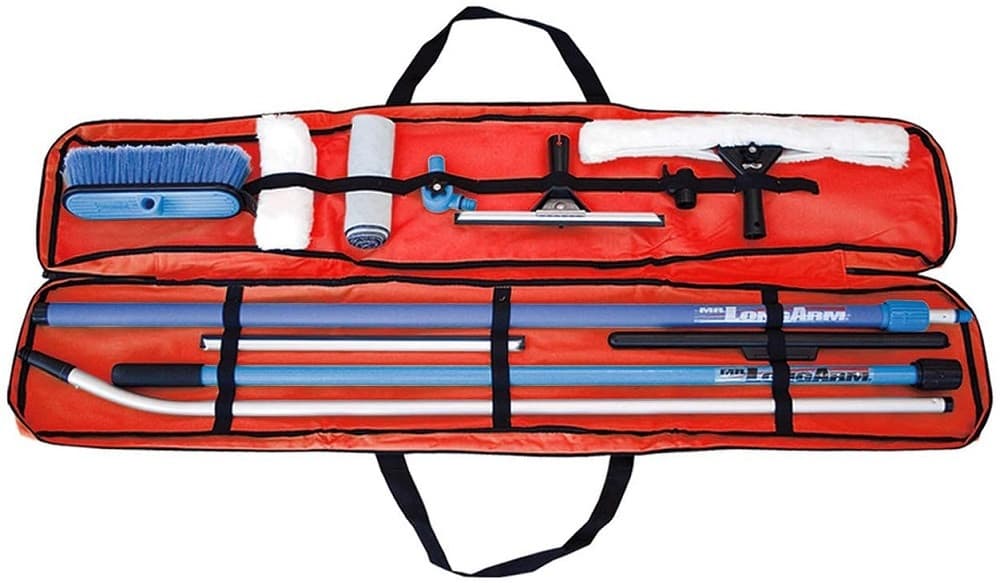
Solar Panel Cleaning Kit with Extension Pole
£38.66Dirty panels lose 5–15% output. Cleaning twice a year keeps generation at its peak.
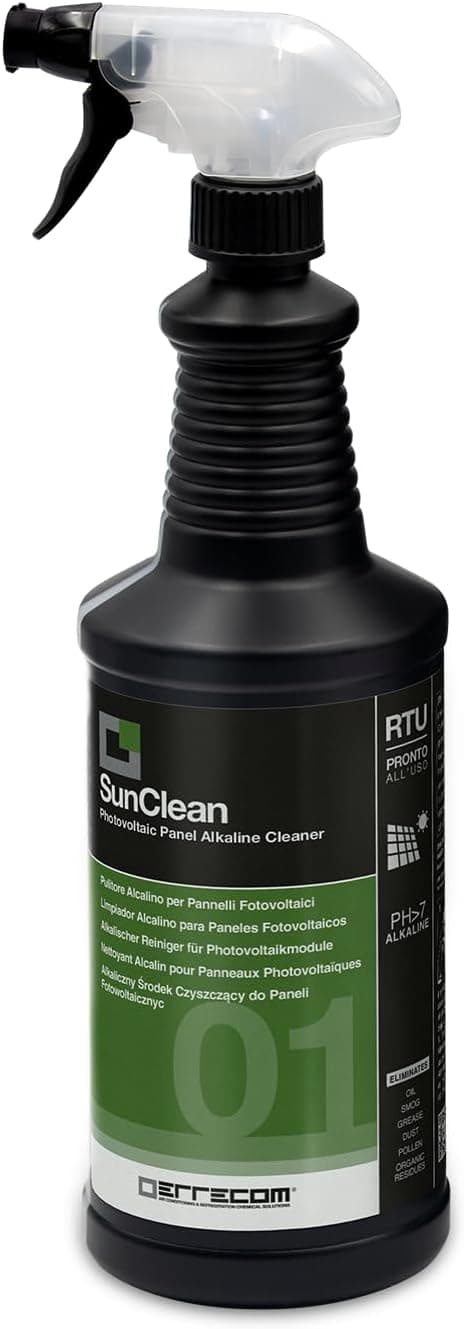
Errecom SunClean Solar Panel Cleaner (1L Spray)
£16.40Purpose-made for solar panels, won't damage coatings like washing-up liquid can. One bottle does a full roof.
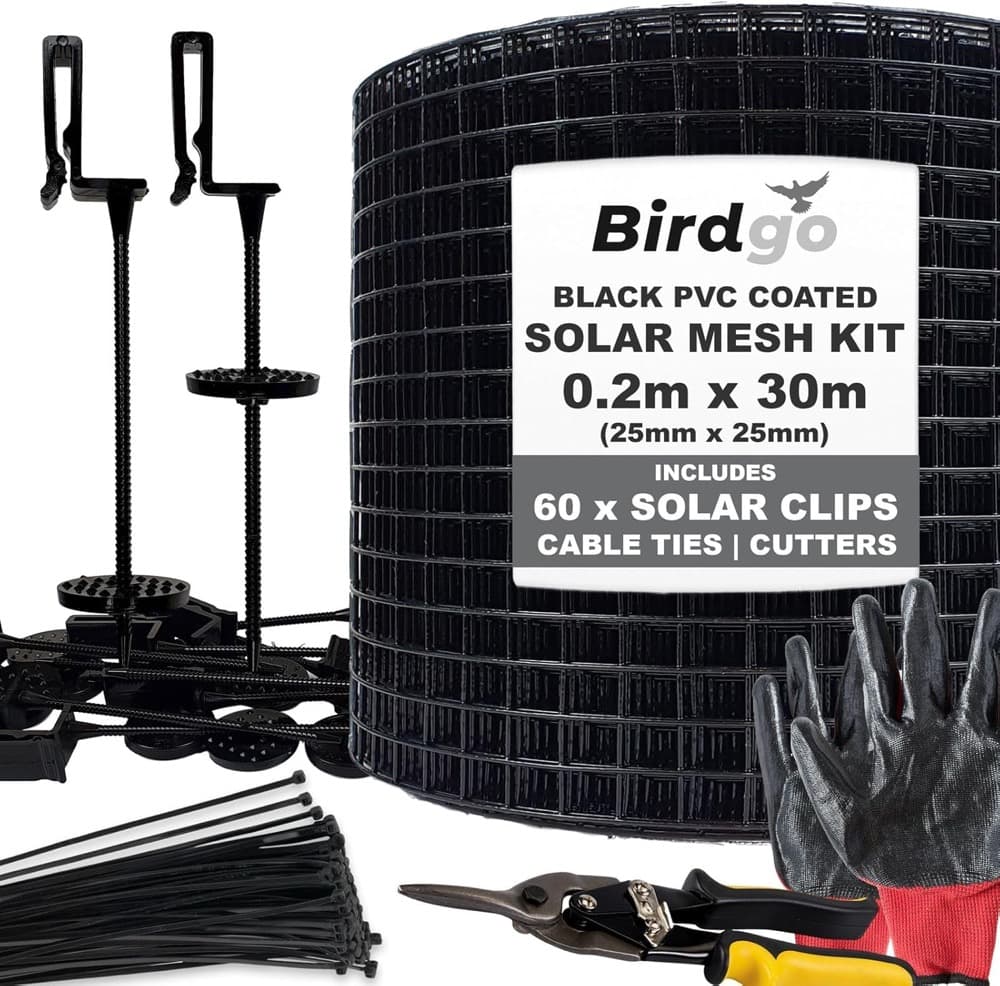
Solar Panel Bird Proofing Mesh Kit (30m)
£40–£65Pigeons nesting under panels cause damage and reduce output. Much cheaper than paying someone to remove nests later.
As an Amazon Associate we earn from qualifying purchases. Prices and stock are checked against Amazon every few hours and may have changed since.
