
The Short Answer
A heated airer saves you real money against a tumble dryer, about £157 a year if you do five loads a week. But it does not cost 3p an hour, whatever the internet tells you. A 300W airer costs about 8p an hour at the current Ofgem rate of 26.32p/kWh. What makes it cheap isn't the appliance, it's the cover and the overnight tariff.
- Lakeland Dry:Soon Deluxe 3-Tier: best overall. 21m of space, 300W, a full load for about 32p with a cover on.
- Black & Decker 3-Tier: same wattage, same drying, about £70 less. The smart money pick.
- A cover: £10–£18, cuts drying time by roughly 40%, and therefore cuts the cost of every load by the same amount. Buy it with the airer, not later. The specific cover we link to keeps going out of stock; any universal 3-tier cover does the same job.
The Real Running Costs
Every figure below uses the Ofgem price cap rate for 1 October to 31 December 2026: 26.32p/kWh for electricity. Watts times hours, divided by a thousand, times 26.32p. No rounding in our favour.
| Appliance | Power | Cost per hour |
|---|---|---|
| Drying Pod / pod-style dryer | 1000W | 26.3p |
| 3-tier heated airer (most of them) | 300W | 7.9p |
| Minky Wing | 230W | 6.1p |
| Heat Pod cover over your own airer | 150W | 4.0p |
| Heated ladder airer | 100W | 2.6p |
Eight pence an hour isn't three pence an hour. If you've read the 3p figure somewhere (and you will have, it's all over the place, and it was on this page until we checked it), it's the electricity price from about 2021. It's out by a factor of two and a half.
Cost Per Load, Which Is What Actually Matters
Pence per hour is a bad way to compare a dryer that takes 90 minutes with an airer that takes six hours. Here's the same thing per load, and per year at five loads a week (260 loads).
| Method | Energy per load | Cost per load | Per year (260 loads) |
|---|---|---|---|
| Condenser tumble dryer | 3.5 kWh | 92p | £239 |
| Drying Pod (1000W, 3 hrs) | 3.0 kWh | 79p | £205 |
| Heat pump tumble dryer | 2.0 kWh | 53p | £137 |
| 300W airer, no cover (6 hrs) | 1.8 kWh | 47p | £123 |
| Minky Wing 230W (6 hrs) | 1.38 kWh | 36p | £94 |
| 300W airer + cover (4 hrs) | 1.2 kWh | 32p | £82 |
| Minky Heat Pod 150W (7 hrs) | 1.05 kWh | 28p | £72 |
| Dunelm Heated Ladder 100W (6 hrs) | 0.6 kWh | 16p | £41 |
So the headline: swapping a condenser tumble dryer for a 300W airer with a cover saves 60p a load, which is £3 a week or £157 a year. That's a genuinely good saving for a £70–£200 appliance, and it's the honest version of a claim you'll see quoted as £193 or higher.
Three things fall straight out of that table and they're the whole guide, really:
- The cover is worth more than the airer you choose. Cover on versus cover off is 32p against 47p. That's £39 a year for a £15 accessory, and it's the same £15 whether you bought the Lakeland or the Black & Decker.
- The Drying Pod is a bad deal on cost. At 79p a load it's only £34 a year better than the condenser dryer it's meant to replace, and it's worse than a heat pump tumble dryer. Buy it for speed if you need speed. Don't buy it to save money.
- A heat pump tumble dryer is closer than people think. 53p a load against 32p. If you're choosing between a heated airer and a modern heat pump dryer purely on running cost, the airer wins by about £55 a year, not by a factor of five. Our heat pump tumble dryer guide has the other side of that argument.
The Bit That Makes It Genuinely Cheap: Overnight Electricity
This is where the airer stops being a modest saving and starts being nearly free, and it's the reason to own one.
On Intelligent Octopus Go you get 8p/kWh from 23:30 to 05:30. That's a six-hour window, which comfortably covers a covered 300W airer's four hours. Same 1.2 kWh load, now costing about 10p instead of 32p.
Over a year at five loads a week that's about £25 against £82 on the standard cap rate, and against £239 if you were running a condenser dryer. The £57 a year you save by moving the load overnight is more than the £39 the cover saves you, and it costs you a £8–£10 smart plug. That pays back in about two months.
Two practical notes. First, the Lakeland's built-in timer is a countdown, not a scheduler: it switches off after the hours you set, it can't sit and wait until 23:30 to switch on. For the cheap window you want a plug-in timer or a smart plug regardless of which airer you buy. Second, you have to actually be on the tariff. Intelligent Octopus Go is aimed at EV drivers and needs a compatible car or charger for the full version, so check you qualify before you plan around it.
If you've got solar instead, a 300W draw is well within what a modest array puts out in the middle of a decent day, and that's a free load. More on that below.
Our Picks
All 7 Products Compared
As an Amazon Associate we earn from qualifying purchases. Prices correct as of 25 September 2026, checked against Amazon every few hours.
Best Overall
Lakeland Dry:Soon Deluxe 3-Tier
£169.99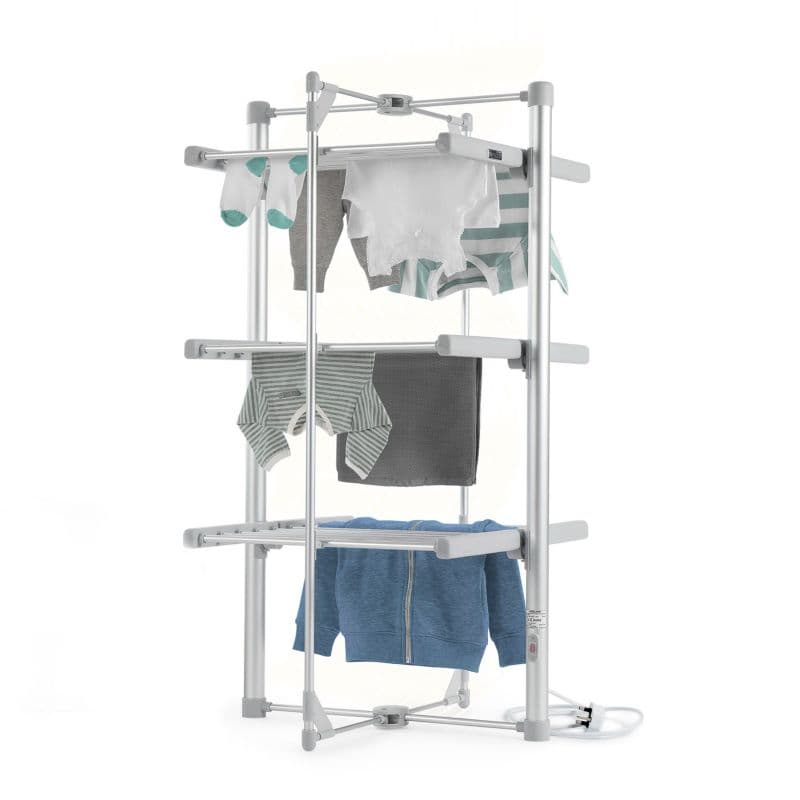
The Dry:Soon Deluxe is the heated airer everyone else gets compared to, and it's still the one we'd buy if the budget stretches. It's got 21 metres of drying space across three tiers, enough for a full wash load including towels and jeans. The aluminium frame is solid rather than the flexy plastic you get lower down the market, and the heated bars run the full length of each tier so the warmth is even.
At 300W it's 7.9p an hour, so about 47p for a six-hour uncovered load or 32p with a cover on. The difference between this and the cheaper 300W airers isn't the running cost, because it's identical. It's the frame and the timer.
The timer runs up to 12 hours and switches the airer off when it's done, which is genuinely useful if you tend to forget about it. Just don't expect it to schedule you into a cheap overnight window, because it counts down from when you press it.
Drying times: cotton shirts 3–4 hours, jeans and towels 6–8. With a cover, knock roughly 40% off.
The downsides? It's big unfolded, about 70cm wide and 140cm tall, so you want a spare room, utility or bathroom for it. And it's the most expensive airer here by a distance, which at identical running costs is a comfort and build-quality decision, not an energy one.
Best Value
Black & Decker 3-Tier
£99.99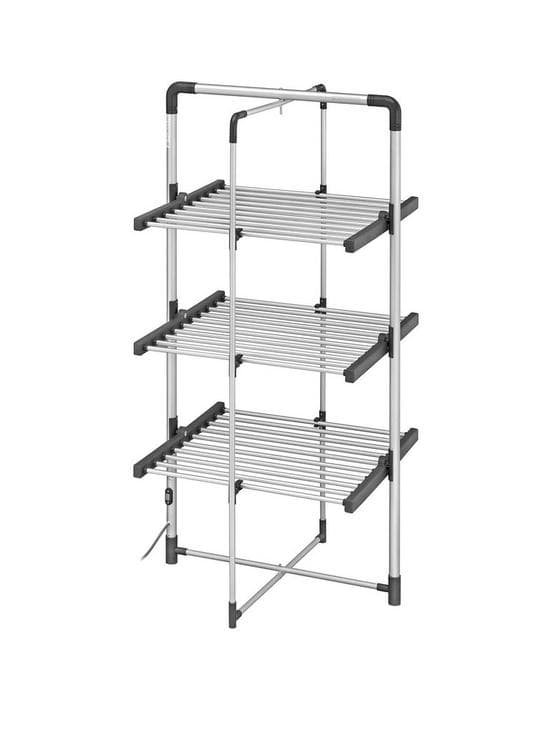
Here's the thing about the Black & Decker: 20.5 metres of drying space, the same 300W, the same 7.9p an hour, and it dries a load in the same time as the Lakeland. For about £70 less (£99.99 against £169.99 on 18 September 2026). So why isn't it the top pick?
Two reasons, and neither is about your bill. There's no built-in timer, so you'll want a plug-in timer or smart plug (about £8, and you wanted one anyway for the overnight trick). And the build is a step down: lighter frame, thinner bars, less satisfying to fold. It works just as well, it just doesn't feel as nice doing it.
If neither bothers you, this is the smart money pick and it's the one we'd actually put in most houses. About £100 plus a £15 cover, against a £157 a year saving, is a payback of roughly nine months.
Best Budget
Minky Wing Heated Airer
£59.00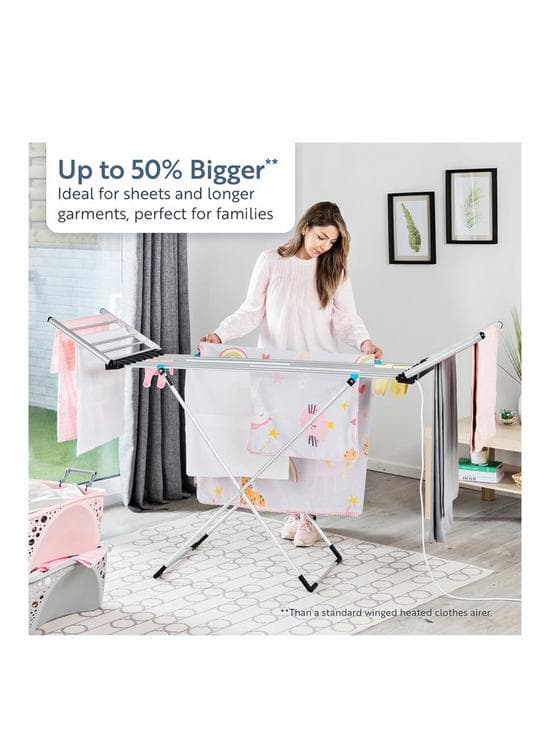
If you're a couple or on your own, you don't need a three-tier airer eating half the spare room. The Minky Wing has 12 metres of drying space in a winged design that folds genuinely flat, flat enough to slide behind a wardrobe. At 230W it's 6.1p an hour, so about 36p for a six-hour load.
Note that the lower wattage doesn't automatically mean cheaper per load: less power means longer drying, and 36p uncovered is barely better than a covered 300W airer's 32p. The reason to buy this is the footprint, not the running cost.
Capacity is roughly half a tiered airer, so no full family wash. For two or three people's laundry it's spot on, and it's light enough to move around a flat.
Fastest Drying
Lakeland Dry:Soon Drying Pod
£64.99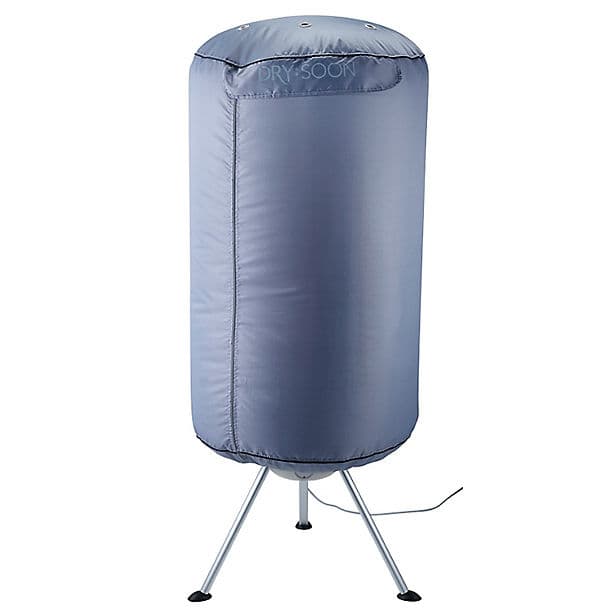
This is a different beast, and the one we'd steer most people away from. The Drying Pod isn't a bar airer, it's a fabric pod with a 1000W fan heater that sits over a frame. Warm air circulates around the clothes and light items can be dry in 1–2 hours, heavier stuff in 3–4.
The catch is the maths. At 1000W it's 26.3p an hour. A three-hour load is 79p. A condenser tumble dryer is 92p. A heat pump tumble dryer is 53p. So the Pod saves you 13p a load against the appliance it's meant to replace, and loses to a heat pump dryer outright, while taking three hours instead of ninety minutes.
Over a year that's £205 against £239 for the condenser, so you'd save £34. The £15 cover on a bar airer saves you more than that.
Buy it if drying speed in a small flat is the actual problem you're solving and you understand you're paying for it. Don't buy it thinking it's the cheap option. The fan is also audible, roughly a quiet bathroom extractor rather than a hairdryer.
Small Spaces
Dunelm Heated Ladder Airer
£35–45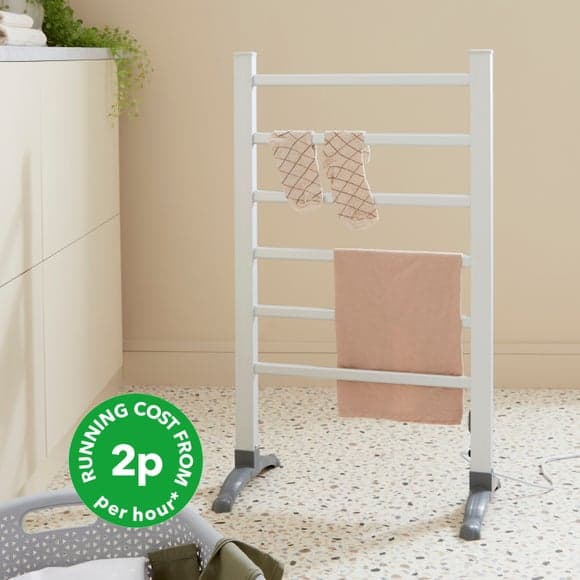
If you've got a bathroom alcove, a narrow utility, or genuinely nowhere for a full-size airer, the heated ladder is worth a look. Wall-mounted or freestanding, almost no floor space, and at 100W it's the cheapest thing here to run: 2.6p an hour, about 16p for a six-hour session.
The trade-off is capacity: five or six items, maximum. No bedding, no towels, no jeans. That £41 a year figure looks brilliant next to the dryer's £239 until you remember it isn't doing the same job. It's a supplementary dryer for shirts and underwear, or a heated towel rail that moonlights.
Large Families
Minky SureDri 4-Tier
£130–160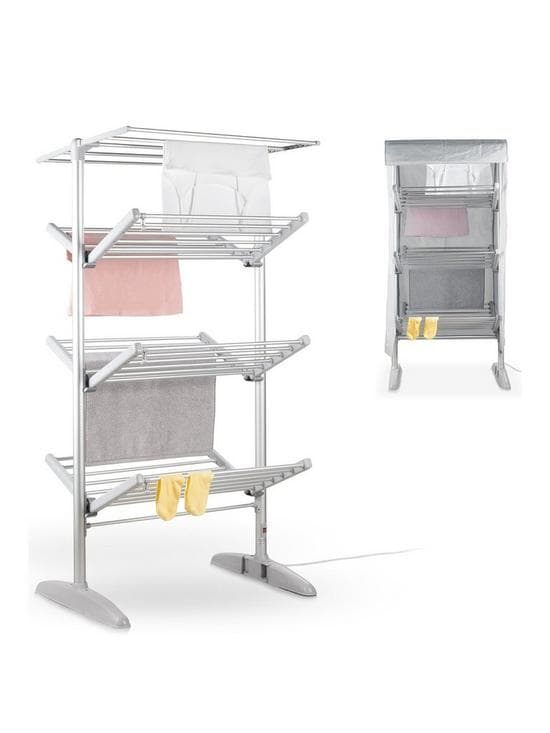

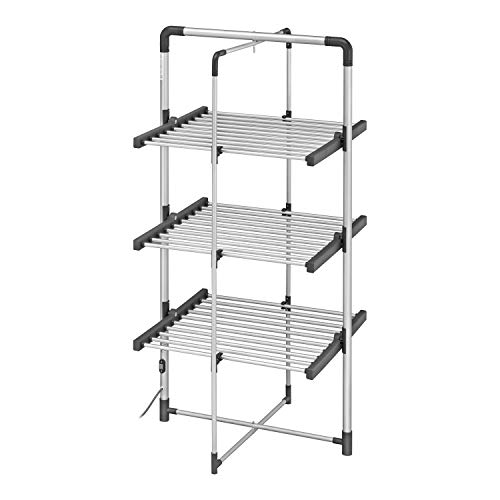
If you're doing laundry for four or more and space isn't the constraint, the Minky SureDri 4-Tier has the most drying space of any heated airer we know of: 23 metres. Four tiers means you can separate items properly, which matters more than people think, because clothes touching each other is the main reason a load takes eight hours instead of five.
It's the same 300W as the Lakeland and the Black & Decker, so the same 7.9p an hour, and it comes with a cover, which the others don't. That's £15 you don't spend and, more to the point, it's the £39-a-year accessory already in the box.
The downside is the footprint. It's big, it's heavy, and it's not something you shuffle around loaded with wet washing. Give it a permanent spot.
Use Your Own Airer
Minky SureDri Heat Pod
£40–50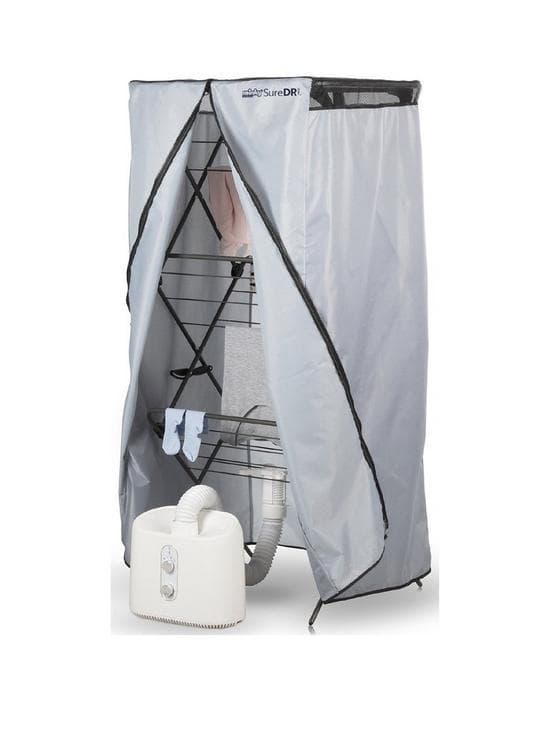


Already got a perfectly good airer? The Heat Pod is a heated cover that wraps around a standard airer and turns it into a heated one without buying a new frame. At 150W it's 4.0p an hour, so about 28p for a seven-hour load, which is the cheapest per-load figure here that still handles a real wash.
It's slower than a dedicated heated airer, because the warmth comes from the enclosed air rather than direct contact with hot bars. But if you've got an airer you like and don't fancy spending £100 plus on a new setup, this is the clever option, and it's the one that gets closest to "as cheap as the internet says heated airers are".
Running Cost Comparison
Costed at the Ofgem price cap rate of 26.32p/kWh (1 October to 31 December 2026).
As an Amazon Associate we earn from qualifying purchases.
The headline again, with the payback spelled out. A 300W airer with a cover costs £82 a year to run against £239 for a condenser tumble dryer, so you save £157 a year. A Black & Decker plus a cover is about £115 all in, which pays for itself in roughly nine months. A Lakeland Deluxe plus a cover is about £185, which takes about fourteen months. Move the load onto an overnight tariff and the running cost drops to about £25 a year, at which point the airer has paid for itself before the next winter either way.
What You Don't Need
- Don't buy a pod dryer to save money. 79p a load against 32p for a bar airer with a cover, and a heat pump tumble dryer beats it. Speed is the only reason to own one.
- Don't buy the airer and skip the cover. The cover is £15 and saves £39 a year, which is a better return than anything else on this page. If you're choosing between a better airer and a cover, buy the cheaper airer and the cover.
- Avoid airers that only heat every other bar. Some budget models do this and don't advertise it. Half your washing sits on cold metal and stays damp. Everything we've picked heats every bar.
- You probably don't need a dehumidifier alongside one. Use the cover, crack a window or run the extractor, and the moisture is handled. Don't let anyone sell you a £150 dehumidifier for a problem a £15 cover fixes, unless your house is already damp-prone.
- Ignore heated airers under £30. The elements fail inside a year and the frames wobble inside a month. The Minky Wing, around £59 on 18 September 2026, is about the floor for something that lasts.
If You've Got Solar Panels
A 300W draw is small. On a bright day even a modest array will cover it easily around the middle of the day, and that load costs you nothing at all. If you're working from home, or you can set the airer going before you leave, this is one of the easiest things to shift onto your own generation.
Be realistic about winter though. On a genuinely grey December afternoon a 4kW array might be doing 200–400W, so you'll be importing at least part of it. Spring and autumn are where this really works, and those are also the months when you can't just hang things outside. Read more in our solar panel costs guide or our guide to combining solar panels with a heat pump.
The Damp Problem (And How to Avoid It)
A full wash load releases roughly 2 to 2.5 litres of water as it dries, and that water has to go somewhere. Without a cover it goes into your room as humidity, hits a cold wall or window, condenses, and eventually turns into mould. This is the number one complaint about indoor drying and it's almost entirely avoidable.
- Use the cover. It keeps the warm, moist air around the clothes rather than dumping it into the room, and it's why the covered load dries in four hours instead of six.
- Ventilate. A window open a crack, or the bathroom extractor running, is enough. You don't need a gale.
- Use the bathroom if you can. It's already designed to cope with moisture and it's already got the fan.
- Only add a dehumidifier if your house is already damp-prone. A Victorian terrace with poor ventilation and single glazing might need one; a modern house with trickle vents won't. If you do, see our best dehumidifier for drying clothes guide. A dehumidifier plus a covered heated airer is the fastest indoor drying setup there is, but it's also two appliances drawing power, so cost it properly before you commit.
There's a genuine comfort angle here too. Humid air feels colder than dry air at the same temperature, so drying washing on radiators and open airers makes the house feel colder as well as damper, and tempts you to nudge the thermostat up. That's a cost that never shows up in a per-load calculation.
How to Choose: Quick Buying Guide
- Family of three or more with a spare room or utility: Black & Decker 3-Tier plus a cover and a plug-in timer. Same running cost as the Lakeland, £80–£100 cheaper. Take the Lakeland if you want the better frame and the built-in timer and you're happy paying for them.
- Couple or single: Minky Wing. Enough space, folds genuinely flat.
- Tiny flat, no space at all: heated ladder airer, wall-mounted in the bathroom. Accept that it's five or six items.
- Already own an airer you like: Minky SureDri Heat Pod. Cheapest per load of anything that handles a real wash.
- Large family, plenty of room: Minky SureDri 4-Tier. 23 metres and the cover's included, when you can get one.
- You need it dry fast and cost is secondary: Drying Pod, eyes open, at 79p a load.
Essential Accessory: The Cover
We've mentioned it throughout and it deserves its own section, because on the numbers it's the best-value thing on this page. A heated airer cover is a lightweight fabric tent, usually with a zip front, that goes over the whole airer. It costs £10–£18.
Without one, the warm air rises off the bars and dissipates into the room; the clothes mostly dry by contact, which is slow. With one, the warm air is trapped around the clothes and a six-hour load becomes roughly a four-hour load. Same watts, fewer hours, so 47p becomes 32p. At five loads a week that's £39 a year for a £15 purchase, and it pays back inside five months. Nothing else here comes close to that return.
Only the Minky SureDri 4-Tier includes one as standard. For everything else, a universal cover fits any standard 3-tier airer. The one we link to has been out of stock more often than not, so buy whichever universal cover is actually available; they're all the same fabric tent.
Tips for Best Results
- Spin at 1400rpm or higher before loading. The less water in the clothes, the fewer hours the airer runs, and hours are what you're paying for. This is free money.
- Use a timer or smart plug. Don't leave it running longer than the load needs, and if you're on a time-of-use tariff, use it to hit the cheap window.
- Heavy items on the bottom tier. Heat rises, so the top tier is warmest, but the bottom bars are in direct contact with whatever's on them. Towels and jeans low, shirts and underwear high.
- Don't overlap items. Air circulation is what turns a six-hour load into a four-hour one. Two batches beats one crammed batch, both for time and for cost.
- Rotate halfway through. Swap the middle and the outside, especially on a full load.
- Use the cover. We've said it five times. We'll keep saying it.
Frequently Asked Questions
For more ways to cut your energy bills, see our complete energy efficiency guide.
Our Top Picks
The best heated airers for every budget and household size.
Lakeland Dry:Soon Deluxe 3-Tier Heated Airer
£169.99The best heated airer overall. The timer is worth the premium: set it to run overnight on a cheap tariff and it switches off automatically.
Black & Decker 3-Tier Heated Clothes Airer
£99.99Nearly matches the Lakeland for £40–50 less. Best value heated airer on the market.
Minky Wing 12m Heated Clothes Airer
£59.00Best budget option. Lower capacity than the Lakeland but folds flat and costs less to buy and run.
Lakeland Dry:Soon Drying Pod
£64.99Fastest drying option: light items in 1–2 hours. Higher running cost (10p/hr) but useful when you need clothes dry quickly.
Dunelm Heated Ladder Airer
£35–£45Cheapest to run at about 1p/hour. Ideal for small spaces: 5–6 items max, not for full loads.
Minky SureDri 4-Tier Heated Airer with Cover
£130–£160Most drying space of any heated airer. The cover is included, which saves £15 and halves drying time.
As an Amazon Associate we earn from qualifying purchases. Prices and stock are checked against Amazon every few hours and may have changed since.
