The Complete Guide to Making Your UK Home Energy Efficient
A step-by-step guide to making your UK home more energy efficient.
The Complete Guide to Making Your UK Home Energy Efficient
Energy bills in the UK have roughly doubled since 2021. The average household now spends around £1,700 to £2,000 a year on gas and electricity, and for older, poorly insulated homes the figure is considerably higher. The good news is that most UK homes have significant room for improvement — and the upgrades that make the biggest difference are well understood, well funded by government grants, and increasingly affordable.
This guide covers the full picture: from no-cost behaviour changes and cheap draught-proofing right through to heat pumps, solar panels, and whole-house retrofit. We explain what to do, in what order, what it costs, and what you can realistically save at each stage.
The golden rule: reduce demand first, then upgrade your heating system, then generate your own energy. Doing it in the wrong order wastes money.
Understanding EPC Ratings: A to G Explained
Every home sold or let in the UK requires an Energy Performance Certificate (EPC). The certificate gives your home a rating from A (most efficient) to G (least efficient) and estimates annual energy costs. Understanding your rating is the starting point for any improvement plan.
| EPC Band | SAP Score | Typical Annual Energy Cost | What It Means |
|---|---|---|---|
| A | 92–100 | £500–£800 | New-build standard — very well insulated, often has renewables |
| B | 81–91 | £800–£1,100 | High performance — good insulation, modern heating |
| C | 69–80 | £1,100–£1,500 | Average new-build or well-improved older home |
| D | 55–68 | £1,500–£2,000 | UK average — most homes fall here |
| E | 39–54 | £2,000–£2,800 | Below average — significant improvements possible |
| F | 21–38 | £2,800–£4,000 | Poor — likely uninsulated, old heating system |
| G | 1–20 | £4,000+ | Very poor — solid walls, no insulation, aged boiler |
Around 60% of UK homes are rated D or below. The government's stated target is for all homes to reach EPC C by 2035, and landlords in England are already facing minimum EPC requirements. If your home is rated D, E, F, or G, you are likely eligible for one or more grant schemes — see our ECO4 grant guide and Great British Insulation Scheme guide for details.
Your EPC also includes a list of recommended improvements with estimated costs and savings. It is a useful starting point, but it is not always ordered optimally — this guide will help you prioritise more effectively.
Stage 1: Quick Wins (Under £500, Some Free)
Before spending money on insulation or new equipment, address the easy wins. These measures cost little or nothing, can be done this weekend, and collectively save a meaningful amount.
Draught-Proofing
Uncontrolled air leakage accounts for roughly 20% of heat loss in a typical UK home. Draught-proofing is one of the most cost-effective measures available. Key areas to address:
- External doors: Fit brush or rubber seals to the frame and a door sweep to the bottom. Cost: £10–£30 per door.
- Letterboxes and keyholes: Fit a letterbox draught excluder and keyhole cover. Cost: £5–£15.
- Sash windows: Brush pile seals fitted into the meeting rail and sides. Cost: £15–£25 per window as a DIY job.
- Floorboards: Fill gaps with flexible filler or sealant. Cost: £10–£30 for materials.
- Loft hatch: Fit foam tape around the frame and add insulation board to the top of the hatch. Cost: £20–£40.
- Pipework and cable entry points: Fill gaps around pipes entering from outside with expanding foam. Cost: £5–£10.
Total DIY draught-proofing for a typical semi-detached house: around £100–£200 in materials. The Energy Saving Trust estimates annual savings of £125–£175 for a typical detached house.
Install a Smart Thermostat
A smart thermostat such as a Hive, tado, or Nest allows you to control your heating remotely, set schedules based on your actual routine, and — in the case of tado and Nest — use weather compensation or geofencing to avoid heating an empty home. Studies by the Energy Saving Trust suggest smart thermostats save 10–15% on heating bills, equating to roughly £130–£200 per year for the average household.
Cost: £150–£250 installed, though many energy suppliers offer subsidised or free installation. Payback period: typically 1–2 years. See our guide to the best smart thermostats for our top picks. Pairing a smart thermostat with an energy monitor lets you see exactly where your electricity goes.
Switch to LED Lighting
LED bulbs use around 75% less electricity than traditional incandescent bulbs and last up to 25 times longer. Replacing all bulbs in a typical home costs £30–£80 and saves approximately £55–£70 per year on electricity bills at current rates. This is genuinely a no-brainer — if you have not already made the switch, do it today.
Turn Down Your Boiler's Flow Temperature
This is one of the most impactful quick wins for homes with a modern condensing boiler, and almost nobody does it. Most combi and system boilers leave the factory set to a flow temperature of 70–80°C. Reducing this to 55–60°C forces the boiler into condensing mode more of the time, dramatically improving efficiency from around 80% to over 90%.
The Electrification of Heat project (run by the Department for Energy Security and Net Zero) found that lowering flow temperature to 55°C saves an average of £112 per year with no noticeable loss of comfort in well-insulated homes.
How to do it: locate the flow temperature dial on your boiler (often labelled with a radiator symbol or a tap/shower symbol), and turn it down. If you have a combi boiler, there are typically two dials — one for heating and one for hot water. Reduce the heating dial only; leave the hot water dial at 60°C (this prevents Legionella growth). The process takes two minutes and costs nothing.
Switch to a Heated Clothes Airer
If you use a tumble dryer, this is one of the biggest single savings available. A heated clothes airer costs around 3p per hour to run versus 60p or more for a tumble dryer — a saving of roughly £100–£200 per year for a family doing 5 loads per week. See our best heated clothes airer guide for our top picks.
Bleed Your Radiators and Add Booster Fans
Cold spots on radiators mean trapped air — bleeding them takes 2 minutes and costs nothing. For rooms with high ceilings or radiators under windows, a radiator booster fan pushes warm air into the room instead of letting it rise to the ceiling.
Stage 2: Medium Investments (£500–£5,000)
Once you have addressed the quick wins, the next layer of improvement focuses on the fabric of your home — how well it holds heat. These measures have payback periods of 3–10 years and are often partially or fully funded through government schemes.
Loft Insulation
If your loft has less than 270mm of insulation (or none at all), topping it up is the single highest-return insulation measure for most UK homes. Around 25% of heat is lost through an uninsulated roof.
- Cost: £300–£500 for a professional installation in a typical semi-detached house. Many homes qualify for free installation through the Great British Insulation Scheme or ECO4.
- Annual savings: £150–£250 depending on house size and previous insulation levels.
- Payback period: 2–3 years if self-funded; immediate if grant-funded.
- Considerations: Ensure the loft hatch is also insulated and draught-proofed (see Stage 1). If you use your loft for storage, consider rigid foam board between the joists topped with 100mm mineral wool.
Cavity Wall Insulation
Most UK homes built between 1930 and 1990 have cavity walls — two leaves of brick with a gap between them. Filling that cavity with mineral wool or EPS beads is quick (typically a few hours), causes minimal disruption, and typically improves an EPC by one full band.
- Cost: £400–£800 for a semi-detached house if self-funded. Free for eligible households through ECO4 or GBIS.
- Annual savings: £150–£300.
- Payback period: 2–4 years if self-funded.
- Considerations: Not suitable for all properties. Homes in very exposed locations, or those with defective mortar, may be at risk of moisture penetration. Always use a registered installer (CIGA-guaranteed scheme). Check your property's suitability with a free survey from an Energy Saving Trust advice centre.
Double Glazing and Secondary Glazing
Single glazing accounts for around 10% of heat loss in a typical home. If your property still has single-glazed windows, upgrading to double or triple glazing makes a meaningful difference to both comfort and energy bills.
- Double glazing (full replacement): £400–£600 per window installed. A typical 3-bed semi might have 8–10 windows, giving a total cost of £3,500–£6,000.
- Annual savings: £110–£160 for a full house of windows.
- Payback period: 20–30 years for double glazing alone — making this primarily a comfort and noise upgrade rather than a pure energy investment.
- Secondary glazing: A much cheaper alternative for listed buildings or period properties where replacing original windows is not permitted. Secondary glazing costs £100–£300 per window and provides similar thermal and acoustic performance to double glazing.
Hot Water Cylinder Insulation and Heating Controls
If you have a hot water cylinder, check it has a proper jacket (at least 80mm thick). Bare or poorly insulated cylinders lose a surprising amount of heat. A cylinder jacket costs around £20 and saves around £40–£60 per year. Also fit a cylinder thermostat (around £20–£30) set to 60°C if one is not already present.
Stage 3: Major Upgrades (£5,000–£25,000+)
The major upgrades are transformational — they can cut your bills by 50–80% and eliminate or drastically reduce your home's carbon emissions. They require more planning, higher upfront costs (though significant grants are available), and in some cases changes to your heating distribution system.
Air Source Heat Pump
An air source heat pump (ASHP) extracts heat from outside air and moves it into your home, using electricity rather than burning gas. Modern heat pumps are efficient even at temperatures as low as -15°C, and in the UK climate they typically achieve a Coefficient of Performance (COP) of 2.5–4.0 — meaning for every £1 of electricity used, you get £2.50–£4.00 worth of heat.
- Cost: £8,000–£14,000 installed, before grants.
- Boiler Upgrade Scheme grant: £7,500 (England and Wales). This brings the net cost down to roughly £500–£6,500.
- Annual savings vs gas boiler: Highly variable. In a well-insulated home, running costs can be lower than gas. The gap narrows as gas prices fall and electricity prices come down with more renewables on the grid.
- Best suited to: Well-insulated homes with EPC C or above (or homes being upgraded to that standard simultaneously). Homes with underfloor heating or oversized radiators.
See our air source heat pump costs guide and heat pump vs gas boiler comparison for detailed analysis. For the grant application process, see our Boiler Upgrade Scheme guide.
Solar Panels
A 4kWp solar panel system generates around 3,400–4,200 kWh per year in most parts of the UK — roughly equivalent to a third to a half of a typical household's annual electricity consumption. Solar panels carry 0% VAT (since February 2024) and have payback periods of 7–11 years at current electricity prices.
- Cost: £5,000–£9,000 for a typical 4kWp system (10–12 panels).
- Annual savings: £600–£900, combining self-consumption savings and Smart Export Guarantee payments for exported electricity.
- With battery storage: Add £2,500–£5,000 for a 5–10kWh battery; self-consumption rises from around 40% to around 70–80%, improving savings by £200–£400 per year.
See our solar panel costs guide and solar battery storage guide for full details.
Solid Wall Insulation
Around 7 million UK homes have solid walls — typically Victorian and Edwardian properties built before the cavity wall era. These walls lose roughly twice as much heat as cavity walls and cannot be insulated by injecting foam or beads. Instead, insulation boards must be fixed to the inside or outside of the wall.
- External wall insulation (EWI): Insulation boards fixed to the outside of the wall and finished with render or cladding. Cost: £8,000–£22,000 for a semi-detached house. Saves £200–£500 per year. Significantly disrupts the external appearance of the property.
- Internal wall insulation (IWI): Insulation boards fixed inside each external wall. Cost: £5,000–£15,000. Reduces internal floor area slightly (typically 50–100mm per wall). Less disruptive to the external appearance.
- Grant funding: Solid wall insulation is a priority measure under ECO4 and GBIS, and significant funding is available for eligible households. The Social Housing Decarbonisation Fund also covers many housing association and council properties.
The Whole-House Retrofit Approach: PAS 2035
For homeowners undertaking multiple upgrades — particularly replacing a heating system alongside insulation — the gold standard approach is a PAS 2035-compliant whole-house retrofit. PAS 2035 is a British Standard published in 2019 that sets out a framework for assessing and improving domestic buildings in a coordinated, fabric-first way.
The key principle of PAS 2035 is that improvements must be designed as a whole, not bolt-on individual measures. Critically, it prohibits fitting a heat pump in a poorly insulated home without addressing the insulation first — this protects both the homeowner (from a system that cannot perform) and the installer (from liability).
Under PAS 2035, a Retrofit Assessor surveys the property and produces a Whole House Plan. A Retrofit Coordinator then oversees the delivery. All work funded through government schemes (ECO4, GBIS) must comply with PAS 2035.
For homeowners funding their own retrofit, you are not obliged to use PAS 2035, but the structured approach it mandates is still worth following. The Energy Saving Trust and Trustmark both offer guidance and lists of accredited assessors.
A Suggested Upgrade Order for a Typical 1930s Semi
A typical 1930s semi-detached house in the UK is EPC D or E, has cavity walls, a gas combi boiler, partial loft insulation, and single or old double-glazed windows. Below is a realistic, prioritised improvement plan:
| Priority | Measure | Typical Cost (Self-Funded) | Annual Saving | Notes |
|---|---|---|---|---|
| 1 | Draught-proofing | £100–£200 | £125–£175 | DIY weekend job |
| 2 | Smart thermostat | £150–£250 | £130–£200 | Often subsidised by energy supplier |
| 3 | Reduce boiler flow temperature | Free | £100–£150 | Takes 2 minutes |
| 4 | LED lighting | £30–£80 | £55–£70 | Immediate payback |
| 5 | Loft insulation top-up to 270mm | £300–£500 (or free via GBIS) | £150–£250 | Check grant eligibility first |
| 6 | Cavity wall insulation | £400–£800 (or free via ECO4/GBIS) | £150–£300 | Check grant eligibility first |
| 7 | Upgrade to A-rated condensing boiler (if boiler is old) | £1,500–£3,000 | £100–£200 | Only if heat pump is not yet feasible |
| 8 | Double glazing (priority: worst performing windows first) | £400–£600 per window | £15–£20 per window | Comfort and noise benefit outweighs pure financial return |
| 9 | Air source heat pump | £500–£6,500 after £7,500 BUS grant | Varies — model with heat pump calculator | Do after insulation measures are in place |
| 10 | Solar panels (4kWp) | £5,000–£9,000 at 0% VAT | £600–£900 | Even better if you have a heat pump (self-consume more) |
Following this sequence for a typical 1930s semi, a homeowner starting at EPC E could realistically reach EPC C after steps 1–6, and EPC B or above after steps 9–10 — cutting energy bills from around £2,200 to under £800 per year.
How to Prioritise Based on Budget
Not everyone can pursue the full sequence above. Here is a budget-based framework:
Under £500
Focus entirely on behaviour changes, draught-proofing, LED lighting, reducing boiler flow temperature, and smart thermostat. These measures cost very little and can save £300–£500 per year. Also apply for any free grants you may be entitled to — cavity wall and loft insulation are free for millions of households through ECO4 and GBIS.
£500–£2,000
Add loft insulation and cavity wall insulation if not already grant-funded. Consider a smart heating system with thermostatic radiator valves (TRVs) on every radiator, which typically saves a further £70–£150 per year.
£2,000–£8,000
At this level, solar panels become a realistic option for many households. A 3kWp system (8–9 panels) can be had for around £4,500–£6,000 at 0% VAT and has a payback period of 7–9 years. Alternatively, invest in improving the worst-performing windows or addressing floor insulation (suspended timber floors can lose 15% of heat).
£8,000 and above
With the £7,500 Boiler Upgrade Scheme grant, an air source heat pump is now within reach for many households at a net cost of £500–£6,500. The combination of well-insulated fabric, a heat pump, and solar panels is the destination most homes should be aiming for — achieving near-zero running costs and a very low carbon footprint. Use our heat pump savings calculator to model the numbers for your specific home.
Key Resources and Further Reading
- Energy Saving Trust (energysavingtrust.org.uk) — impartial advice, grant finder tool, and free home energy advice in Scotland through Home Energy Scotland.
- GOV.UK — Find energy grants for your home — the government's official eligibility checker for ECO4, GBIS, and BUS.
- Ofgem — regulates energy suppliers and administers the Boiler Upgrade Scheme and Smart Export Guarantee.
- Trustmark — the government-endorsed quality scheme for home improvement contractors. Always use a Trustmark or MCS-registered installer for major works.
- MCS (Microgeneration Certification Scheme) — mandatory certification for heat pump and solar panel installers. Check mcsregistered.com before appointing any installer.
For specific measures, see our detailed guides: air source heat pump costs, solar panel costs, loft insulation costs, cavity wall insulation costs, and Boiler Upgrade Scheme application guide.
Quick Wins for Energy Efficiency
These low-cost products make a real difference to your energy bills — most pay for themselves within a few months.
Stormguard Door Draught Seal Kit
£10–£18Draughty doors are one of the cheapest heat losses to fix. This kit seals one door completely.
Exitex Letterbox Draught Excluder
£8–£14Letterboxes are a surprisingly large source of draughts — this is a quick, cheap improvement.
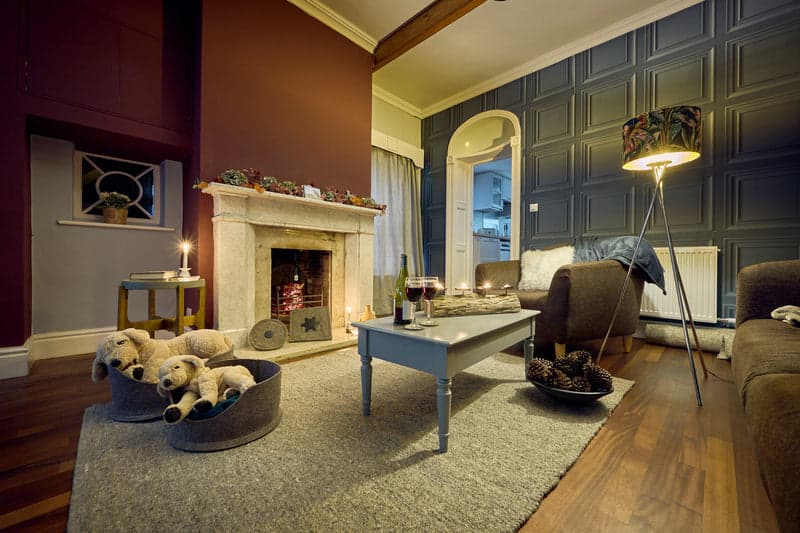
Chimney Sheep Chimney Draught Excluder
£20–£35An open chimney loses as much heat as leaving a window open. This is one of the best draught-proofing investments.
OWL Intuition-e Energy Monitor
£50–£80See exactly how much electricity your heat pump or home uses in real time — essential for tracking savings.
As an Amazon Associate we earn from qualifying purchases. Product prices and availability are accurate as of the date of publication and may change.