
This page is for owners, not buyers
GivEnergy Ltd (Companies House 11571089), the company that built and sold the All-In-One, has been in administration since 9 April 2026. GivEnergy Commercial Limited (14546237) is in liquidation. We've stopped writing this page as a buying recommendation and rewritten it for the people who actually need it: owners, and anyone sitting on a live quote. If you're shopping for a new battery, skip to what to buy instead.
The Short Answer
Your battery keeps working. Administration is a company event, not a hardware event: the unit still charges and discharges to the schedule it already has, the GivEnergy Portal is still live, and the firmware library is still up. What you've lost is the warranty as a reliable safety net, because a manufacturer warranty is a contractual claim against a company, and claims against a company in administration sit a long way behind the secured creditors. So stop treating GivEnergy as your fallback and start treating your installer, your card provider and your insurance-backed workmanship warranty as the fallback instead. The checklist below takes about an hour and is worth doing this month rather than in 2030.
What Companies House actually says
There's a lot of loose talk about "GivEnergy going bust". The register is more specific than that, and the difference matters if you're chasing a warranty.
| Company | Number | Status |
|---|---|---|
| GIVENERGY LTD | 11571089 | In administration (administration started 9 April 2026) |
| GIVENERGY COMMERCIAL LIMITED | 14546237 | Liquidation |
| GIVENERGY GROUP LIMITED | 14404895 | Active |
| GIVENERGY PROPERTY LIMITED | 14540802 | Active |
| GIVENERGY SOFTWARE LIMITED | 14899764 | Active |
Source: Companies House, checked 18 September 2026. The appointment of an administrator was registered on 21 April, a statement of the administrator's proposals was filed on 18 May, and the result of the meeting of creditors was filed on 10 June 2026.
So the trading company that sold most of the UK's All-In-Ones is the one in administration. The holding company and the software company are still listed as active, givenergy.com is still live, and the All In One 2 is still being sold. We're not going to guess how that resolves. What we will say plainly is this: nobody can promise you today that a warranty claim made in 2029 gets paid. Plan as though it won't, and be pleasantly surprised if it does.
What still works
- The hardware. It's LFP cells, an inverter and a battery management system in a box on your wall. An insolvency doesn't reach inside any of that.
- The schedules you've already set. Charge and discharge windows live on the unit, so it carries on doing what you told it to do.
- The GivEnergy Portal and app. Both were live when we checked on 18 September 2026 (givenergy.cloud), along with the firmware download library and the support knowledge base on givenergy.com.
- Your export payments. The Smart Export Guarantee is a contract between you and your electricity supplier. GivEnergy has nothing to do with it and can't affect it.
What is genuinely at risk
- The manufacturer warranty. Whatever length your paperwork states, it's an unsecured claim now. Treat it as a bonus, not a plan.
- Spare parts. The cells will outlast everything else. The parts that actually fail on home batteries are inverter boards, fans and BMS modules, and those come from the manufacturer.
- The cloud service. Servers and APIs cost money to run every month. They're live today. Nobody has guaranteed 2031.
- Cloud-dependent tariff control. If your battery is optimised by a third party talking to GivEnergy's cloud API, that link is only as durable as the cloud. A system controlled locally over your own network is less exposed. Ask your installer which yours is, because most owners genuinely don't know.
Your warranty: the honest position
Here's the bit nobody explains properly. A manufacturer warranty is a contract with the manufacturer. When that manufacturer is in administration, you join the queue of unsecured creditors, and unsecured creditors in an administration typically get pennies, if anything. That's not scaremongering, it's just how the insolvency waterfall works.
But the manufacturer warranty was never your only cover, and for most homeowners it was never even the most useful one.
Your contract is with your installer, not GivEnergy. You bought an installed system from a company, and under the Consumer Rights Act 2015 what they supplied has to be of satisfactory quality and last a reasonable time. That claim is against the installer and it doesn't care what happened to the manufacturer. You generally have six years from the breach to bring it in England and Wales, five in Scotland.
Check how you paid. If any part of the purchase went on a credit card, Section 75 of the Consumer Credit Act 1974 can make your card provider jointly liable with the supplier for the whole thing. There are value thresholds and conditions, so ask your card provider where you stand rather than assuming. If you paid by debit card, chargeback may be an option but it's time-limited and far weaker.
Find your insurance-backed warranty. For years MCS-certified installers had to belong to a consumer code, in practice RECC or HIES, and those codes require workmanship cover that's underwritten by an insurer so it survives the installer going under. MCS's redeveloped scheme has since dropped that requirement, but most GivEnergy systems went in under the old rules, so if you had an MCS install there should be a certificate. A lot of people never registered theirs and don't know it exists.
What to do this month if you own one
- Gather the paperwork and get it off the cloud. MCS certificate, invoice, warranty document, serial numbers, installer's company name and number. Put it in a folder that doesn't depend on anyone else's server.
- Find your consumer code and your insurance-backed warranty certificate. RECC or HIES. If you can't find it, ring the installer and ask for a copy, then register it if you never did.
- Phone your installer and ask a direct question. "If the inverter board fails in 2028, what happens?" Some of the bigger installers have quietly built parts stocks. Some will tell you honestly that you'd be paying. Either answer is useful.
- Work out whether your control is cloud-based or local, and ask what the local option would look like if the portal went dark.
- Don't panic-replace it. A working battery with a shaky warranty is worth far more than the £4,000 to £6,000 you'd spend swapping it for a new one. Replace it when it actually fails, not because of a headline.
If you've been quoted an All In One
GivEnergy is still selling, installers are still quoting the All In One 2, and the hardware is the same hardware it was in March. That's all true. What's changed is that you're being asked to buy a ten-year relationship from a group whose main trading company is in administration, so the questions you ask should change too:
- Which company is the warranty actually with? Get the legal entity name and company number in writing, then look it up on Companies House yourself. It takes two minutes.
- What does the installer guarantee on their own account, independently of the manufacturer, and for how long?
- Is there an insurance-backed warranty certificate, and who underwrites it?
- Is the price reflecting the risk? If the quote isn't meaningfully cheaper than an equivalent Fox ESS or Sunsynk system, you're carrying the uncertainty for free.
If the answers are vague, walk away. There is nothing the All In One does for a typical UK home that a Fox ESS or Sunsynk system can't, and no amount of good hardware fixes a warranty you can't enforce.
What you actually bought
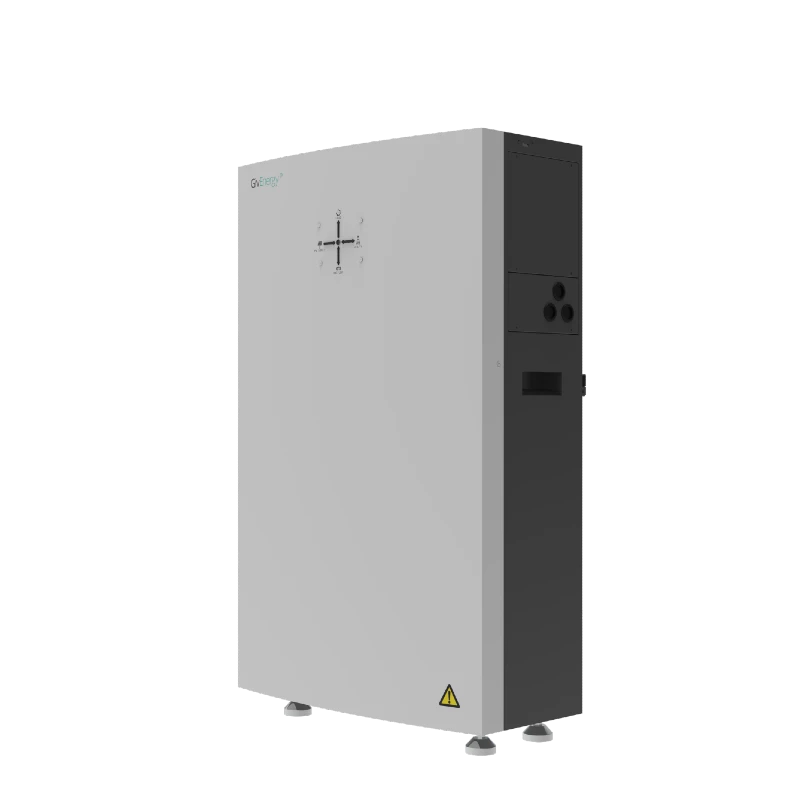
Worth clearing up, because plenty of sites get this wrong and this one did too until today: the All In One is not a range of 5.0, 8.2, 9.5 and 13.5 kWh units. Those smaller numbers are GivEnergy's separate battery modules, the ones that pair with a standalone hybrid inverter. The All In One is a single 13.5 kWh box with the inverter built into it.
| Part | Capacity | What it does |
|---|---|---|
| All In One 2 | 13.5 kWh usable (15.9 kWh design energy) | Inverter, battery and controls in one IP65 enclosure, indoor or outdoor |
| Expansion Battery | +13.5 kWh each, up to two per system | Takes one All In One 2 up to 40.5 kWh |
| Gateway 2 | n/a | Whole-home backup and load control, with switchover on grid failure |
| MPPT unit | n/a | Turns an AC-coupled All In One 2 into a true DC-coupled hybrid |
Figures from givenergy.com/all-in-one/ and the All In One 2 product page, checked 18 September 2026. If you own the original All In One rather than the All In One 2, it's the same 13.5 kWh architecture with the older Giv-Gateway.
The cells are lithium iron phosphate, which is the good kind. LFP tolerates a daily deep cycle far better than the NMC chemistry used in some older home batteries, and it's why almost every serious home battery sold in the UK now uses it. That part of the product was never the problem.
What to buy instead
If you're buying a battery today rather than nursing one you already own, the realistic UK shortlist is short:
- Tesla Powerwall 3: the most expensive by a distance, but whole-home backup as standard and the strongest company behind it. Read our payback section before you commit, because it's a resilience purchase, not an investment.
- Fox ESS: modular, mid-price, decent UK installer coverage. FOXESS UK LTD (12768415) was active on Companies House when we checked on 18 September 2026, with no insolvency filings.
- Sunsynk: cheaper, big installer base, popular with self-builders and people who like to tinker. SUNSYNK UK LTD (08778087) and SUNSYNK GROUP LIMITED (15107233) were both active on the same date.
- Duracell Energy: newer here, keenly priced, fewer installers. Worth knowing before you lean on the name: there's no company called Duracell Energy on the UK register. It's a licensed brand, not the battery company you're picturing, so ask which legal entity your warranty is actually with and look that one up.
Our honest advice hasn't changed since April: pick the installer first and the badge second. The thing most likely to go wrong with a home battery in the next decade is a poor install or a company that stops answering the phone, and reading a datasheet only protects you from one of those. For the wider picture, see our solar battery storage guide and our GivEnergy vs Tesla Powerwall comparison.