
The Short Answer
For most people, the De'Longhi Magnifica S (around £295) is the one to buy: a bean-to-cup machine that grinds fresh beans, makes a proper espresso, and at around 19p a cup pays for itself against a café habit fast.
- Philips 3300 LatteGo (£415): if you want one-touch lattes.
- De'Longhi Dedica: for learning espresso, though Amazon has it out of stock at the time of writing.
- Russell Hobbs Chester (£60): on a budget, it grinds and brews fresh filter for about 10p a cup.
The thing worth knowing before you spend: the machine barely matters next to how you make your coffee. Pods cost roughly two and a half times what fresh beans do.
We pulled live prices and review counts for ten coffee machines worth considering on Amazon UK, across every type: bean-to-cup, pods, manual espresso and filter. Then we did the bit that actually matters for your wallet, the real cost per cup, because that's what decides whether a machine is a bargain or a money pit. Here's the at-a-glance table, then the picks grouped by type.
All 9 Products Compared
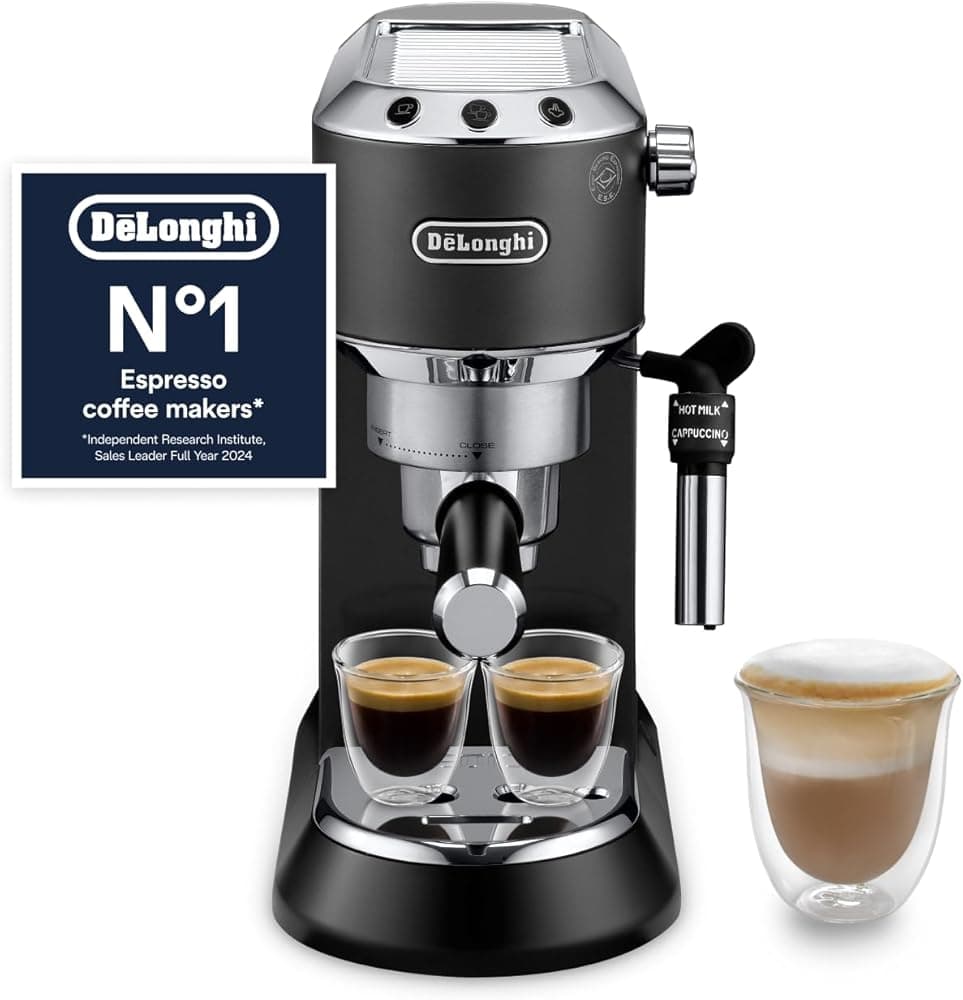
De'Longhi Dedica Style
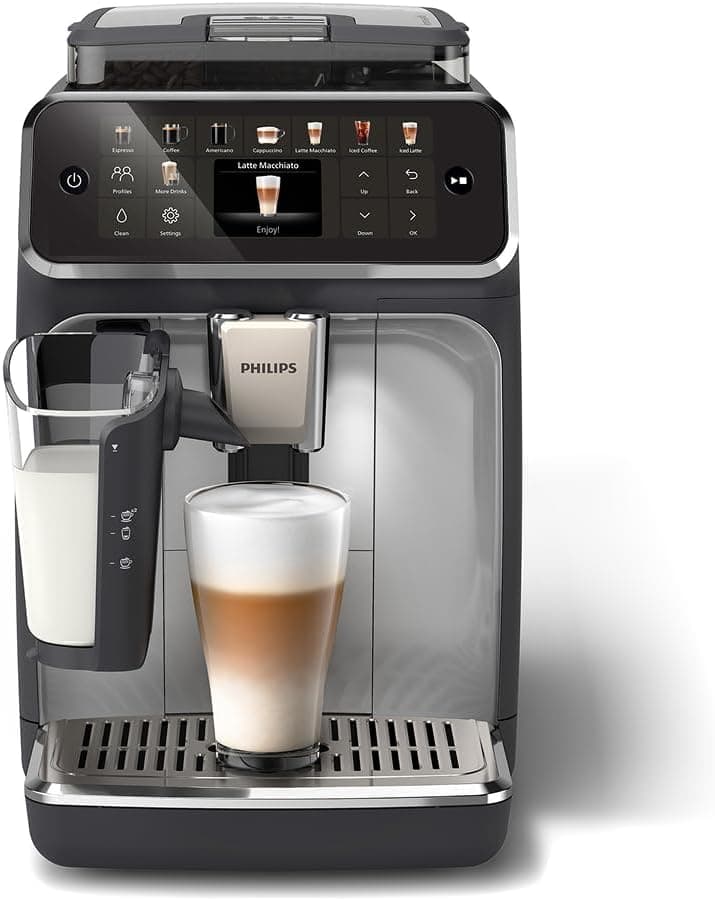
Philips 3300 Series LatteGo
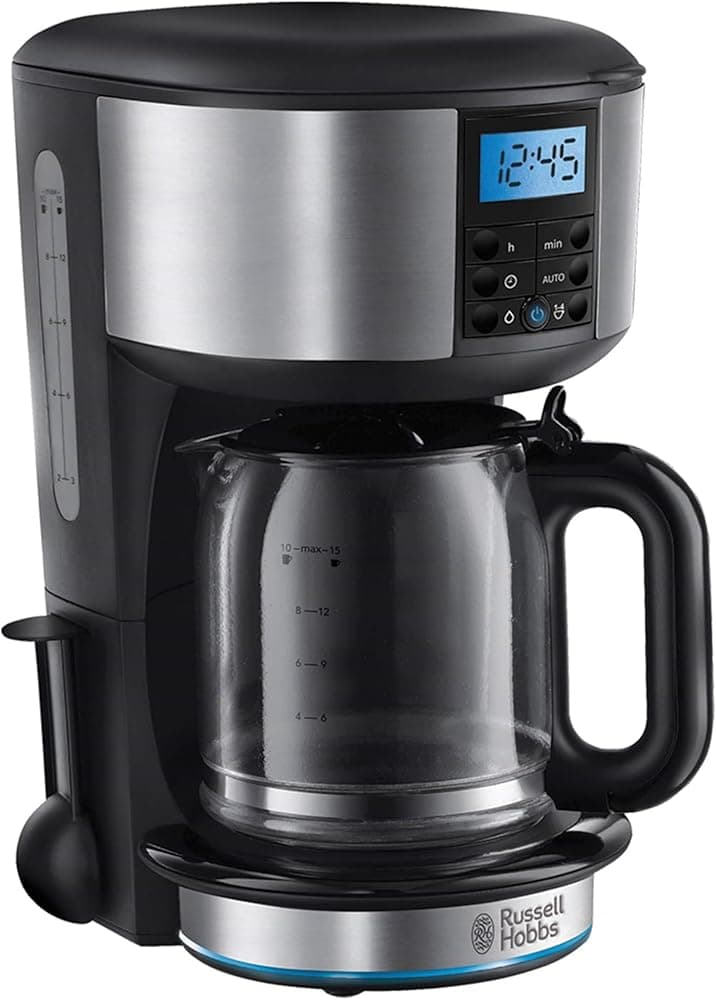
Russell Hobbs Buckingham Filter
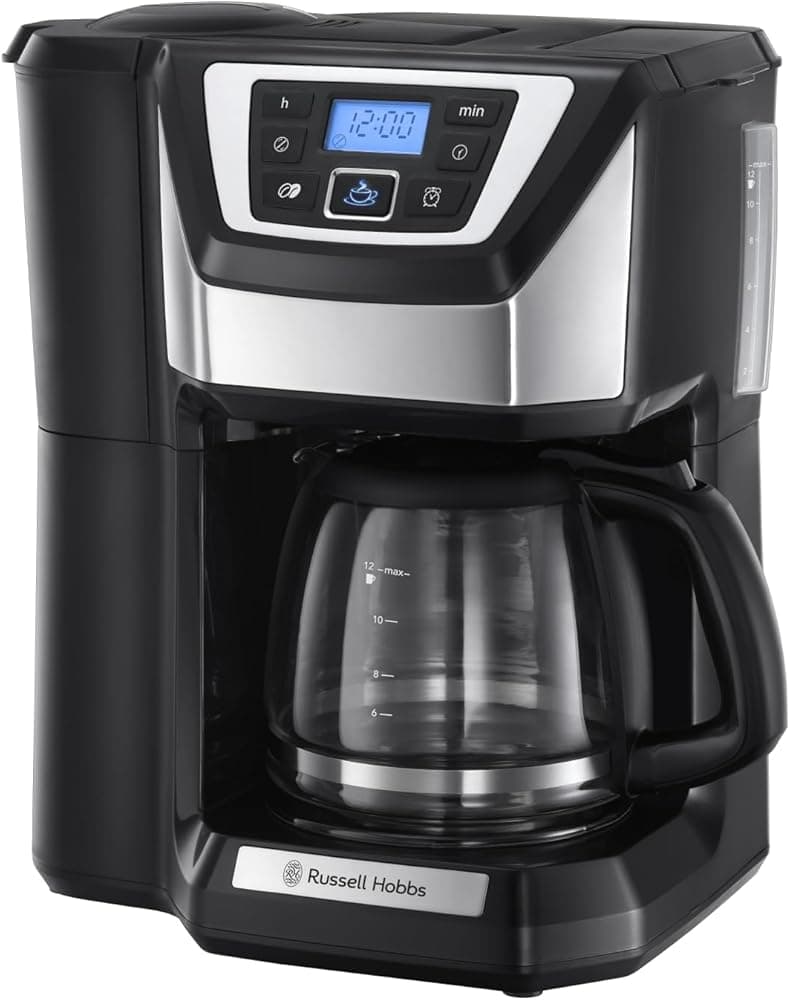
Russell Hobbs Chester Grind & Brew
Sage Barista Express
As an Amazon Associate we earn from qualifying purchases. Prices correct as of 19 September 2026, checked against Amazon every few hours.
Is It Worth Buying a Coffee Machine?
If you currently buy coffee out, almost certainly yes, and the maths is faster than people expect. A chain latte is around £3.50. The same drink from a bean-to-cup machine costs roughly 19p in beans, milk and electricity. Drink two a day and you're choosing between about £2,500 a year buying out and £130 making it at home. That's roughly £6.60 a day saved, so the £295 Magnifica has paid for itself in about a month and a half, and even the £415 Philips takes only about two months.
The honest exception is if you already make coffee cheaply at home with a cafetiere or an old filter machine. Then a fancy bean-to-cup is about quality and convenience, not saving money, so buy it on those terms. Put your own habit in and see:
Coffee Cost Calculator
What you'd spend making it at home versus buying the same coffees out, and how fast the machine pays for itself.
Bean-to-cup, fresh beans: ~19p a cup
You'd save, versus buying out
£2416 / year
The De'Longhi Magnifica S pays for itself in about 1 month at this rate.
Making it at home
£139/yr
Buying the same out
£2555/yr
Cost per cup includes the coffee (beans ~15-25p, pods ~36-60p, ground filter ~5-10p) plus about 1p of electricity at the Ofgem cap (26.32p/kWh, 1 October to 31 December 2026). Milk, if you take it, adds a few pence either way. The payback assumes you'd otherwise buy those cups out.
The other thing the maths makes obvious is that the type of coffee matters far more than which machine you buy. Here's the annual spend at two cups a day, by method:
What a cup actually costs
Annual spend at two cups a day, by how you make it. The machine you buy barely matters next to the difference between brewing at home and buying out.
As an Amazon Associate we earn from qualifying purchases.
Which Type of Coffee Machine?
Four families, and the right one depends on what you drink and how much faff you'll tolerate:
- Bean-to-cup (Magnifica, Philips). Beans in the top, coffee out the bottom, fresh-ground every time. Dearest to buy, cheap per cup, best all-round if you drink a few a day. Get one with an auto milk system if you live on lattes.
- Manual espresso (Dedica, Sage). You grind, dose and pull the shot yourself. Cheapest route to genuine espresso and the most satisfying, but there's a learning curve and you'll want a separate grinder.
- Pods (Nespresso). The most convenient and the most expensive per cup. Fine if you drink one or two and value zero effort. Stick to OriginalLine so you can buy cheaper third-party pods.
- Filter / grind & brew (Russell Hobbs). Big jugs of black coffee for pennies. No espresso, no milk, but the cheapest way to drink real coffee, especially the grind-and-brew models that take whole beans.
Do You Need a Separate Grinder?
This is the question that catches people out. Bean-to-cup machines and the Sage Barista Express have a grinder built in, so you don't need anything else. Pod and filter machines don't grind, and you don't need them to. The trap is the cheap manual espresso machine: a Dedica or a Bambino Plus makes brilliant espresso, but only with freshly ground beans at the right fineness. Feed it stale supermarket pre-ground and you'll be disappointed.
So if you're buying a manual espresso machine, budget for a burr grinder too (a decent one is £40 to £150), or accept you'll only ever use pre-ground and buy a grind-and-brew filter machine instead. The grinder genuinely matters as much as the machine for espresso.
Milk: Manual Wand vs Automatic
If you drink black coffee or straight espresso, ignore this section, almost any machine here will do. If you live on lattes and flat whites, milk is what you're really paying extra for:
- Manual steam wand (Magnifica, Dedica, Barista Express). You froth the milk yourself. More control, a bit of a knack, and the cheapest option.
- Automatic texturing (Sage Bambino Plus). The machine froths to a set temperature and texture for you. Latte-art microfoam with no skill required.
- One-touch milk (Philips 3300 LatteGo). The machine pours the milky drink start to finish at the press of a button. The most convenient, and why the 3300 costs more than the Magnifica that's otherwise similar.
Do Coffee Machines Use Much Electricity?
Barely. Heating the water for a cup uses around 0.02 kWh, which is about half a penny at the current Ofgem rate (26.32p/kWh). So when people say a machine is "cheap to run", they really mean the coffee is cheap, not the power. That said, there are two genuine ways coffee machines waste energy:
- Filter hotplates left on. A filter machine's warming plate can sit drawing 50-100W for hours after the coffee's brewed. Switch it off and decant to an insulated flask, the coffee stays hotter and tastes less stewed anyway.
- Always-on standby. Older or cheaper machines can sit warm all day. Most modern bean-to-cup and pod machines auto-off after a few minutes, the Essenza Mini after nine, so this is less of an issue than it used to be, but check.
Best Bean-to-Cup Machines
The do-it-all option: fresh-ground beans, espresso and milky drinks from one machine. Dearest to buy, but among the cheapest per cup, so the best choice if a few people drink a few coffees a day.
Best overall. The De'Longhi Magnifica S is the bean-to-cup machine most people should buy, and the one reviewers benchmark everything else against. Fresh beans, real espresso, and one of the biggest review piles on Amazon UK.
Best Overall
De'Longhi Magnifica S
£294.70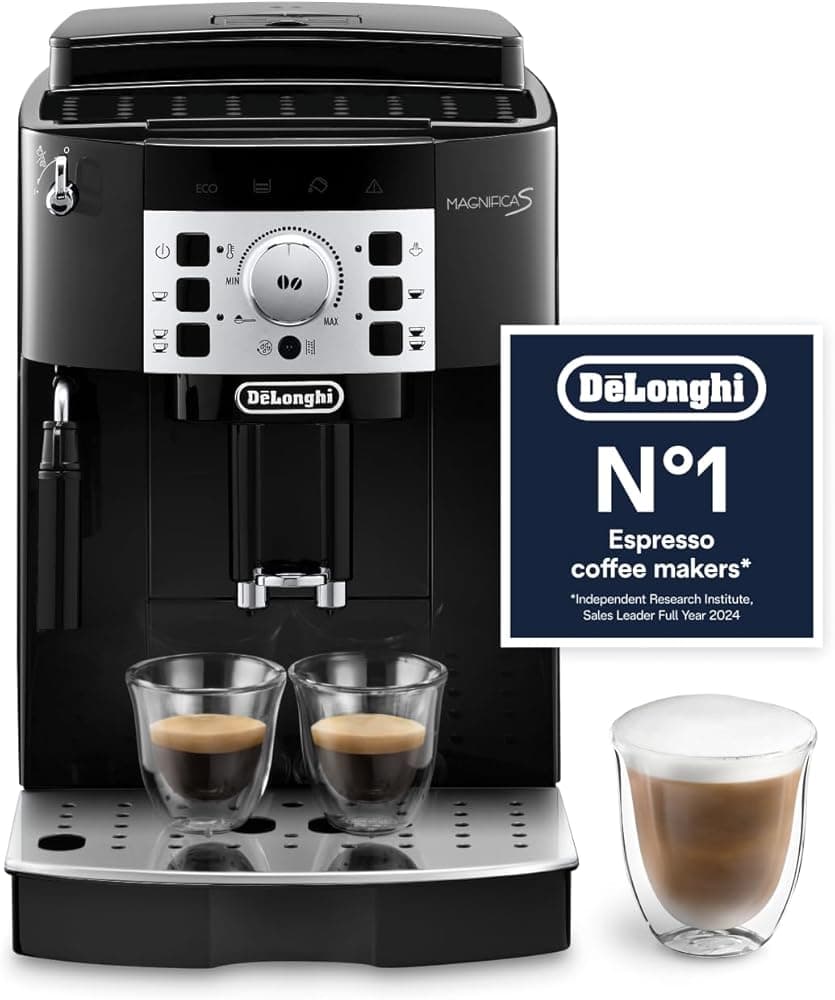
Best for milky drinks. If your household runs on lattes and flat whites, the Philips 3300's one-touch LatteGo milk system is worth the step up from the Magnifica's manual wand.
Best for Milky Drinks
Philips 3300 Series LatteGo
£415.00A word on cheaper bean-to-cup machines. We used to recommend the Philips 2200 here at around £270. Amazon has delisted it, and having gone looking for a replacement, there isn't one we'd put our name to. Everything credible under the Magnifica's ~£295 is either an unknown brand with a few dozen reviews or a known brand scoring under 4 stars.
So the honest answer is that the Magnifica S is the budget bean-to-cup now. It's the floor for a machine that grinds fresh and pulls a real espresso. If that's more than you want to spend, don't drop to a worse bean-to-cup, change category instead: the De'Longhi Dedica gets you proper espresso from pre-ground beans for well under half the Magnifica's price when it's in stock, and the Russell Hobbs Chester at about £60 grinds and brews fresh filter for roughly 10p a cup. Both are covered below, and both are better buys than a cheap bean-to-cup.
Best Pod Machines
The convenient option: drop a pod in, press a button, no skill or cleaning. The catch is cost, pods are the dearest coffee there is, so buy these for simplicity, not savings.
Best pod for value. The Krups Essenza Mini is tiny and foolproof, and because it's OriginalLine you can use cheaper third-party pods to soften the per-cup cost.
Best Pod (Value)
Krups Nespresso Essenza Mini
£119.99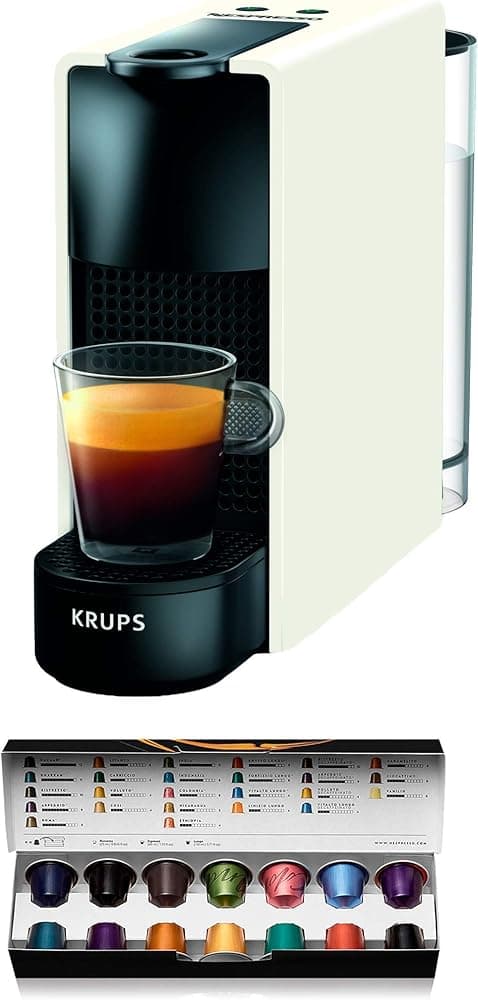
Best Vertuo. If you want Nespresso's thick-crema Vertuo coffee and bigger mug sizes, the Vertuo Pop is the cheapest way in. Just know Vertuo is locked to Nespresso's own (pricier) pods, and that Amazon has it out of stock at the time of writing.
Best Vertuo
Nespresso Vertuo Pop
£59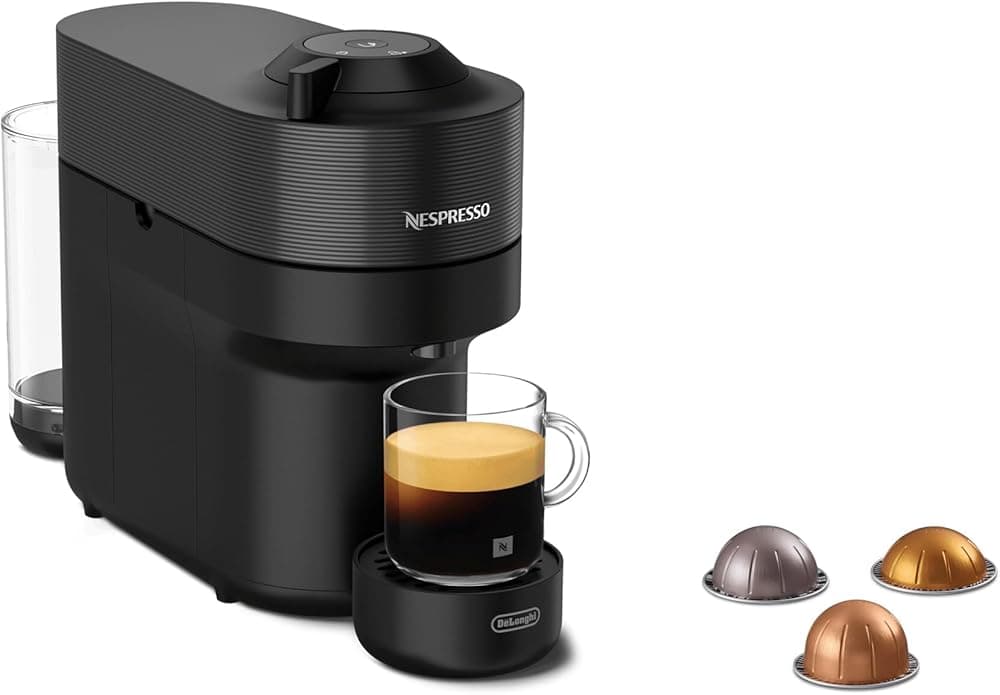
While it's out of stock, consider
 Krups Nespresso Essenza Mini Capsule Coffee Maker, 19-Bar Coffee Machine with 2 Coffee Programmes, Ultra-Compact Size and Auto-Off Function, 1450 W, 0.6 litres White£119.99 on Amazon
 Russell Hobbs Chester Bean to Cup Filter Coffee Machine with Built-In Grinder, Grind & Brew Automatic Coffee Maker, 4-12 Cup Brewing Option, 24 Hour Programmable Timer, 40 Minute Keep Warm, 1025W£59.99 on Amazon
Best Espresso Machines
The hands-on option: you grind, dose and pull the shot. The cheapest route to genuine espresso and the most fun, as long as you're happy to learn and to buy a grinder.
Best budget espresso. The slim De'Longhi Dedica is the cheapest way into proper hands-on espresso, and one of the most-reviewed machines on Amazon UK. Pair it with a grinder. It's out of stock on Amazon as we write, and it comes and goes, so check the box below before you set your heart on it.
Best Espresso (Budget)
De'Longhi Dedica Style
£149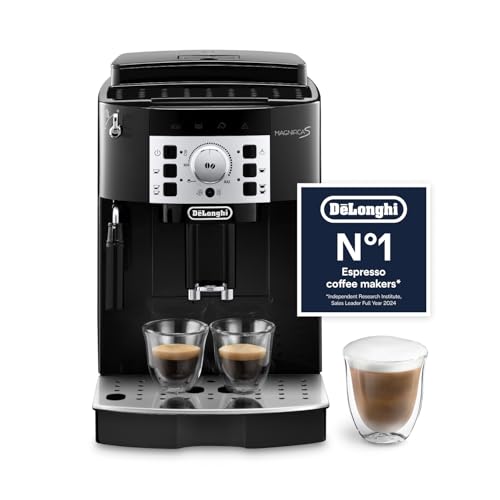

Best step-up espresso. The Sage Bambino Plus heats in seconds and textures milk for you automatically, so you get café-quality flat whites without learning to steam by hand. Also out of stock at the time of writing; the Barista Express below is the in-stock Sage.
Best Step-Up Espresso
Sage Bambino Plus
£399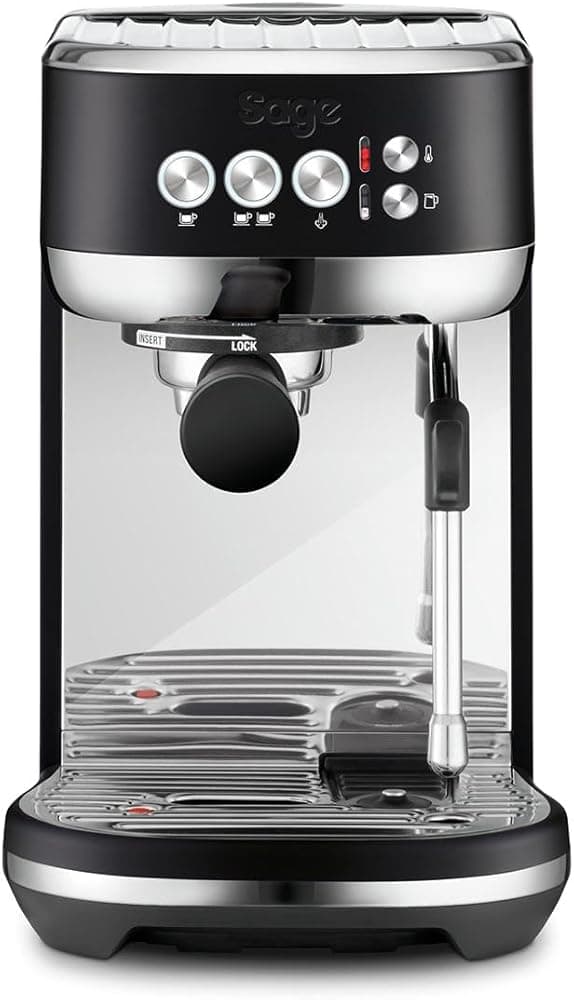

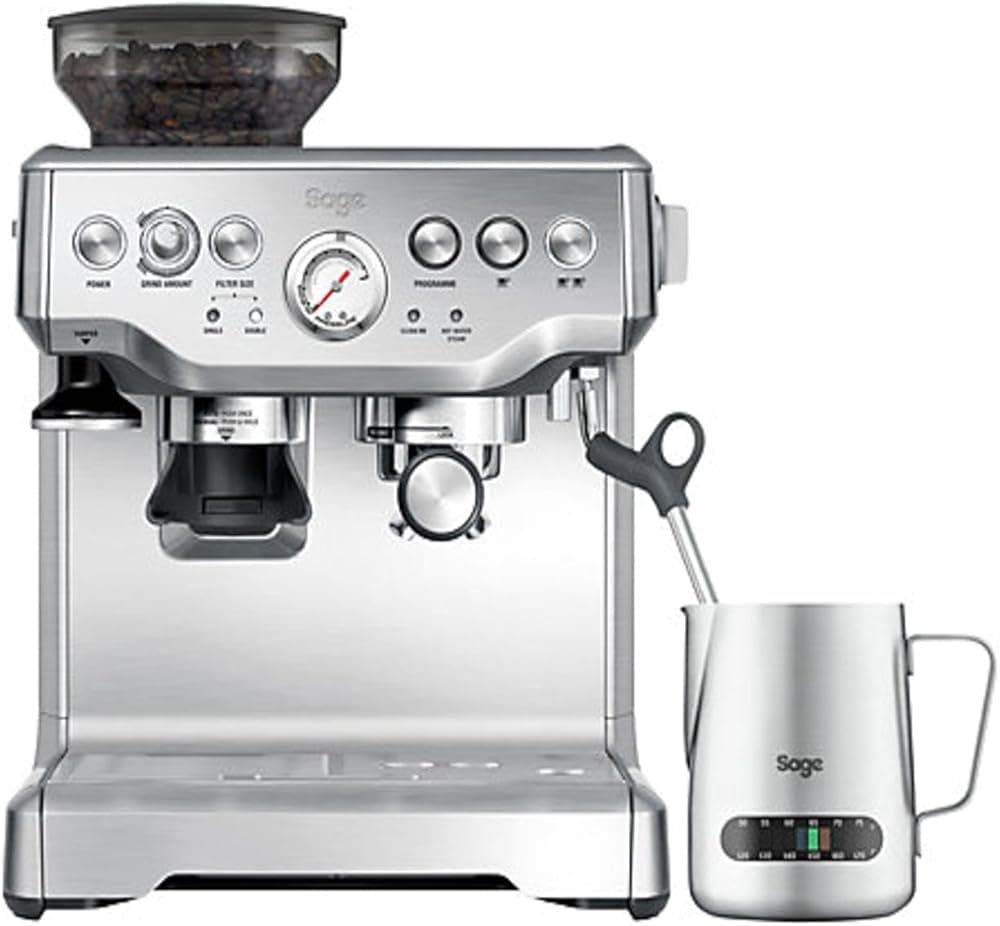
Best premium. The Sage Barista Express is the cult all-in-one, a proper espresso machine with the grinder built in. Overkill for a quick cup, but heaven if you want to tinker your way to café-grade shots.
Best Premium
Sage Barista Express
£499.00Best Filter & Grind-and-Brew Machines
The cheapest option: big jugs of black coffee for pennies a cup. No espresso, no milk, but unbeatable value, especially the grind-and-brew models that take whole beans.
Best value for fresh coffee. The Russell Hobbs Chester grinds whole beans and brews a full jug, giving you fresh filter coffee for around 10p a cup, with a timer so it's ready when you wake.
Best Value (Fresh)
Russell Hobbs Chester Grind & Brew
£59.99Best budget. The Russell Hobbs Buckingham is a no-nonsense filter machine for big batches of black coffee at pennies a cup. Just don't leave the hotplate running.
Best Budget
Russell Hobbs Buckingham Filter
£44.99How to Cut Your Cost Per Cup
Whatever machine you land on, a few habits keep the running cost down:
- Buy beans, not pods. Fresh beans are around 15-25p a cup versus 36-60p for pods. If you're set on pods, an OriginalLine machine plus third-party pods is far cheaper than Vertuo.
- Buy beans in bulk and freeze them. Larger bags work out cheaper per cup, and freezing in portions keeps them fresh.
- Switch the filter hotplate off. Decant to a flask the moment it's brewed. It's the one real electricity saving with a coffee machine.
- Descale on schedule. A scaled-up heater works harder and dies younger. Five minutes of maintenance protects a machine that might otherwise need replacing.
Which Should You Buy? A Quick Decision Guide
- You drink milky coffees and want zero faff: Philips 3300 LatteGo (one-touch) or, cheaper, the Magnifica S (manual wand).
- You want espresso and enjoy the ritual: Dedica plus a grinder to start, Bambino Plus or Barista Express if you've caught the bug.
- You drink one or two and value simplicity over cost: Essenza Mini (cheap pods) or Vertuo Pop (better crema, dearer pods).
- You drink mugs of black coffee and want it cheap: Russell Hobbs Chester (fresh-ground) or Buckingham (pre-ground, cheapest of all).
What We'd Skip
A few things to walk past on the listings page:
- Fake-RRP bean-to-cup machines. You'll see unbranded machines at "£179, was £599" or "£99, was £599" with a couple of dozen reviews. Those reference prices are fiction. Judge them on the actual price and the (usually thin) review count, not the imaginary saving.
- Vertuo pod machines, if cost matters. They make lovely coffee but they're locked to Nespresso's own pods, so you can't buy cheaper third-party ones. If you're set on pods, OriginalLine machines are cheaper to feed.
- Pods at all, if you drink a lot. At 36-60p a cup they're convenient but the priciest way to drink coffee at home. Three or more a day and a bean-to-cup machine has paid for itself inside a year.
- Cheap espresso machines without a decent grinder. A £60 espresso machine fed with stale pre-ground coffee makes disappointing espresso. The grinder matters as much as the machine, budget for both or buy a grind-and-brew instead.
A Few Things Worth Knowing
Descaling isn't optional. Limescale is the number one killer of coffee machines, especially in hard-water areas. Descale on the schedule the machine asks for, it keeps the heater efficient and the machine alive for years rather than months.
Pods are the running cost, not the machine. A cheap pod machine with an expensive pod habit costs far more over time than a dearer bean-to-cup machine running on beans. Always think in cost-per-cup, not just the sticker price, it's the whole reason a £415 machine can be the cheaper choice.
