
The Short Answer
You can now plug solar into an ordinary 13A socket in Great Britain. The law changed on 27 August 2026, when SI 2026/848 amended the Plugs and Sockets Regulations and the ESQCR to allow it. The device has to be a complete kit that meets the government's Plug-in Solar Device Interim Product Specification: 800 VA maximum AC output, 3.5A maximum current, no more than 2,000W of panels, and a manufacturer-supplied plug. You notify your network operator through G98 (a form, not a permission request), and for now you're limited to one device per home. Batteries are explicitly out of scope, so a plug-in solar kit with storage bolted on is not covered by the new route. Expect roughly 4 to 6 years' payback on an 800W kit, which now runs £400 to £700 all in because you no longer have to pay an electrician.
Where The Rules Stand in September 2026
For years plug-in solar sat in a UK regulatory dead end. Germany, the Netherlands, Spain and Austria normalised it a long time ago and millions of small systems went up on balconies, walls and sheds. Here, the products couldn't lawfully be sold or used, because BS 1363 bans plugs that feed electricity into a socket, and the Electricity Safety, Quality and Continuity Regulations 2002 didn't accommodate them either.
That's now fixed. The sequence, if you want to check any of it yourself:
- 24 March 2026. Government announces it intends to make plug-in solar available "within months" as part of Clean Power 2030.
- 15 April 2026. The IET and BSI publish BS 7671:2018+A4:2026, Amendment 4 of the Wiring Regulations. It can be used from that date and becomes the only current version on 15 October 2026, when Amendments 2 and 3 are withdrawn. This is the wiring standard, not the thing that legalised plugging in.
- 16 to 30 June 2026. DESNZ consults on amending the Plugs and Sockets etc. (Safety) Regulations 1994 and on an interim product specification. 466 responses; 85% agreed with the specification.
- 16 July 2026. The government response and the final Plug-in Solar Device Interim Product Specification, version 2.0, are published.
- 27 August 2026. SI 2026/848 comes into force. Compliant kits can be sold and plugged in.
The BSI standard people kept waiting for hasn't arrived
A lot of coverage written in the spring (including an earlier version of this page) said the missing piece was a BSI product standard due in July 2026. That's not what happened. What published in July was a government document: the DESNZ Interim Product Specification, a 45-page spec adapted from the German DIN VDE V 0126-95 with UK modifications. It is explicitly interim. The government response says only that "work will begin on the development of longer-term standards to succeed the IPS", with no date attached. So if you're waiting for a British Standard with a number before you buy, you'll be waiting a while, and you don't need to: the IPS is the thing products are certified against right now.
The Rules, In Full
Straight from the Interim Product Specification and the connection rules that sit alongside it:
- 800 VA maximum AC output, 3.5A maximum current. Per device, into your installation.
- 2,000W maximum total panel DC output, across no more than four modules. Above 960W of panels, the spec says you should consider getting your electrical installation professionally assessed first.
- One device per household, for now. The IPS itself permits one device per final circuit, but it says plainly that G98 Issue 2 Amendment 1 currently restricts you to one per household, and that restriction applies until G98 is amended. So: one, until further notice.
- G98 notification to your network operator is mandatory, for connecting and for disconnecting. It's a notification, not an application. The product's own labelling has to tell you this and link to the instructions.
- The manufacturer's plug only. No extension leads, no multi-way adaptors, no RCD adaptors, no travel adaptors. All four are explicitly prohibited.
- Modern residual current protection. The circuit needs RCD or RCBO protection in good condition. If you've still got an old fuse box with rewireable fuses, get it checked and upgraded before you plug anything in.
- Batteries are out. The specification does not apply to plug-in battery systems or to plug-in solar devices integrated with battery storage. If a product has a battery in it, the plug-in route doesn't cover it.
- Great Britain. The ESQCR amendment in SI 2026/848 extends to England, Wales and Scotland. G98 is a GB document; Northern Ireland uses G98/NI, and the IPS says application to Northern Ireland is "subject to further consideration and may require amendment". If you're in NI, this isn't settled yet.
One more thing worth knowing: the safety case rests on a DESNZ-commissioned study of plug-in PV on UK ring final circuits, which found no safety concerns at 800W on appropriately protected circuits. That's why the number is 800 and not 1,200.
Do You Qualify? A Quick Decision Framework
Before you spend £500 or so, work through this:
- Do you own your home, or have your landlord's written permission? You're not touching the consumer unit any more, so this is less of a legal hurdle than it was, but you're still fixing panels to the building. Tenancy agreements and leases usually have something to say about that. Get it in writing. Leasehold flat owners: check the lease for alterations clauses before you buy.
- Have you got somewhere to mount the panels? Balcony railing, garden wall, shed roof, garage roof. South-facing is best, east or west gets you 80-90% of that, north-facing isn't worth the effort.
- Is your consumer unit modern? RCBOs or at least RCD protection, in good condition. If you're not sure what you're looking at, that's the one question worth paying an electrician half an hour to answer.
- Can you work out which sockets are on which circuit? You need to know, because of the one-per-circuit rule in the spec (and the one-per-household rule in G98 today). If you can't, the spec says to ask an electrician.
- Is your daytime electricity use high enough? Working from home, retired, kids about in the day: yes. Empty house from 8am to 6pm: you'll export most of it, which is still worth something but a lot less than using it yourself.
How Plug-in Solar Actually Works
Same physics as rooftop solar, much smaller. The panels generate DC. The microinverter, usually mounted right next to them, converts that to 230V AC. It plugs into a socket, and the electricity flows backwards down the ring into whatever's drawing power at that moment. Your appliances take it first, and anything left over goes out to the grid through your meter, earning a Smart Export Guarantee payment if you've got an SEG tariff.
The microinverter does the safety work. It's small, handles 600 to 800 VA, sits outside with the panels, and has anti-islanding protection built in: if the grid drops, it shuts off. That's a G98 requirement and it's why plug-in solar does nothing for you in a power cut, with or without a battery attached.
Calculate Your Payback
Pick your system cost, install cost, and whether you want storage. The calculator uses a realistic UK yield (760 kWh a year for an 800W system, which is the same 950 kWh per kWp we use everywhere else on the site for a south-facing, unshaded position), the current Ofgem cap rate of 26.32p, and a 12p export rate by default.
Plug-in Solar Payback Calculator
Realistic UK numbers based on average annual yield (~760 kWh for an 800W system), current Ofgem rates, and Smart Export Guarantee tariffs.
EcoFlow STREAM kit £499; bare MI ~£149 plus panels
800 VA is the maximum for a plug-in device under the DESNZ interim product specification
Brackets and fixings for a self-install kit: £30-80. An electrician is only needed if you're hardwiring.
With a battery, you self-use ~75% of generation instead of ~35%
Ofgem cap 1 October to 31 December 2026: 26.32p/kWh
Basic SEG ~4-5p; Octopus Outgoing 12p
Annual generation
760 kWh
Annual benefit
£129
Payback
4.2 years
Upfront cost (kit + install)
£549
25-year net savings
£2,683
Annual yield assumes ~0.95 kWh per watt per year for an average UK installation (south-facing, modest tilt, some shading). Self-consumption assumes you're home for some of the daylight hours; if you're away all day with no battery, real self-consumption drops to 15-25%. Panels degrade ~0.4% per year, ignored here for simplicity.
A few notes on the maths:
- Annual generation assumes 0.95 kWh per watt per year (950 kWh per kWp), so 760 kWh from an 800W kit facing south with nothing shading it. Northern UK knocks 10-15% off that, the south coast adds about 10%, and a vertical balcony railing rather than a tilted mount will cost you more than either.
- Self-consumption defaults to 35% without storage, which is deliberately below the 45% we use for a rooftop system: a plug-in kit is usually on a balcony or a wall rather than an optimal roof, and it's often in a flat with lower daytime occupancy. Working from home pushes it to 45-55% because you're using it as it's made. With a battery it's about 75%, the same figure we use for a 10 kWh rooftop battery.
- Export rate matters more than people expect. On the defaults (760 kWh, 35% self-consumed, 26.32p import, 12p export) the annual benefit is about £129: roughly £70 off your bill and £59 of export income. Drop the export rate to a bog-standard 5p SEG deal and the same system earns about £95. Octopus Outgoing at 12p is the number to beat; switch if your supplier is paying you 4p.
- Panel degradation is roughly 0.4 to 0.55% a year and the calculator ignores it, so treat 25-year lifetime savings as 5-7% optimistic.
- Set the install cost to what you'll actually spend. It defaults to £300, which is what an electrician used to cost you when hardwiring was compulsory. If you're plugging in a certified kit yourself, that field should be the price of brackets and fixings, so £30 to £80 for most balcony mounts. On the £499 kit that's the difference between a 6-year payback and a 4-year one.
What To Check Before You Buy
The rules changed at the end of August, and not every listing has caught up. Anything sold before 27 August was sold for an electrician to hardwire, and some of that stock is still on shelves. Four things to look for:
- It says it complies with the Plug-in Solar Device Interim Product Specification. The spec requires that statement on the product. If the listing doesn't mention it, assume it isn't certified.
- The kit includes the plug and lead. The route only covers the manufacturer-supplied BS 1363 plug. A bare microinverter with a pair of flying leads is not a plug-in solar device, it's a hardwiring job.
- 800 VA or less, and 2,000W or less of panels. If a listing quotes an inverter above 800 VA, it's outside the rules here, whatever it's rated for in Germany.
- The inverter is on the ENA's G98 type test register. The IPS requires type testing to G98; the register is the public way to check it.
Availability snapshot, checked 18 September 2026. Three weeks after the rules changed, UK supply is still thin. EcoFlow's STREAM line has had UK distribution since 2024 and is the easiest thing to actually buy. Anker (SOLIX Solarbank and the Balcony Power Station kits), Hoymiles, Growatt, BENY and Marstek all have products aimed at this market, and availability on Amazon UK has come and gone all summer. This is the part of this page that ages fastest, so check the live price and stock on the product cards below rather than trusting any prose about what's on the shelf.
All 3 Products Compared
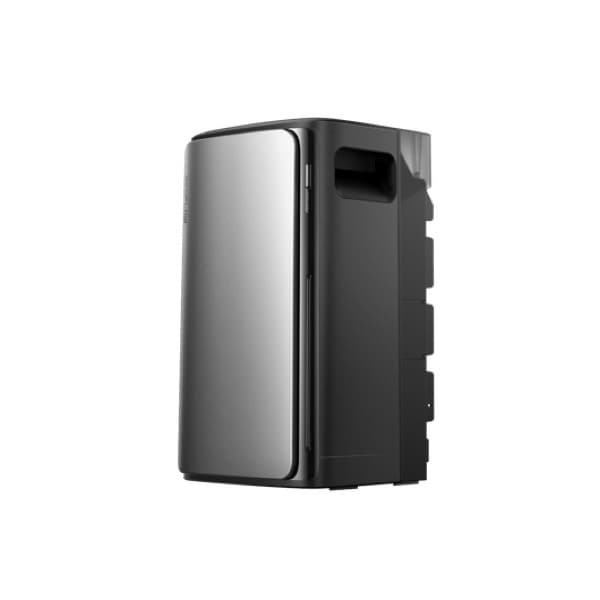
EcoFlow STREAM AC Pro (with 1.92 kWh storage)
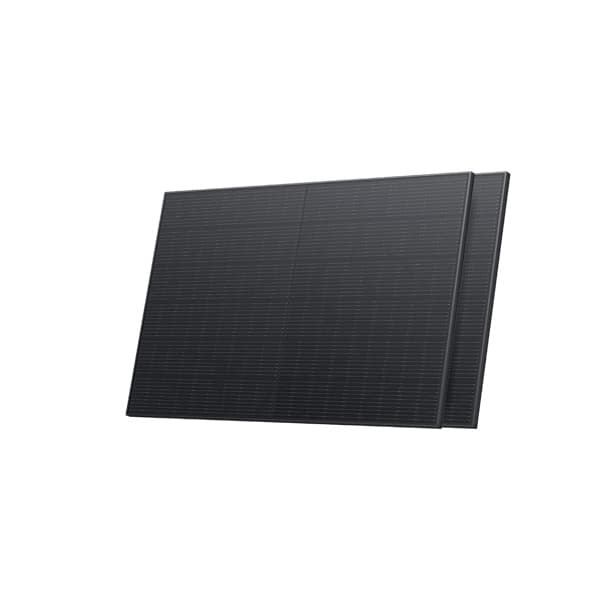
EcoFlow STREAM Balcony Solar System (Kit)
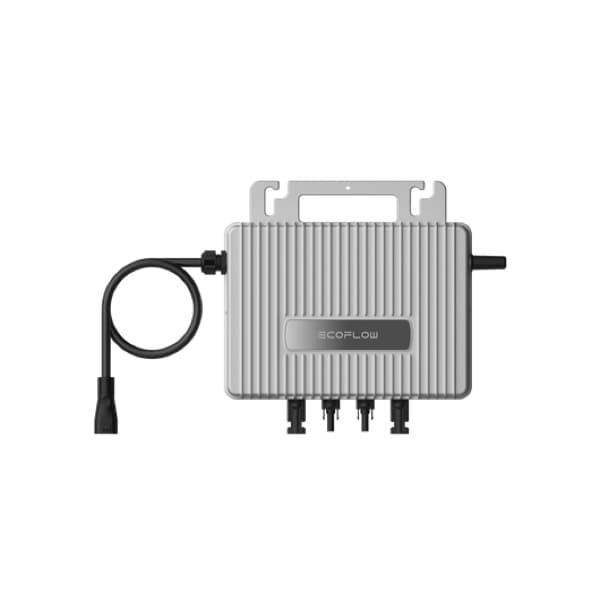
EcoFlow STREAM Microinverter
As an Amazon Associate we earn from qualifying purchases. Prices correct as of 22 October 2026, checked against Amazon every few hours.
The Picks
Best If You Already Have Panels
EcoFlow STREAM Microinverter
£129.00The bare microinverter is the cheapest way in if you already own panels or want to buy them separately. 800 VA output, dual MPPT inputs (16-60V DC per channel, so you can run two different-sized panels), IP67, 2.4GHz WiFi monitoring through the EcoFlow app, 10-year warranty, which matches Hoymiles and Anker.
The catch since 27 August: a bare inverter isn't a plug-in solar device under the new rules, because the route covers a complete kit supplied with its own BS 1363 plug and lead. Buying the inverter on its own and assembling your own kit puts you back in hardwiring territory, which means an electrician and a dedicated circuit. Check the listing carefully for whether EcoFlow now supplies it as a certified plug-in package.
Buy this if: you already have panels and you're happy to pay an electrician to wire it in properly, or the listing confirms it now ships as a certified plug-in kit.
Best Complete Kit
EcoFlow STREAM Balcony Solar System (Kit)
£499
The kit is everything in one box: 800 VA microinverter, two 400W rigid panels (23% efficient, IP68, rated for 130mph winds), and lattice balcony brackets. If you don't already own panels this is the right shape of purchase, because the compatibility is guaranteed and it's a complete kit, which is what the rules now want.
One thing to check before you self-install it. The spec also needs the inverter type tested to G98, and we couldn't confirm the STREAM inverter on the ENA's type test register when we checked on 23 September 2026 (the register's search wasn't loading, and at least one buyer on EcoFlow's own site reports it isn't listed). Look it up yourself, or ask EcoFlow, before plugging it into a socket. If it isn't listed yet, it's still a good kit, but it needs an electrician to fit it the old way until it is.
Two 400W panels is 800W of DC, comfortably inside the 2,000W cap and below the 960W threshold where the spec suggests getting your installation assessed. EcoFlow reckons on 858 kWh a year and about £115 of annual saving. Our calculator, on a more cautious 760 kWh with a 12p export rate, lands at about £129 a year (£70 off the bill, £59 of export income). Both are in the same territory; on a 5p SEG tariff it's nearer £95. The gap between those two numbers is your export tariff, not the hardware.
Buy this if: you don't already have panels and you want the shortest path from order to working system.
Storage (Not Covered by the Plug-in Route)
EcoFlow STREAM AC Pro (with 1.92 kWh storage)
£699.00Read this one carefully, because the regulatory position is different. The AC Pro adds a 1.92 kWh LiFePO4 battery, and battery-integrated products are explicitly excluded from the plug-in route. The Interim Product Specification says it does not apply to plug-in battery systems or to plug-in solar devices integrated with battery systems. The government response acknowledged that a lot of respondents wanted batteries included and declined, saying they'd need further evidence and safety assessment first.
That doesn't make home storage illegal, it just means this isn't a plug-it-in-yourself product. Storage on your electrical installation is an electrician's job, wired in and notified to your DNO like any other home battery. If you want it, budget for that properly rather than treating it as a £290 upgrade on a plug-in kit.
If you do go down that road, the economics are real: self-consumption climbs from roughly 35% to about 75%, which means more of your generation displaces 26.32p imports instead of earning 12p (or 5p) on export. On the calculator above, ticking the battery box takes the annual benefit from about £129 to about £173. The AC Pro stacks to six units and 11.52 kWh, 6,000 cycles to 70% capacity, and it self-heats below 5C, which matters on an unheated balcony. It still won't power your house in a blackout: anti-islanding applies to storage too.
Buy this if: you want evening solar, you've accepted it needs an electrician, and you've priced that in.
Installing It, Step by Step
For a compliant complete kit, this is now a DIY job:
- Check your consumer unit. RCD or RCBO protection, in good condition. Old rewireable fuses mean an electrician first.
- Work out your circuits. Identify which socket you'll use and which breaker covers it. One device per household under G98 as things stand, so this is mostly about picking a sensible socket on a healthy circuit.
- Mount the panels. Balcony railing, garden wall, shed roof, garage roof. 30-45 degrees tilt facing south is optimal. Use the kit's brackets. This is the part where people get hurt, so if it's above head height or over a public footpath, get someone to help or pay a fitter.
- Mount the microinverter outside, near the panels. Connect the panel DC cables. Don't disconnect DC connectors under load.
- Plug it in. Direct into a wall socket, using the lead and plug that came with it. No extension lead, no adaptor, no multi-way block.
- Label the consumer unit. The kit comes with a durable label to fix at or near the board, flagging that there's a plug-in PV device on the installation. Fit it; the next person to work on your wiring needs to know.
- Send the G98 notification. Each DNO (UK Power Networks, SSEN, National Grid Electricity Distribution, Northern Powergrid, SP Energy Networks, Electricity North West) has its own form. It takes about fifteen minutes. Notify again if you ever remove it.
- Set up the app and watch it work. You'll see daily and monthly kWh, and the export figures, in real time.
Realistic timeline: an afternoon, once the box arrives.
What NOT To Do
- Don't run it off an extension lead or an adaptor. Extension cables, multi-way adaptors, RCD adaptors and travel adaptors are all explicitly prohibited by the specification. Straight into a wall socket or nothing.
- Don't fit two. G98 still limits you to one device per household until it's amended, even though the product spec would allow one per circuit.
- Don't exceed 800 VA. That's the limit in the product specification for the plug-in route, and it's well below the 3.68 kW per phase where the grid rules themselves switch from G98 to G99. If you want more than 800 VA you're out of the plug-in route entirely and into a proper wired install, which is a different job with an electrician in it.
- Don't skip the G98 notification. It's mandatory, it's free, and the form takes fifteen minutes.
- Don't plug in a battery product and assume it's covered. It isn't. Integrated storage sits outside the new route entirely.
- Don't buy an uncertified import. A German 800W kit is not automatically a UK-compliant one, and AliExpress microinverters mostly meet nothing at all. The listing needs to claim compliance with the Interim Product Specification.
- Don't expect blackout backup. Anti-islanding shuts the inverter down within seconds of the grid going. That's the whole point of it.
- Don't mount panels in half-day shade. Shading one panel drags the whole string down more than you'd think, even with per-panel MPPT.
Plug-in Solar vs Rooftop Solar
| Plug-in solar (800W) | Rooftop solar (4 kW) | |
|---|---|---|
| Upfront cost | £400-700 (self-install) | £5,000-7,000 |
| Annual generation | ~760 kWh | ~3,800 kWh |
| Annual benefit (no battery) | ~£129 (£70 bill + £59 export at 12p) | ~£701 (£450 bill + £251 export at 12p) |
| Payback period | 4-6 years | 7-10 years |
| Install | An afternoon, yourself | 1-2 days (MCS installer) |
| Renter friendly? | Yes with landlord consent | No (permanent install) |
| Warranty | 10 years (EcoFlow / Hoymiles / Anker) | 25 years (panels) |
| Best for | Flats, balconies, rentals, sheds | Houses with usable roofs |
The honest summary: if you own a house with a usable roof, rooftop is still the better deal. It generates five times as much and is worth about five times as much a year, so the lifetime saving dwarfs a plug-in kit even though the payback period is a bit longer. Plug-in solar is for renters, flat dwellers and anyone who can't fit a full system, and now that you can do it yourself in an afternoon the payback has got noticeably shorter, because the £200-400 electrician's fee has gone. See our solar panel costs UK guide for the rooftop maths.
Thinking bigger than a balcony kit? Our solar panel grants guide covers the schemes that help with a full roof system.
Frequently Asked Questions
Currently Buyable on Amazon UK
EcoFlow's STREAM line is the easiest plug-in solar to actually buy in the UK. Check the live price and stock below: availability across Anker, Hoymiles, Growatt and Marstek has moved around a lot since the rules changed in August.
EcoFlow STREAM Microinverter (800W)
£129.00The cheapest 800W microinverter from a known brand currently in stock for the UK. 10-year warranty matches Hoymiles/Anker. Bring your own panels.
EcoFlow STREAM Balcony Solar System (Kit)
£499Everything you need in one box at the UK's lowest current price point. The right pick if you don't already own panels.
EcoFlow STREAM AC Pro (with 1.92 kWh storage)
£699.00The pick if you want to use the solar after dark. Battery storage takes self-consumption from 30-40% to 70-80%. Expands to 11.52 kWh later.
As an Amazon Associate we earn from qualifying purchases. Prices and stock are checked against Amazon every few hours and may have changed since.
