
The Short Answer
Buy thermal curtains because a cold room feels warmer with them shut, not because of what they'll do to your bill. On a fully single-glazed house, drawing heavy lined curtains at dusk is worth somewhere around £15 to £30 a year. On double glazing it's closer to a fiver. That's real, but it's small, and anyone promising you three figures is guessing.
- Deconovo: best for value. Triple-weave, every size going.
- NICETOWN: heavier, for a big window or a bay that billows.
- Clip-on thermal lining: adds the same insulating layer to curtains you already like, for less money. Start here if you've got decent curtains already.
The Number That Puts Everything Else in Its Place
The Energy Saving Trust publishes one figure that anchors this whole subject: upgrading a semi that's entirely single glazed to A-rated double glazing saves £85 a year in Great Britain (£140 in Northern Ireland). That's the ceiling. It's what you get for ripping out every window in the house and spending around £4,800 on new ones.
Curtains are a piece of fabric you pull across the glass at night. They cannot beat new glazing, so they cannot save you more than £85 a year. Any page telling you thermal curtains will save £90, £150 or £180 has done its sums without checking them against that ceiling. We had that mistake on this page until we caught it, which is why we're being blunt about it now.
What curtains actually get you is a decent fraction of the glazing prize, at about 3% of the glazing price, plus the bit that doesn't show up on a bill at all: not sitting next to a cold window.
How Thermal Curtains Actually Work
Windows are the thermal weak point of any house. Even double glazing loses heat several times faster per square metre than an insulated wall, and single glazing is worse again. In a typical semi, windows are responsible for a meaningful chunk of total heat loss, which is why the glazing upgrade is worth £85 a year in the first place.
Thermal curtains tackle this by creating a trapped pocket of still air between the fabric and the glass. Still air is a good insulator; moving air is not. The heavy, multi-layered fabric slows heat transfer across that pocket, and, just as importantly, stops the convection loop where warm room air rolls down the cold glass and spills across your floor as a draught.
That second effect is the one you feel. A room with single glazing and thin curtains has a cold river running down the window and along the skirting. Close a proper lined curtain that reaches the floor and the river stops. The air temperature in the middle of the room barely changes; the room still feels several degrees warmer to sit in.
All of that depends on the seal. The curtain has to cover the window completely from wall to wall and reach the floor or the sill. A curtain that doesn't touch the sides lets the cold air spill out around the edges and you've bought a decorative panel.
About That "Up to 40%" Figure
You'll see "thermal curtains cut window heat loss by up to 40%" quoted everywhere, usually credited to the National Energy Foundation. We went looking for the study and couldn't find it published anywhere we could link to. The 14 to 17% figure for double glazing that travels with it has the same problem.
So treat those as trade rules of thumb rather than measurements. They're plausible for a heavy, well-fitted, floor-length curtain over single glazing, closed all night. They're not plausible for a thin pair over modern double glazing, and they were never a claim about your annual bill. No UK body publishes a pounds-per-year saving for curtains, and that's worth knowing before someone sells you one.
What the Energy Saving Trust does say is that heavy lined curtains are a legitimate budget option for cutting heat loss through windows, and one of the recommended non-intrusive measures for listed buildings and period properties where you can't touch the glazing. That's an endorsement of the measure, just not of a number.
What to Look For
- Triple-weave or multi-layer construction: this is what traps the air. A thin unlined curtain does essentially nothing thermally, no matter what the listing says.
- Full coverage: the curtain should extend at least 15cm beyond each side of the window, touch the sill or floor, and ideally return around to the wall so the edges seal. Length matters more than fabric weight.
- Weight, for big windows: a light curtain on a wide bay billows when the heating comes on, which breaks the seal exactly when you need it.
- Blackout lining is a bonus, not a necessity: most thermal curtains happen to be blackout too, which is useful in a bedroom and irrelevant to the thermal job.
Our Picks
Best Value: Deconovo Blackout Thermal Curtains
The Deconovo range is the best-selling thermal curtain on Amazon UK and it's an easy recommendation. The triple-weave construction traps air properly, they come in a huge range of sizes and colours, and they're priced well under most high street alternatives.
The fabric weight is mid-range: noticeably heavier than a standard unlined curtain, not as heavy as premium options. For most rooms and most window sizes that's the right balance. If you're doing the whole house, the difference against premium curtains adds up faster than any energy saving will.
Best for: Most rooms, most budgets. The safe choice.
Best for Large or Draughty Windows: NICETOWN Thermal Curtains
If you've got a big bay, floor-to-ceiling glass, or particularly draughty single-glazed windows, NICETOWN curtains are worth the small premium. They're heavier and denser than the Deconovo, which means they hang still instead of billowing, and a curtain that hangs still is a curtain that's sealing.
The fabric quality is a step up too. If they're going in a living room where appearance matters, these are the ones.
Best for: Living rooms, large windows, bays.
Best if You Like Your Current Curtains: Thermal Lining
If you've already got curtains you like, or you've spent money on them, don't replace them. A clip-on thermal lining attaches to the back using your existing curtain hooks and adds the insulating layer without changing the look of the room.
One honest correction, because we used to claim linings were the cheaper route and that's stopped being true. On 18 September 2026 the clip-on lining we link to was £20.99 a pair, while the Deconovo curtains were £10.34 and the NICETOWN £12.11 in their smaller sizes. Curtain prices scale hard with size, so at bay-window widths new curtains overtake the lining again, but for an ordinary window you may well find it cheaper to buy proper thermal curtains outright. Check both live prices before you decide.
The reason to buy a lining anyway is that you keep the curtains you already like, and you can take it off in summer. The downside is bulk: if your pole is already loaded, check it'll take the extra weight before you order four of them.
Best for: Anyone who doesn't want to replace curtains they already like. Also the renter's answer, because they come with you.
How Much Will You Actually Save?
Here's the honest version, expressed for a whole house rather than per window, because per-window numbers are what let people add up to a silly total.
| Your situation | What curtains do | Whole-house saving per year |
|---|---|---|
| All single glazed, thin or no curtains now | The big one. Stops the cold draught off the glass and slows overnight loss | £15–£30 |
| All single glazed, already have lined curtains | Marginal. You've had most of the benefit already | £5–£10 |
| Double glazed, thin or no curtains now | Small. The glazing is doing the work | £5–£12 |
| Double glazed, already have lined curtains | Nothing you'd notice on a bill | £0–£5 |
| For comparison: replacing all single glazing with A-rated double glazing (Energy Saving Trust) | Fixes the problem permanently, costs around £4,800 for a semi | £85 (GB) / £140 (NI) |
Where do those numbers come from? Curtains only work while they're shut, so call it the dark half of a winter day. While they're shut over single glazing they knock perhaps a third off the heat going out through that window. New glazing cuts it by roughly two thirds, permanently, day and night. Run that through and curtains land at something under a third of the £85, so £15–£30 is where we've put them. It's an estimate, not a measurement, and we'd rather say that than dress it up.
On cost: six windows of thermal curtains runs from about £60 at the small sizes to £270 if the windows are big and you want the heavier fabric. At £20 a year that's a payback measured in three to thirteen years. Nobody buys curtains on a payback and you shouldn't either. Buy them because the room is cold to sit in, and take the £20 as a rebate.
What You Don't Need
- Don't buy thermal curtains for a room that's already comfortable. On modern double glazing with existing lined curtains there is nothing left to get.
- Don't buy "thermal" curtains that are a single thin layer. The word is unregulated. If the listing doesn't say triple-weave or multi-layer and the curtain isn't heavy in your hand, it's a normal curtain with a marketing budget.
- Don't buy curtains instead of fixing a draught. If cold air is physically coming through a gap in the frame, seal the gap first. Draught proofing windows, floors and doors is worth around £55 a year in GB according to the Energy Saving Trust, which is more than the curtains, and a roll of foam strip costs a few pounds.
- Don't buy short curtains for a thermal job. A curtain that stops halfway down the window lets the cold air pour out of the bottom. Full length, every time.
Tips for Maximum Effect
- Close them at dusk, not at bedtime. Heat loss through glass ramps up as soon as the sun goes. Those extra four hours are a third of the benefit.
- Open them during the day on south-facing windows. Free solar gain heats the room. Don't block it.
- Make sure they reach the floor or the sill. A gap at the bottom lets cold air fall down the glass, pool, and flow into the room. This is the single biggest mistake people make.
- Tuck them behind the radiator, not over it. A floor-length curtain hanging in front of a radiator under a window sends most of that radiator's output straight up the cold glass. Either the curtain sits behind the radiator, or it stops at the sill.
- Use a pelmet or a curtain box if you can. It stops warm room air rising up behind the curtain and hitting the glass, which is how the pocket loses its warmth. It makes a surprising difference and it's the cheapest part of the job.
For more ways to cut heat loss through windows, see our guide to window insulation film. For the full picture on insulating your home, read our insulation costs guide, and for the gaps rather than the glass, our draught-proofing guide.
Our Top Picks
These are the thermal curtains we recommend, from budget to premium.

Deconovo Blackout Thermal Curtains
£10.34Best value thermal curtains. Triple-weave construction traps air effectively. Huge range of sizes and colours.
NICETOWN Thermal Insulated Blackout Curtains
£12.11Slightly heavier than Deconovo, better for large or draughty windows. Premium feel at a reasonable price.
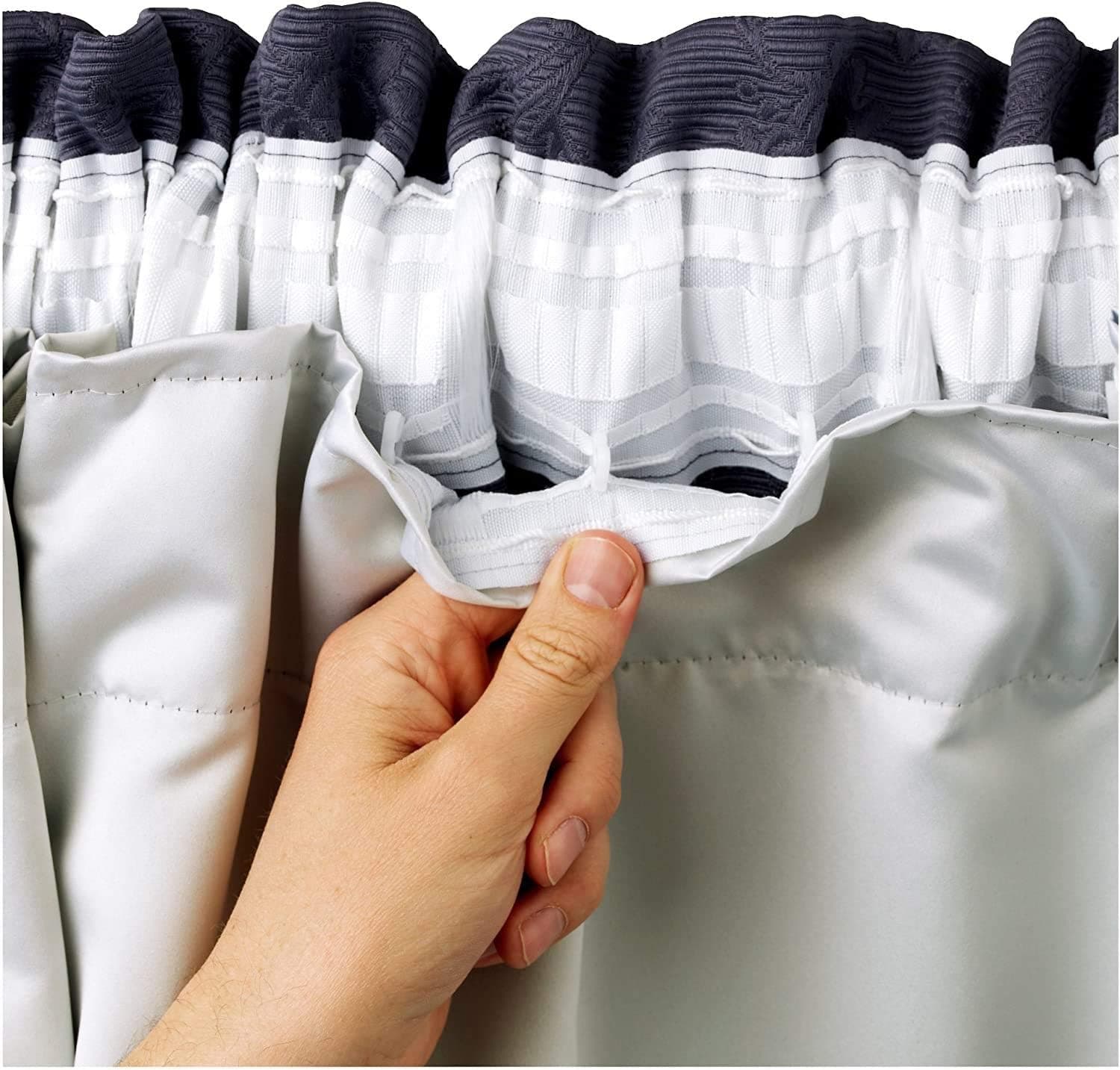
Kinfolk Textile Thermal Blackout Curtain Lining
£20.99Keep your existing curtains and add thermal performance. Cheaper than buying new ones.
As an Amazon Associate we earn from qualifying purchases. Prices and stock are checked against Amazon every few hours and may have changed since.
