
The Short Answer
For most people, the Lay-Z-Spa Florence is the sweet spot: room for four, built-in lights, and hundreds cheaper than the premium tubs.
- Lay-Z-Spa Miami: the cheapest way in, 669 litres, and one of the most-reviewed inflatables on Amazon. Often out of stock, so check.
- Stockholm ThermaCore: the thing nobody tells you is that insulation, not size, decides the bill. Like for like against the same-sized basic-liner Florence, the Stockholm's foam walls cut the cost of holding 40°C by around a quarter, which is what earns back the higher sticker price if you'll run it through winter.
- San Francisco: for a big crowd, the 5-7 person option is the one.
The inflatable hot tub market is basically Lay-Z-Spa, so rather than pad this out with off-brand inflatables that have a handful of reviews and "60% more efficient" claims nobody can stand behind, we picked the five Lay-Z-Spas worth your money and pulled their live prices. More importantly, we've done the bit every other roundup skips: what each one actually costs to run, at the current Ofgem rate. Because with a hot tub, the sticker price is the easy part.
All 5 Products Compared
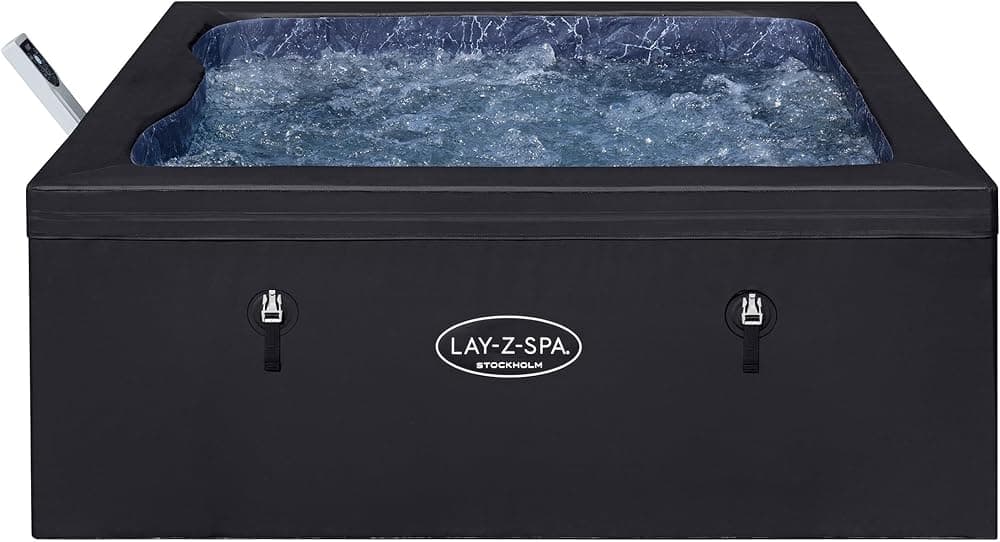
Lay-Z-Spa Stockholm ThermaCore
As an Amazon Associate we earn from qualifying purchases. Prices correct as of 21 September 2026, checked against Amazon every few hours.
What a Hot Tub Actually Costs to Run
This is the question that should decide which tub you buy, and it's the one the retailers are vaguest about. The running cost has two parts: a one-off cost to heat the water from cold the first time (roughly 22 kWh and £5.70 for the 669-litre Miami, up to about 38 kWh and £10 for the biggest tub here), and then a daily cost to hold it at 40°C, which is where the real money goes. Most of that daily cost is simply replacing heat that leaks out of the water, so insulation, the weather, and whether you use the cover matter far more than how often you actually get in.
As a rough guide, budget £33-£50 a month for an inflatable held at temperature in spring or autumn, climbing to £80-£120 in winter when it's working hardest. Put your own tub, usage and weather in here:
Hot Tub Running Cost Calculator
The honest two-part bill: a one-off cost to heat from cold, then a daily cost to hold 40°C. Insulation, the season, and whether you use the cover swing it more than anything else.
669L: Basic liner
Estimated running cost
£40.29 / month
£1.10/day just to keep it warm, plus your soaks.
First heat-up (one-off)
£5.73
22 kWh from cold
Per day to keep warm
£1.10
Left on all year
£483.52
Warmer half only (~5 months)
£201.47
Standing it on a foam mat or insulation boards rather than cold ground would save around 11p/day.
Estimates based on the Ofgem price cap (26.32p/kWh, 1 October to 31 December 2026), a 40°C target, and a 2,050W heater. Real costs depend on how sheltered the tub is, wind, ground type, and how often you top the heat up. Chemicals and filters are extra.
The pattern is clearer than you'd expect once you see the models side by side, and it isn't the one the marketing implies. Size barely moves the needle: the basic-liner tubs all land within a few pounds a month of each other whether they hold 669 litres or 778. The one thing that genuinely changes the bill is proper foam insulation. The ThermaCore Stockholm costs around a quarter less a month to hold at temperature than the same-sized basic-liner Florence, despite holding more water. The San Francisco's EnergySense liner is a milder version of the same idea: it roughly cancels out the penalty of being the biggest tub here rather than beating the small ones. If you'll only ever use it across summer, the cheap tub wins overall. If it's staying on through winter, the ThermaCore pays you back.
What each tub costs to run
Estimated cost to hold 40°C with the cover on, 3 soaks a week, spring or autumn weather, at the Ofgem cap (26.32p/kWh). Bigger tubs and basic liners cost more; ThermaCore foam is the single biggest lever.
As an Amazon Associate we earn from qualifying purchases.
What Size Hot Tub Do You Need?
The headline person-count is optimistic. A "4-6 person" tub fits four adults who like each other; six is shoulder to shoulder. Knock one or two off the number on the box and you'll be about right:
| Realistic use | Size to buy | Water volume | Our pick |
|---|---|---|---|
| Couple, occasional | 2-4 person | 669L | Lay-Z-Spa Miami |
| Couple, want smart control | 2-4 person | 669L | Lay-Z-Spa Boracay |
| Family of four | 4-6 person | 778-950L (not published) | Florence / Stockholm |
| Big family or entertaining | 5-7 person | 1,180L (not published) | San Francisco |
A note on those volumes, because it matters for the running costs above. Lay-Z-Spa publishes a water capacity for the Miami and the Boracay (both 669 litres, confirmed on lay-z-spa.co.uk) but not for the Florence, Stockholm or San Francisco. The figures we show for those three come from retail listings rather than the manufacturer, so treat them as indicative. If an exact volume matters to you, ask Lay-Z-Spa before you buy.
Bear in mind a bigger tub holds more water, which costs more to heat and more to keep warm. Don't size up "to be safe" if it's usually just the two of you, you'll be paying to heat empty space all year.
Where You Put It Changes the Bill
You can knock pounds off the running cost without spending a penny more, just by siting it well:
- Get it off cold ground. A lot of heat disappears downwards into a cold patio or decking. A cheap foam floor mat or insulation boards underneath make a real difference, and they cushion the base too.
- Out of the wind. Wind strips heat off the cover and the waterline fast. A sheltered corner, a fence, or a gazebo cuts the loss noticeably.
- Cover on, always. The single biggest waste is leaving the insulated cover off between soaks. It roughly doubles the standing cost. Clip it down every time.
- Close to a socket. Inflatable spas run off a normal 13A socket with a built-in RCD on the plug. Use the socket directly, ideally an outdoor-rated one, not a long extension lead.
Inflatable vs Rigid Hot Tubs
People assume inflatables are always cheaper to run. They're not. A thin-walled inflatable loses heat quickly, so a well-insulated rigid tub can cost less to hold temperature. What inflatables win on is the up-front price (hundreds, not thousands), no installation, and the fact you can deflate and pack it away. The insulated inflatables here, the ThermaCore and EnergySense models, are the halfway house: inflatable convenience with much of a rigid tub's heat retention. Unless you want a permanent garden feature and have four-figure money to spend, an insulated inflatable is the sensible buy for most UK homes.
Our Top Picks in Detail
Best for families. The Florence is the one we'd point most people at: genuine room for four, built-in LEDs, and a price that leaves money in the bank versus the premium tubs.
Best for Families
Lay-Z-Spa Florence AirJet
£499.98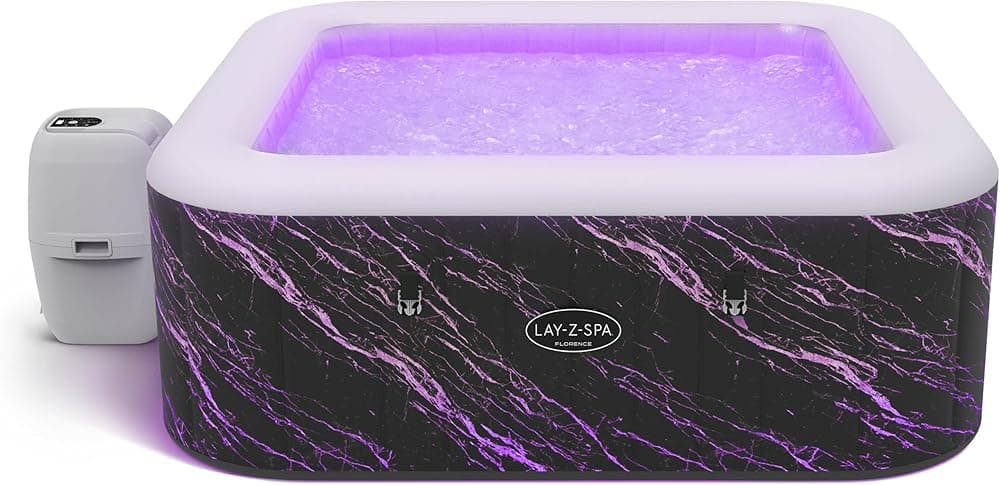
Best starter. The Miami is the cheapest credible way in and one of the most-reviewed inflatables on Amazon UK. At 669 litres it's also the smallest here, which keeps the standing cost at the lower end of the basic-liner group. What it doesn't have is insulation, so it's happiest as a summer and occasional-use tub rather than something you leave running through January. It's frequently out of stock too, in which case the Boracay is the same size with a power-saving timer.
Best Starter
Lay-Z-Spa Miami AirJet
£329.99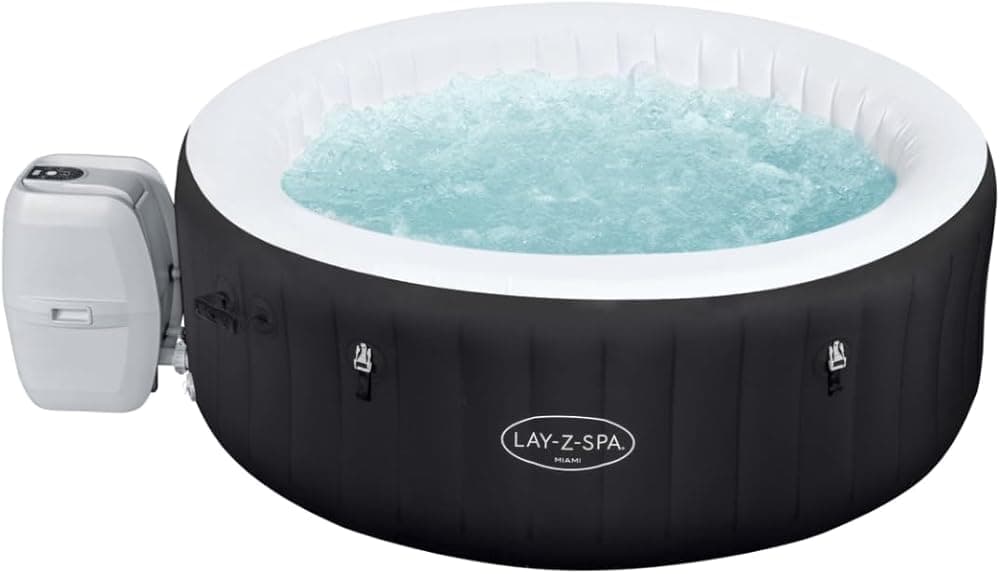
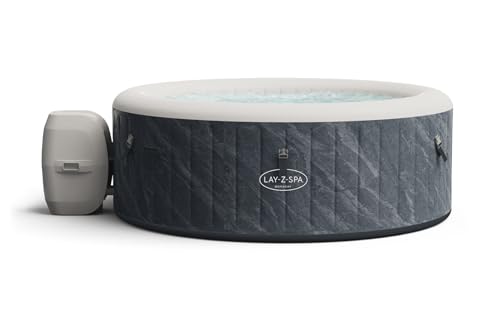

Best smart on a budget. Same compact size as the Miami, but the app and power-saving timer let you schedule heating instead of holding 40°C around the clock. On a basic-liner tub, that scheduling is exactly how you claw back running cost.
Best Smart Budget
Lay-Z-Spa Boracay Smart
£389.99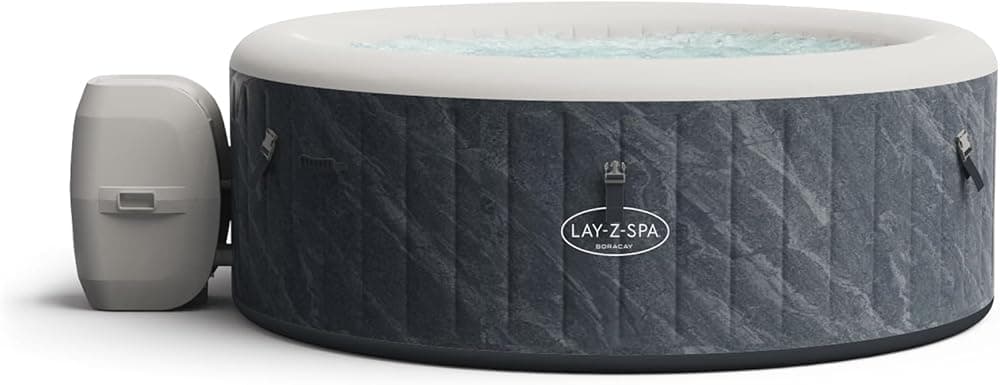
Cheapest to run. If it's staying on through winter, the Stockholm is the smart money. The ThermaCore insulated foam walls and base cut standing heat loss enough that it costs around a quarter less to keep warm than the basic-liner Florence, which is the same 4-6 person size and holds less water. It's newer, so reviews are still building, and it's another one that goes in and out of stock.
Cheapest to Run
Lay-Z-Spa Stockholm ThermaCore
£1,079.99
Best premium. The San Francisco seats up to seven, swaps bubbles for proper HydroJets, and its EnergySense liner keeps the running cost sane for such a big tub. The full spa experience for a crowd.
Best Premium
Lay-Z-Spa San Francisco HydroJet
£1354.99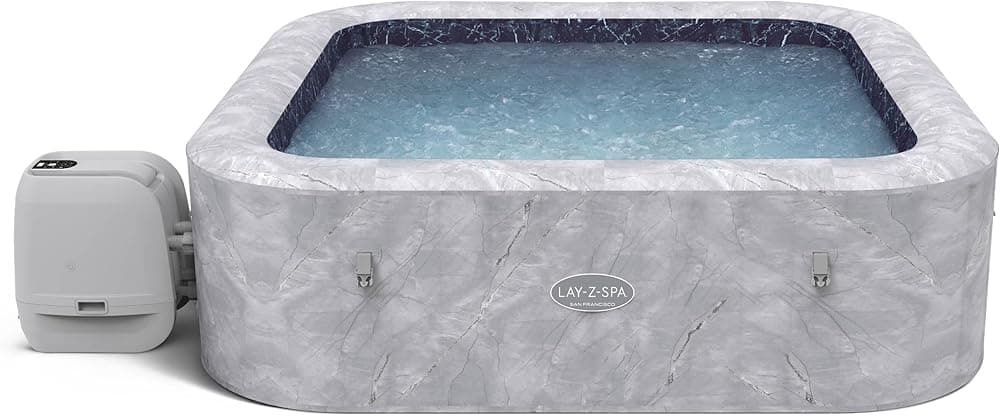
What We'd Skip
A few things to walk past on the listings page:
- Off-brand "energy efficient" inflatables. You'll see unbranded tubs claiming "60% more energy efficient" at tempting prices, with single-digit review counts. The efficiency claim is unverifiable marketing and there's no track record behind them. Stick with a brand you can get parts and support for.
- Fake-RRP anchoring. Watch for tubs listed at a big "discount" off an RRP they never actually sold at, and listings where the current price sits above the stated RRP. Judge on the real price and the review count, not the imaginary saving.
- Brand-new models with a handful of reviews. Some of the pricier smart tubs (the Helsinki, for instance) look fine but have only a few ratings. Promising, but one to watch rather than one to buy on day one.
- Sizing up "to be safe". A bigger tub costs more to buy and more to run, every month, forever. If it's usually two of you, buy the 2-4 person tub.
A Few Things Worth Knowing
You can use it in winter. Every Lay-Z-Spa here has Freeze Shield, which automatically fires the heater to stop the water freezing even in standby. The catch is cost, not capability: winter is by far the dearest time to run one, which is the whole argument for an insulated tub if you won't pack it away in October.
Budget for chemicals and filters. The electricity isn't the only running cost. You'll need chlorine or bromine, test strips, and filter cartridges (the cartridges are cheap but need swapping every couple of weeks in regular use). Reckon on a few pounds a week on top of the energy.
Heating from cold takes a while. Inflatables heat at around 1.5-2°C an hour, so filling from the cold tap and getting to 40°C is the best part of a day, longer in winter. That's why people leave them on with the cover down and just top the heat up, rather than draining and reheating each time.
