
The Short Answer
For a damp bedroom, a flat or a small house, buy the MeacoDry ABC 10L (£129.99). It's quiet enough to sleep next to, costs about 4p an hour to run, switches itself off when the room is dry, and Meaco is one of the few makers that tells you what its dehumidifiers actually do at normal room temperatures.
- Meaco 20L Low Energy (£229.99): for a whole house with condensation on most windows. Nearly twice the real-world extraction for about 6p an hour.
- EcoAir DD1 Simple MK3 (£179.99): for a garage, conservatory, boat or any unheated room. Desiccant, so it keeps working in the cold.
- VonHaus 12L (£84.99): the budget pick from an established brand.
The one thing to know before you buy anything: the "10L" or "20L" on the box is measured at 30C and 80% humidity. In a normal British room you'll get roughly half of it, and in a cold one much less.
All 8 Products Compared
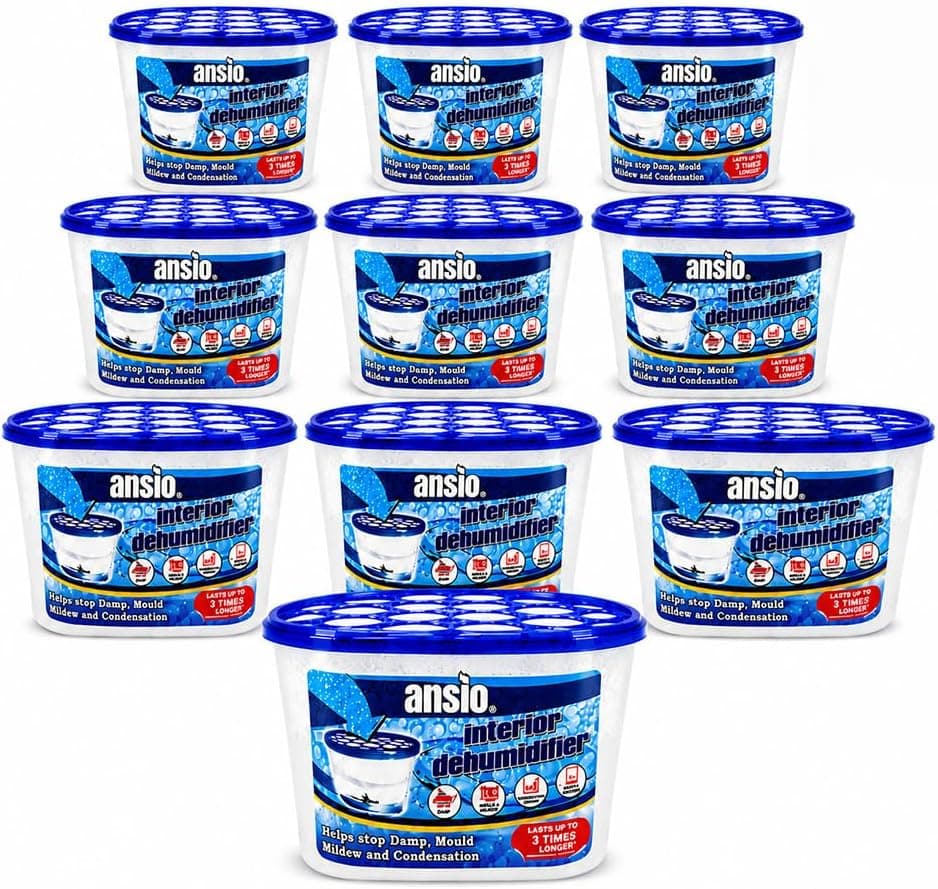
ANSIO Disposable Moisture Absorbers, 10 Pack
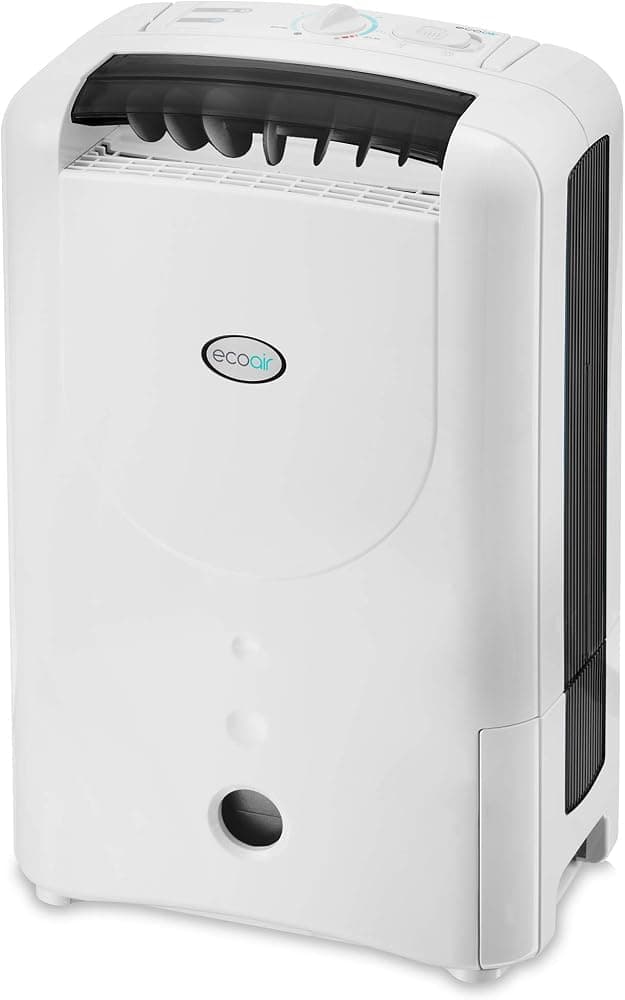
EcoAir DD1 Simple MK3 Desiccant Dehumidifier
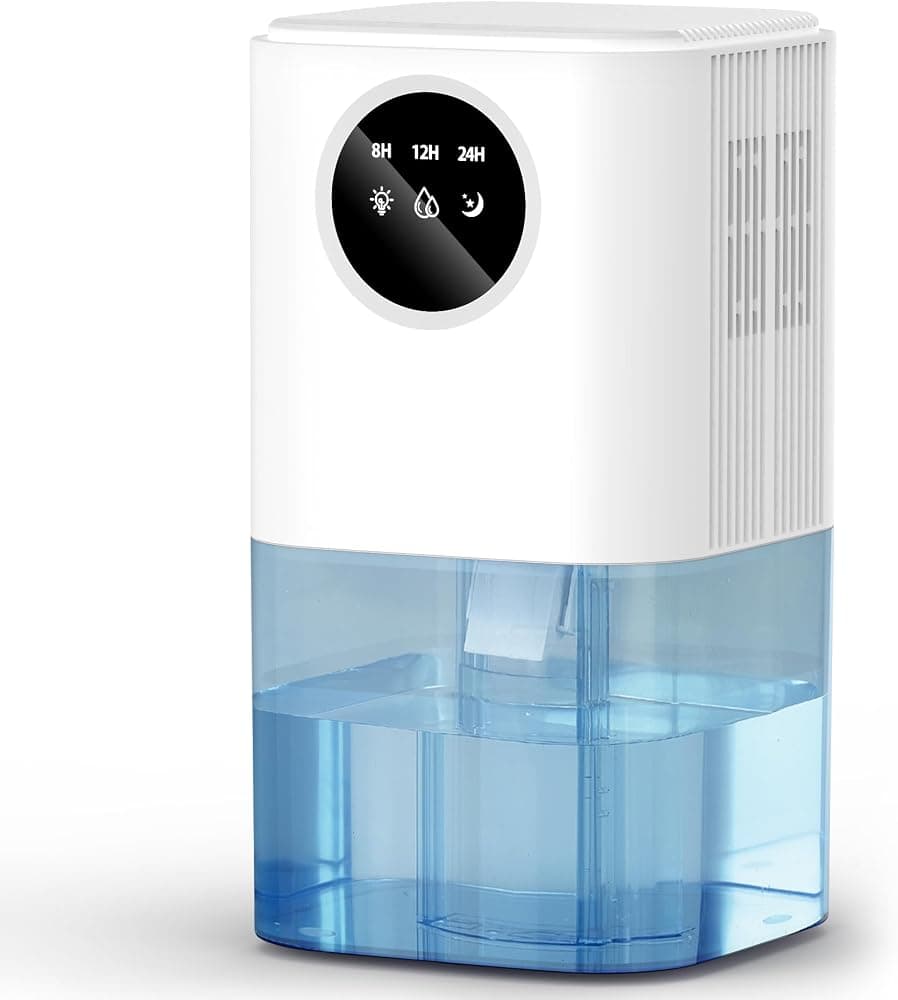
hOmeLabs 1700ml Mini Dehumidifier
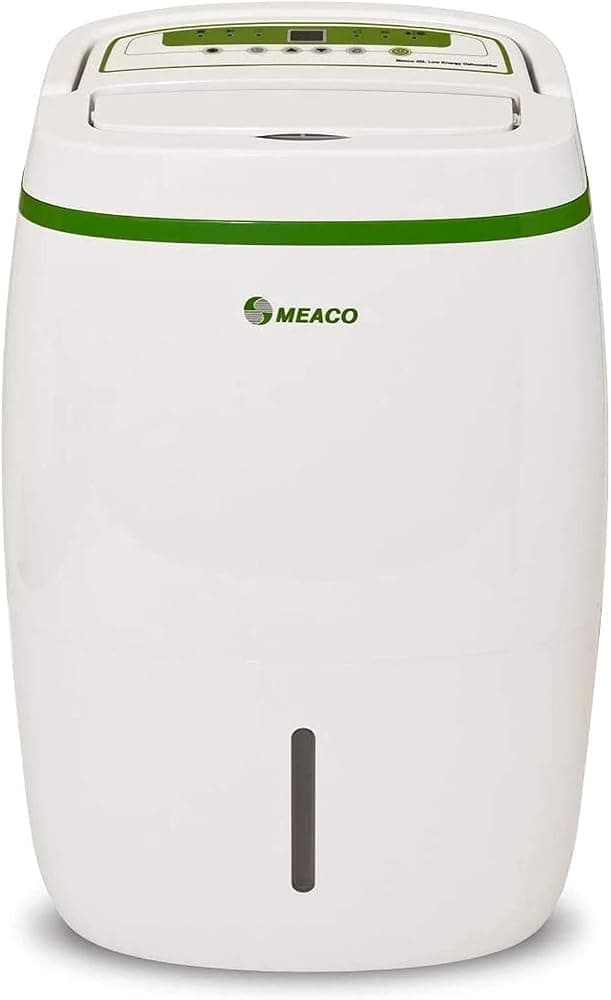
Meaco 20L Low Energy Dehumidifier and Air Purifier
As an Amazon Associate we earn from qualifying purchases. Prices correct as of 12 October 2026, checked against Amazon every few hours.
What "10 Litres a Day" Really Means
Every dehumidifier is sold on its maximum extraction rate, and every maker measures it in a hot, steamy room: usually 30C and 80% relative humidity. That's a fair test for comparing models, but it's nothing like a British living room in November.
Meaco is one of the few brands that publishes the full picture, so we can see the gap. Here's what its two most popular models do, from Meaco's own data:
| Room conditions | MeacoDry ABC 10L | Meaco 20L Low Energy |
|---|---|---|
| 30C, 80% humidity (the "box" test) | 10.28L/day | 20.38L/day |
| 20C, 80% humidity (a very damp heated room) | 7.32L/day | 13.74L/day |
| 20C, 60% humidity (a typical heated room) | 4.48L/day | 8.48L/day |
| 10C, 80% humidity (a damp, cold room) | 2.28L/day | 5.86L/day |
| 10C, 60% humidity (a cold room) | 1.55L/day | 2.52L/day |
Two lessons. First, size up from the box figure: if you've got a genuinely damp house, a "10L" unit is really a 4 to 7 litre unit in your home. Second, compressor dehumidifiers fall off a cliff in the cold. At 10C the 10L Meaco does about a third of what it manages at 20C. That's physics, not a fault: a compressor unit works by cooling air over a cold coil, and that gets harder the colder the room already is.
When a brand doesn't publish figures like these, assume its real-room performance drops in a similar way.
Compressor or Desiccant?
This is the decision that matters most, and it comes down to the temperature of the room.
| Compressor | Desiccant | |
|---|---|---|
| Best in | Heated rooms, 15C and up | Cold rooms: garages, conservatories, boats, caravans |
| Running cost | Lower: about 150 to 220W for our Meaco picks | Higher: 300W on low, 580W on high for the EcoAir DD1 |
| In the cold | Output drops sharply (see table above) | Keeps working; the DD1 is rated down to 1C |
| Heat | Slightly warms the room | Noticeably warms the room, since most of the power comes out as heat |
| Weight and noise | Heavier (our Meaco picks weigh 10 to 14kg) | Lighter (6kg for the DD1) and quiet on low |
Rule of thumb: if the room is heated, buy compressor. If it isn't, buy desiccant. If you're drying washing in a heated house, compressor is cheaper, and our guide to dehumidifiers for drying clothes goes into laundry modes and the cost per load.
What It Costs to Run
Dehumidifiers are cheap to run compared with heating, but a bigger one running all day adds up. Pick a model and how you'll use it:
Dehumidifier Running Cost Calculator
Pick a model and how you'll use it. Costs use the Ofgem price cap electricity rate of 26.32p/kWh (1 October to 31 December 2026).
Per day
32p
4p an hour at 152W
Per year
£58
8 hours a day for 6 months
Water it actually pulls out
4.48L/day
Meaco's figure at 20C and 60% humidity, running flat out
Costs assume the unit draws its full wattage for every hour it's on. In auto mode most units switch off once the room reaches the humidity you set, so a real bill is usually lower. Wattage source for this model: Meaco, at 20C and 60%rh. Desiccant dehumidifiers also give off most of that energy as heat, which warms the room slightly.
For context, at the current price cap rate a MeacoDry ABC 10L running eight hours a day for the six damp months of the year costs about £58. Set it to auto and let the humidistat switch it off once the room is dry, and you'll usually pay less than that.
Our Top Picks in Detail
The one most people should buy:
Best Overall
MeacoDry ABC 10L
£129.99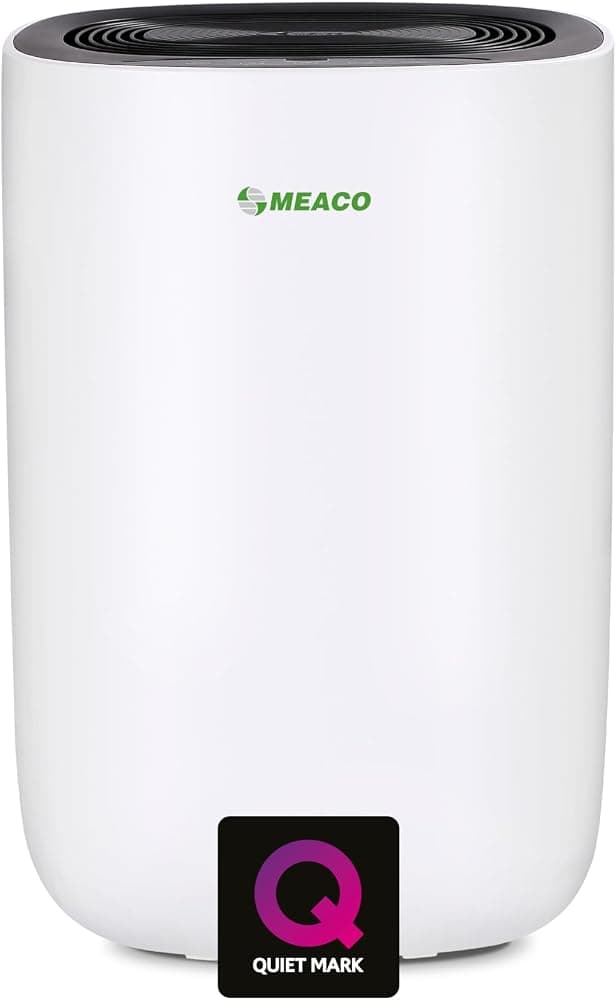
For a whole damp house:
Best for Damp Houses
Meaco 20L Low Energy Dehumidifier and Air Purifier
£229.99For garages, conservatories and anywhere unheated:
Best for Cold Rooms
EcoAir DD1 Simple MK3 Desiccant Dehumidifier
£179.99A strong alternative to the Meaco at the same price:
Best Value
Pro Breeze OmniDry 12L
£129.95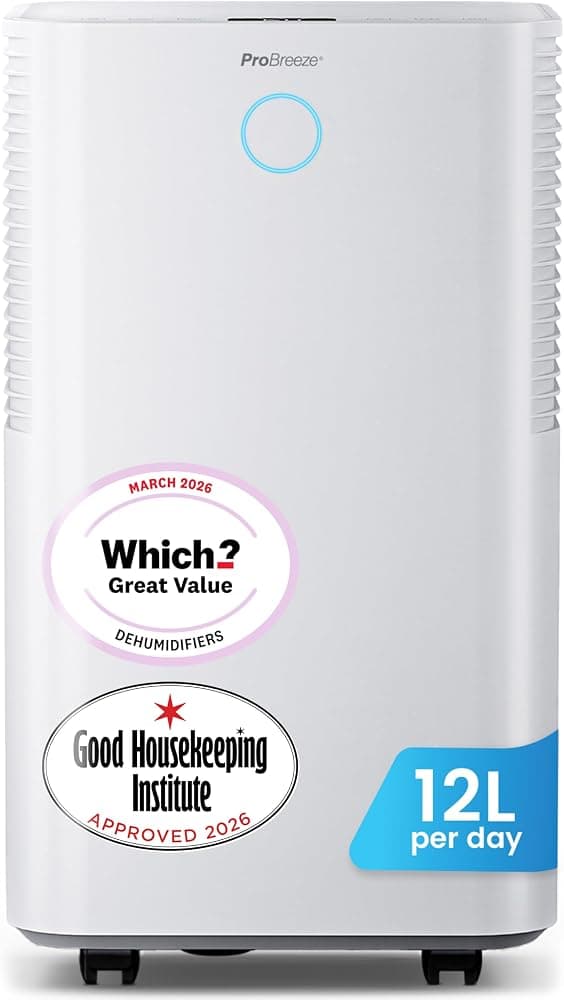
The budget pick:
Best Budget
VonHaus 12L Dehumidifier
£84.99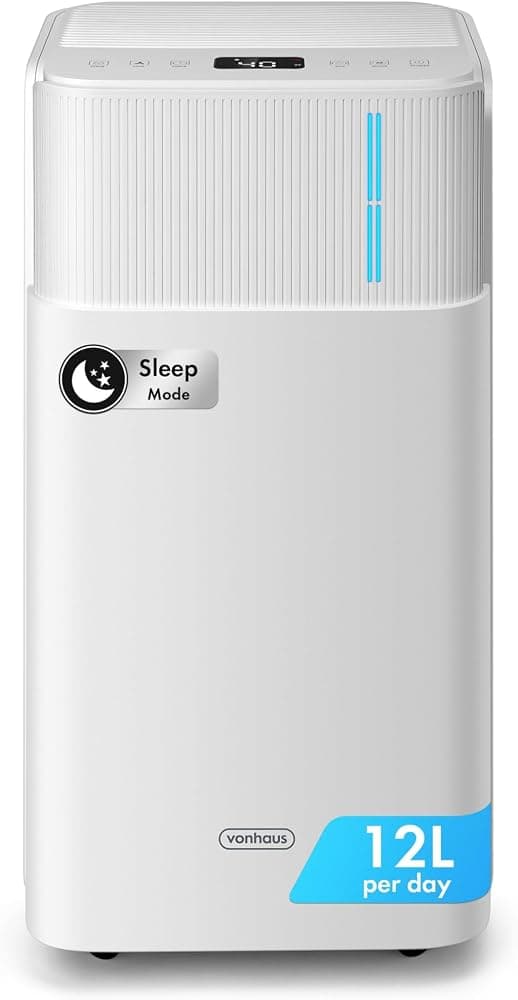
If you want app control:
Best Smart
Dreo 20L Smart Dehumidifier
£161.49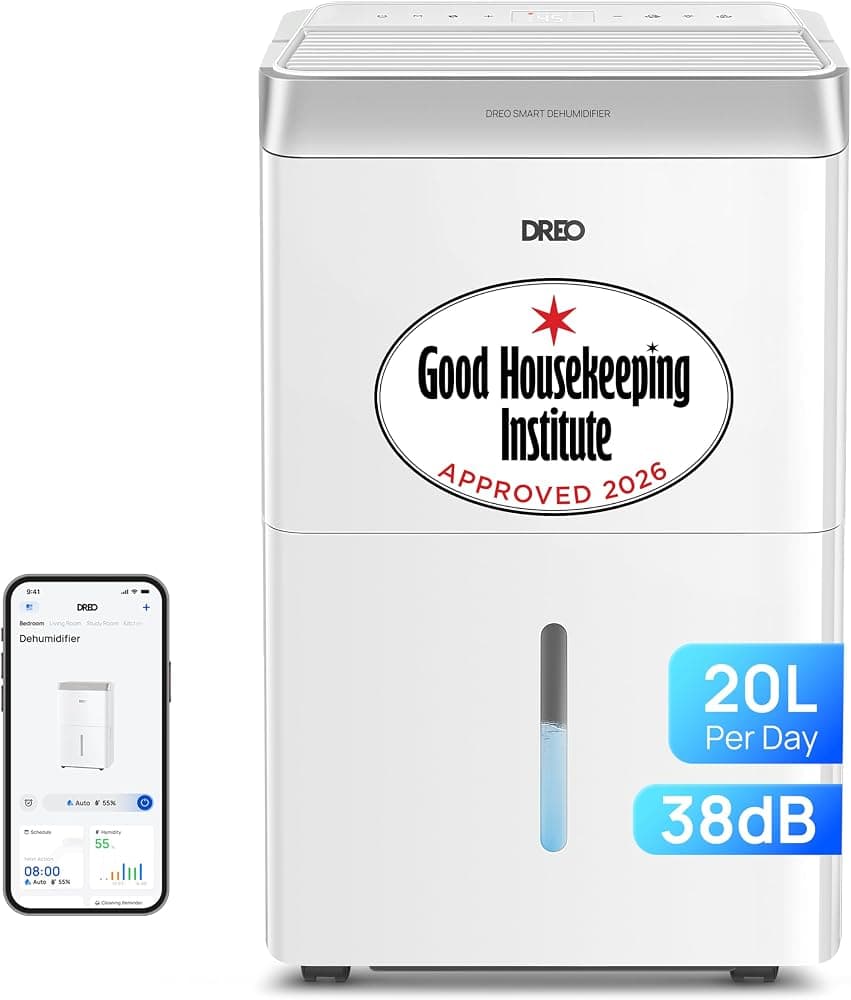
Only for wardrobes and tiny rooms:
Small Spaces Only
hOmeLabs 1700ml Mini Dehumidifier
£42.48For cupboards and stored caravans, no plug needed:
Cupboards and Wardrobes
ANSIO Disposable Moisture Absorbers, 10 Pack
£9.95Before You Buy: Find Out Why It's Damp
A dehumidifier treats the symptom. It's worth ten minutes working out the cause, because some causes need fixing rather than drying:
- Condensation (water on the inside of windows, mould in corners and behind furniture, worse in winter): this is moisture from cooking, showers, breathing and drying washing meeting cold surfaces. A dehumidifier is the right tool, alongside extractor fans and opening a window after a shower.
- Penetrating damp (a patch that grows after rain, often on one wall): water is getting in from outside, through a gutter, a crack or failed pointing. Fix the outside. A dehumidifier won't keep up.
- Rising damp (a tide mark low on ground-floor walls): get it properly diagnosed. Check for blocked air bricks and outside ground levels piled above the damp course before paying for any treatment.
- Leaks: if the tank fills every few hours and the room still feels wet, look for a plumbing leak before blaming the weather.
Cold walls make condensation much worse, which is why damp and poor insulation go together. If your whole house runs cold and damp, the long-term fix is warmer walls and steadier heating. Our home energy efficiency guide covers the cheapest ways to get there.
How to Get the Most From a Dehumidifier
- Shut the door. A dehumidifier dries the room it's in. Leaving doors open asks it to dry the whole house and the outside air coming in.
- Set a target, then leave it on auto. Most units let you pick a humidity level and switch off once they reach it. Running flat out once a room is dry just wastes money.
- Leave space around it. A gap from the wall and furniture lets air reach the intake.
- Use the drain hose for a really damp room. A 2L tank can fill in a few hours. Many units have a continuous drainage outlet, so run a hose to a sink or drain.
- Clean the filter. A clogged dust filter cuts airflow and output.
What We'd Skip
- Mini "dehumidifiers" sold for whole rooms. The small plug-in units holding a litre or two are typically rated at a few hundred millilitres a day even in hot, humid test conditions. They can help in a wardrobe. They won't fix a damp bedroom.
- Compressor units for a cold garage. The box says 20L, the garage gets a litre or two. Buy desiccant.
- Anything without a humidistat. Without one, the unit either runs flat out all day or needs you to switch it off by hand. Our main electric picks all have one, apart from the EcoAir, which uses a simpler manual dial.
- Choosing on the box figure alone. Compare like with like, and favour brands that publish real-room data.
