
The Short Answer
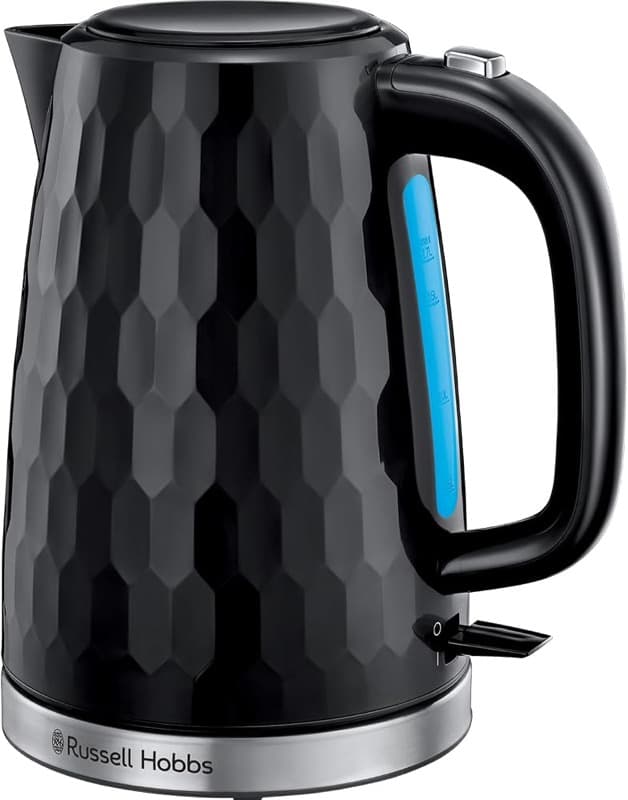
Buy the Russell Hobbs Honeycomb 1.7L (£23) and fill it to the one-cup line. That's it. It has clear 1, 2 and 3 cup markings inside, boils a single cup in under a minute, and it's one of the best-rated kettles on Amazon UK. It costs about 0.9p to boil one cup and about 5p to boil it full, and no kettle at any price changes those two numbers.
- Breville HotCup 1.5L (£40): the one-cup dispenser. Press the button, get exactly 250ml of boiling water. It physically stops you overfilling, which is the only way most households ever save money on a kettle.
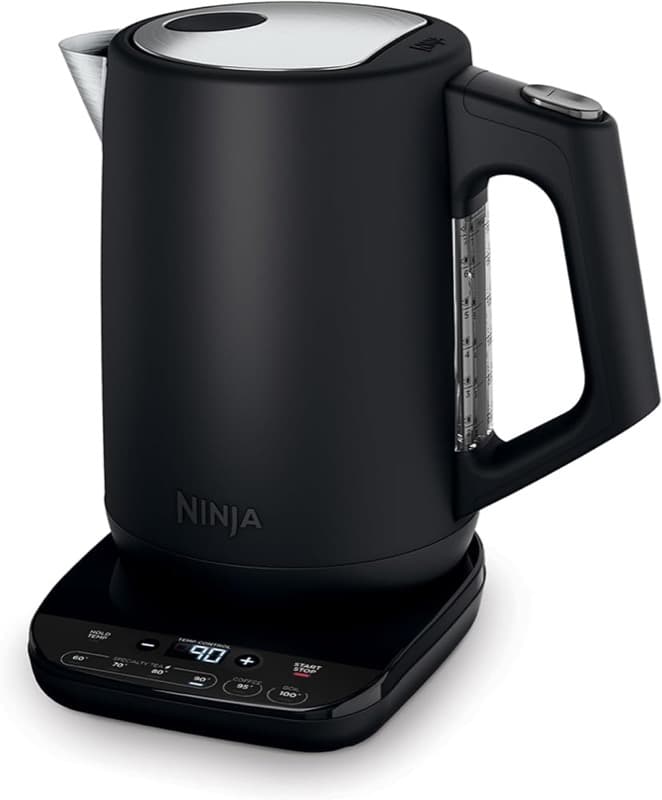
- Ninja Perfect Temperature (£70): if you drink coffee, green tea or make up baby bottles, boiling to 80°C instead of 100°C uses about a quarter less energy per boil and makes a better drink.
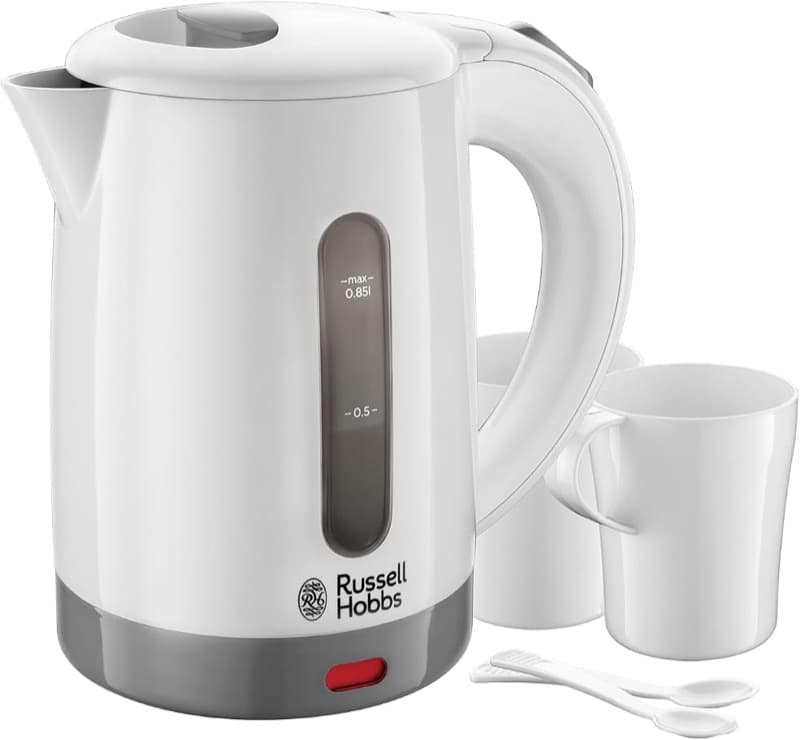
- Russell Hobbs 0.85L travel kettle (£15): live alone? A tiny kettle is the cheapest way to make overfilling impossible.
The thing nobody selling you a kettle will say: every electric kettle turns almost all of its electricity into hot water. A £10 Daewoo and an £84 Bosch heat a litre of water for the same 2.9p. What changes the bill is how much water you boil, what temperature you boil it to, and how many times a day you re-boil the same water. The kettle is the least important part.
Prices used on this page
Every running cost here uses the Ofgem price cap electricity rate of 26.32p/kWh for 1 October to 31 December 2026. There's no VAT on domestic electricity between 1 October 2026 and 31 March 2027, and that's already in the figure. If you're on a cheaper overnight tariff, your kettle costs less than this in the small hours and more in the evening.
Why "Energy-Efficient Kettle" Is Mostly a Marketing Term
Search Amazon for an energy-efficient kettle and you'll find £60 kettles with "eco" in the title, "rapid boil" badges, and claims about saving energy that are technically true and practically meaningless.
Here's the physics, and it isn't complicated. Heating a litre of water from a cold tap (about 15°C) to boiling takes roughly 0.1 kWh. That's fixed. It doesn't matter whether the element is 1kW or 3kW, whether the body is plastic or steel, or what the box says. A kettle's job is to turn electricity into hot water, and every kettle does it at somewhere around 90% efficiency, with the rest lost as steam and warming the kettle itself. At the current price cap, that's about 2.9p per litre, whichever kettle you own.
So a full 1.7 litre kettle costs about 5p to boil. One cup costs under a penny. The gap between those two numbers is the entire story of kettle energy efficiency. Four boils a day, every one of them full, is about £72 a year. Four boils a day, filled to the cup line, is about £13. The Energy Saving Trust puts the typical household saving from filling only what you need at £10 a year, which is what you get if you're currently a moderate overfiller rather than a habitual fill-it-to-the-top one.
Three things actually move the bill:
- How much water you boil. The big one. Boiling 1.7 litres for one mug wastes about 4p every single time. A kettle with an honest one-cup marking, a small minimum fill, or a one-cup dispenser fixes this.
- What temperature you boil to. Water for coffee, green tea and baby bottles wants 70°C to 90°C, not 100°C. Stopping at 80°C uses about 24% less energy than a full boil. A variable temperature kettle is the only kettle feature that reduces the energy of a given boil.
- How often you re-boil. Boiling a full kettle, forgetting it, and boiling it again twenty minutes later is the second biggest waste after overfilling. An insulated kettle, or simply a smaller one, helps here.
Everything else, including wattage, "rapid boil", concealed elements and whether it's glass, is about speed, looks and cleaning. Worth paying for, sometimes. Not an energy saving.
What Does Your Kettle Actually Cost?
Pick how you really fill it and how often it goes on. The kettle's wattage isn't an input because it doesn't change the answer: the energy to boil a given amount of water is fixed.
e.g. what most people do without thinking
Only variable temperature kettles can stop short of boiling
Cap is 26.32p to 31 Dec 2026
Filling for the cup you're actually making would save about £29.24a year. That's free, and it's bigger than any saving a new kettle can offer on its own.
Against your current habit above, at 4 boils a day. A kettle only saves money if it changes how much water you boil or what temperature you stop at.
Electricity 26.32p/kWh and gas 7.97p/kWh are the Ofgem price cap rates for 1 October to 31 December 2026 (average direct debit, England, Scotland and Wales); electricity carries no VAT from 1 October 2026 to 31 March 2027, the gas figure includes 5% VAT. Water is assumed to start at 15°C and need 4.186 kJ per litre per °C, plus 10% for steam and warming the kettle. Gas hob assumes 40% of the flame's heat reaches the water, induction 85%. Your standing charge is payable either way, so it is not included.
What a Boil Actually Costs
Every figure here is the same maths: litres of water, multiplied by 0.109 kWh per litre (which allows for real-world losses), multiplied by 26.32p. The annual figures assume four boils a day.
Cost Per Boil, by How Much You Fill
At the Ofgem price cap of 26.32p/kWh (1 October to 31 December 2026), using 0.109 kWh per litre to allow for steam and warming the kettle. Every kettle uses the same energy per litre; only the fill changes.
As an Amazon Associate we earn from qualifying purchases.
Look at the two ends. Boiling exactly one cup in a dispenser and boiling a full 1.7 litre kettle are separated by a factor of seven. Nothing you can buy narrows that gap. The only thing that closes it is boiling less water.
How Much Electricity Does a Kettle Use?
People ask this three different ways ("how much does it cost to boil a kettle", "how many kWh does a kettle use", "which kettle is cheapest to run") and the answer to all of them is the same table. A kettle uses about 0.11 kWh per litre boiled from cold. Multiply by how much you put in.
| What you boil | Electricity used | Cost per boil | 4 boils a day, per year |
|---|---|---|---|
| One 250ml cup (dispenser) | 0.027 kWh | 0.7p | £10 |
| One mug, to the cup line (300ml) | 0.033 kWh | 0.9p | £13 |
| Two mugs (500ml) | 0.055 kWh | 1.4p | £21 |
| Half a jug kettle (1 litre) | 0.109 kWh | 2.9p | £42 |
| Full 1.5L kettle | 0.164 kWh | 4.3p | £63 |
| Full 1.7L kettle | 0.185 kWh | 4.9p | £72 |
| Full 1.7L kettle, but only to 80°C | 0.142 kWh | 3.7p | £54 |
Over a year, a household that boils four times a day uses somewhere between 40 kWh (dispenser, one cup at a time) and 270 kWh (full jug every time). For context, a typical UK home uses around 2,700 kWh of electricity a year, so a habitual full-jug boiler is putting about a tenth of their electricity through the kettle, while someone filling to the cup line is under 2%. Real, worth fixing for free, not worth agonising over.
Which kettle is cheapest to run? Whichever one you put the least water in. The most electricity-efficient kettle on this page is the one filled to the one-cup line, and it can be the £10 Daewoo.
Does a 3kW Kettle Cost More to Run Than a 2kW One?
No. This trips a lot of people up, because 3,000 watts sounds like a bigger number on the bill. But the kettle switches itself off when the water boils, and the energy needed to get there is the same. A 3kW kettle just gets there faster.
| Kettle power | Time to boil 1.7L | Energy used | Cost |
|---|---|---|---|
| 3,000W (most UK kettles) | About 3.5 to 4 minutes | ~0.185 kWh | ~5p |
| 2,200W (budget and glass kettles) | About 5 minutes | ~0.19 kWh | ~5p |
| 1,000W (travel kettle, 0.85L) | About 5.5 minutes for 0.85L | ~0.093 kWh | ~2.4p |
If anything, the slower kettle loses a fraction more heat because it spends longer getting there, but the difference is too small to measure on a bill. Buy 3kW for speed if you want it. Don't buy a low-wattage kettle expecting it to be cheaper; it's the smaller capacity that saves money, not the wattage.
Electric Kettle vs Gas Hob vs Induction
Someone will tell you it's cheaper to boil a kettle on the gas hob. It's closer than you'd think, but no.
| Method | Fuel rate | Efficiency | Cost to boil 1.7L |
|---|---|---|---|
| Electric kettle | 26.32p/kWh | ~90% | ~5p |
| Stovetop kettle on gas hob | 7.97p/kWh | ~40% | ~3.4p |
| Stovetop kettle on induction hob | 26.32p/kWh | ~85% | ~5.2p |
| Pan on electric ceramic hob | 26.32p/kWh | ~70% | ~6.3p |
Gas is a third of the price per unit, but a hob throws most of its heat round the sides of the kettle rather than into it, so the saving collapses to about a penny and a half a boil, and it takes twice as long. A gas hob also puts combustion products into the kitchen. If you already have gas, boiling on it isn't wrong, it's just not the saving people imagine. If you have a heat pump or solar, your electric kettle is already the cheaper option.
What Actually Matters When You're Choosing
Kettles don't carry an energy label. Unlike a fridge or a washing machine, there's no A-to-G rating, because there's nothing meaningful to rate: they all convert electricity to heat the same way. So you have to judge the features yourself. Here's what does and doesn't matter, roughly in order.
- Minimum fill and cup markings. The single most important thing. Look for a kettle you can fill for one mug (about 250ml to 300ml) with a marking that tells you where that is. Many jug kettles have a MIN line at 500ml, which means every solo cuppa boils two cups' worth.
- Where the water gauge is. Markings inside the jug, visible from above as you fill at the tap, get used. A tinted window on the back of the handle doesn't. The Russell Hobbs kettles and the Cosori have them inside.
- Variable temperature. The only feature that cuts the energy of a boil. Worth it if you drink coffee, green tea or make up bottles; irrelevant if you only drink black tea.
- Insulation. A double wall keeps the water hot and the outside cool. It saves energy only if you'd otherwise re-boil. It's also a real safety feature with small children about.
- Keep-warm. Convenient, and it costs a little. Treat it as a comfort feature, not an eco one.
- Boil speed and wattage. 3kW boils a full jug in under four minutes. Lower wattage is slower and no cheaper. Buy for the speed you want.
- Material. Plastic is light and cheap, and the good brands are BPA-free. Stainless steel is durable and can be plastic-free inside (the Cosori) but gets hot to touch unless double-walled. Glass looks great, shows the limescale, and is the most fragile. None of them affects running cost.
- Limescale filter. A removable, washable filter at the spout is standard on anything decent and matters more in hard water areas.
- Auto shut-off and boil-dry protection. Every kettle here has both. If one you're looking at doesn't say so, walk away.
- Reviews and guarantee. A kettle lives a hard life. Thousands of reviews at 4.3 stars or better, and a two-year guarantee you can actually claim on, are worth more than any feature.
Our Picks
We've picked kettles for the three things that genuinely cut the bill: honest cup markings, one-cup dispensing, and variable temperature. Plus the cheap ones that do the job and an insulated one for the re-boilers.
All 11 Products Compared
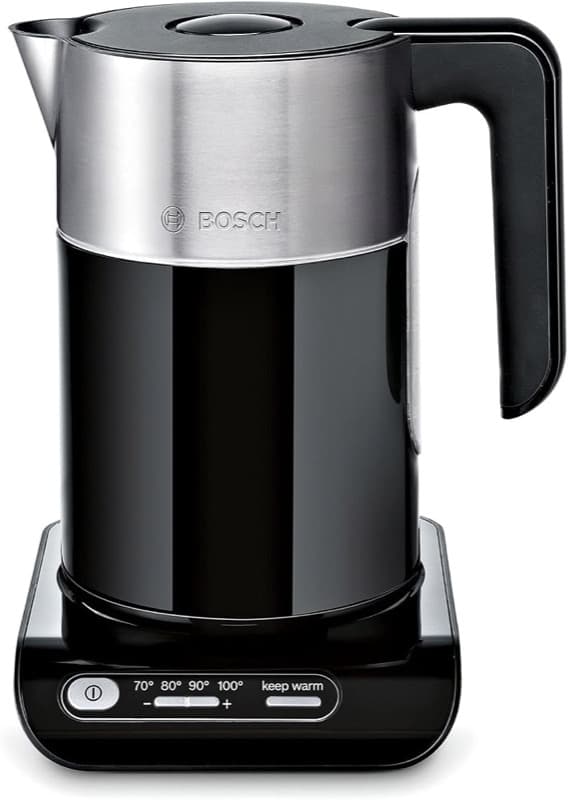
Bosch Styline TWK8633GB Variable Temperature Kettle
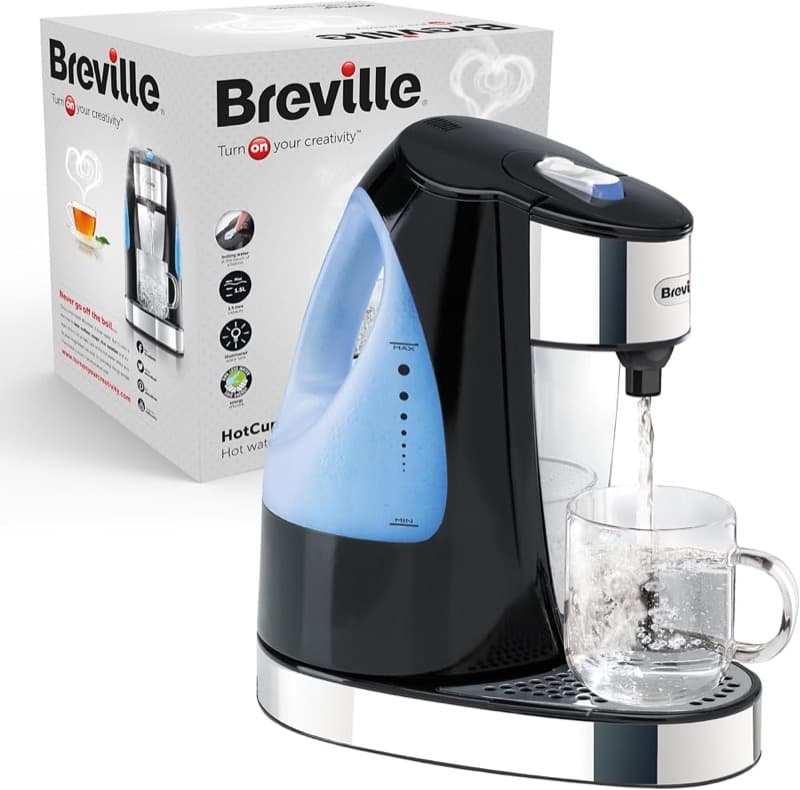
Breville HotCup 1.5L Hot Water Dispenser
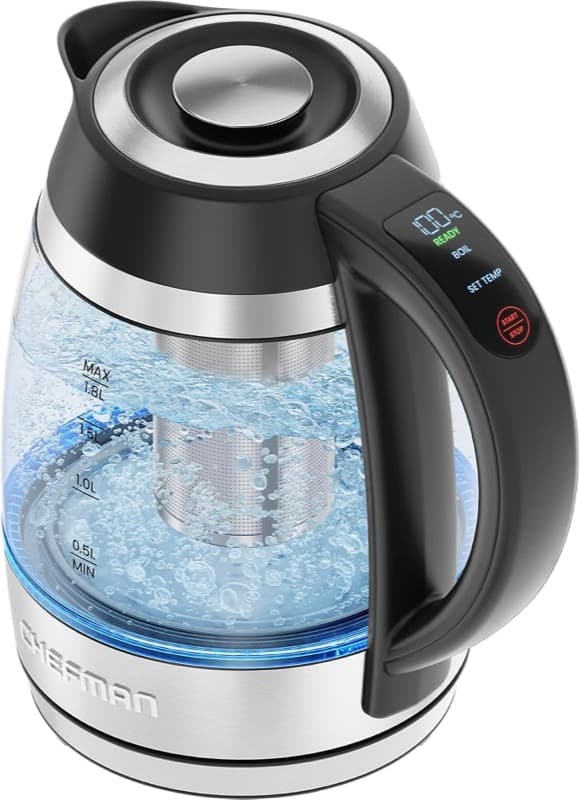
Chefman 1.8L Glass Kettle with Temperature Control
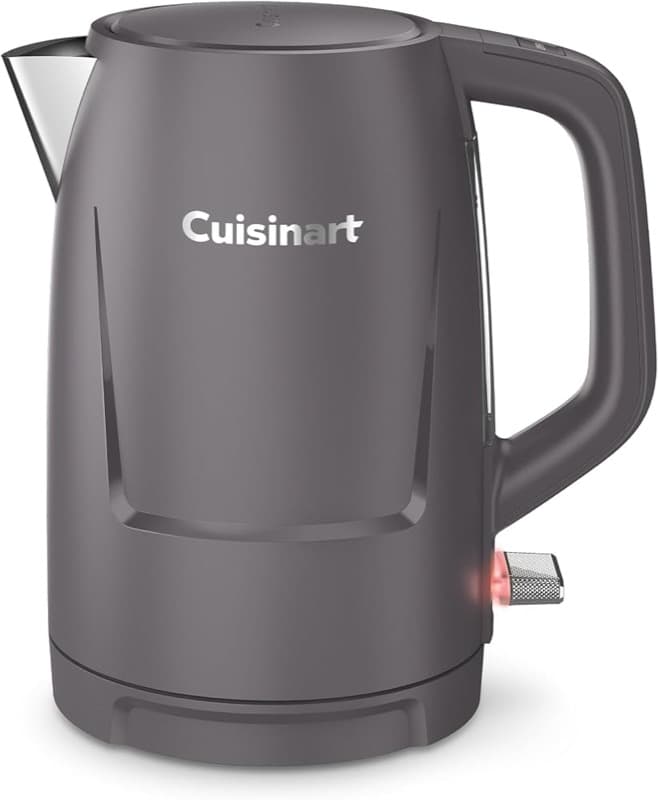
Cuisinart 1.5L Double-Walled Kettle
Daewoo Essentials 1.7L Kettle
Ninja Perfect Temperature 1.7L Kettle
Russell Hobbs 0.85L Travel Kettle
Russell Hobbs Honeycomb 1.7L Kettle
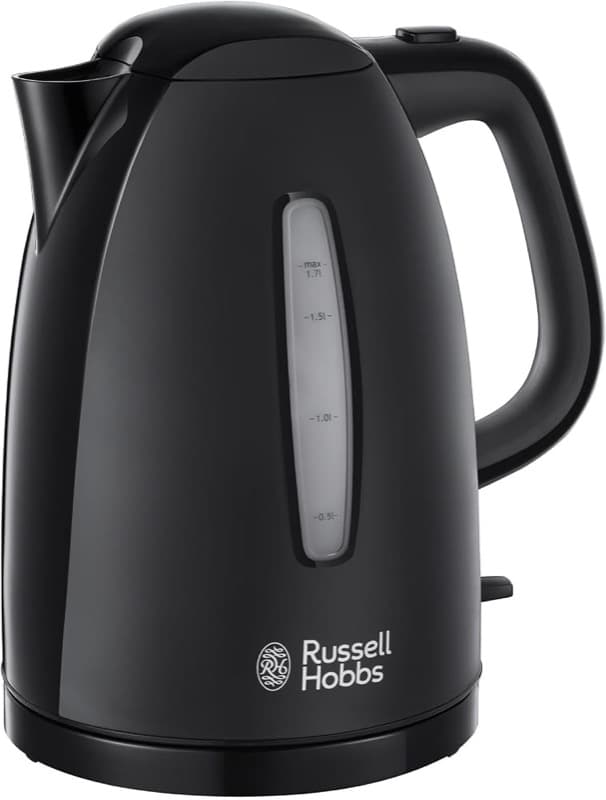
Russell Hobbs Textures 1.7L Kettle
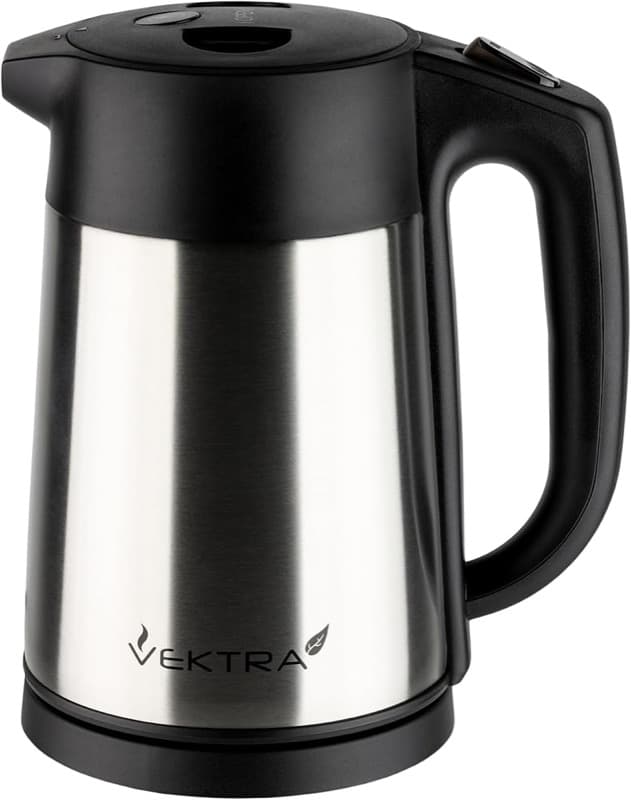
Vektra VEK-1506 Vacuum Insulated 1.5L Kettle
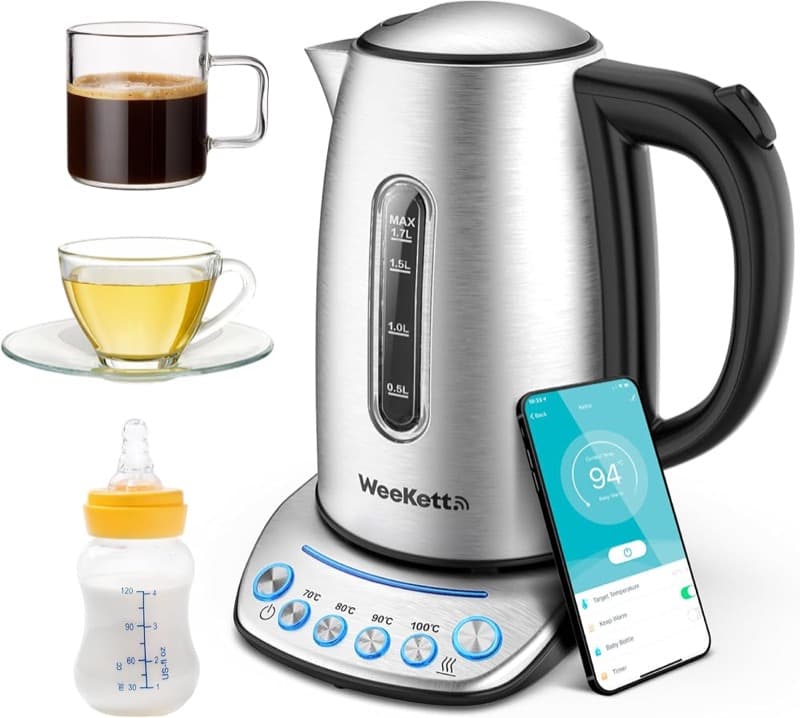
WeeKett Alexa Smart Kettle 1.7L
As an Amazon Associate we earn from qualifying purchases. Prices correct as of 19 September 2026, checked against Amazon every few hours.
Best Overall: Russell Hobbs Honeycomb 1.7L (£23)
Best Overall
Russell Hobbs Honeycomb 1.7L Kettle
£23.00This is the kettle most people should buy, and the reason is boring: it has proper 1, 2 and 3 cup markings moulded inside the jug where you can actually see them while you fill it. Most kettles have a water window on the outside with a "MIN" line at about half a litre. This one lets you fill for one mug, and Russell Hobbs says that boils in 43 seconds.
It's 3kW, so it's quick. It has a washable limescale filter, a push-button lid so you can fill it without touching a hot surface, and a two-year guarantee that becomes three if you register it. At £23 it's not a gamble.
What you don't get is temperature control or any kind of insulation. If you drink black tea and you'll fill it to the line, you don't need either.
If you'd rather have no plastic touching the water, the Cosori stainless steel kettle (£27) is the obvious alternative: all-steel interior, the same 3kW and single-cup boil, and a huge pile of reviews behind it. Its cup markings are on the inside too.
Buy this if: you drink tea, you want one kettle, and you'll actually fill it to the line.
Best One-Cup Dispenser: Breville HotCup 1.5L (£40)
Best One-Cup Dispenser
Breville HotCup 1.5L Hot Water Dispenser
£39.99A hot water dispenser is the only kettle-shaped object that makes overfilling impossible. You fill the 1.5 litre tank at the tap like a kettle, press the button, and it boils and dispenses exactly 250ml. The rest of the tank stays cold until you press again. Every "cup" is about 0.7p and there is no way to accidentally boil the lot.
It's also fast, because it only ever heats a cup's worth. The reviews tell you it works, and Breville has been selling this for well over a decade.
Downsides are real. The fixed 250ml is too little for a big mug, so you press twice, and a bit too much for a small one. It needs descaling more often than a kettle because the boiler is small and hidden. And you can't tip it into a pan of pasta. If you want to choose the cup size, the 2 litre variable-dispense HotCup (£65) has nine cup sizes and a manual stop; the Brita version (£75) adds a water filter, which matters in a hard water area.
Buy this if: your household makes a lot of single cups, or someone in it fills the kettle to the top every time and won't be told.
Best Variable Temperature: Ninja Perfect Temperature 1.7L (£70)
Best Variable Temperature
Ninja Perfect Temperature 1.7L Kettle
£69.99Variable temperature is the one kettle feature that reduces the energy of a given boil, and the Ninja is the best-behaved implementation we've found under £100. Six presets from 60°C to 100°C, or set it by the degree, with a live temperature readout. Boiling to 80°C for coffee or green tea uses about 24% less than a full boil, and the drink is better for it, because boiling water scalds both.
It's 3kW and 1.7 litres with cup markings, so it works as an ordinary fast kettle too. The Hold Temp function keeps the water at your set temperature for up to 30 minutes, which is genuinely useful for a second cup, though it uses a little energy to do it.
At £70 it costs three Honeycombs, and the saving is a penny or so per boil. This is a kettle you buy because you drink coffee or delicate tea and want it made properly; the energy saving is a bonus, not the payback.
Buy this if: you make coffee, green or white tea, or baby bottles, and you'd like the water at the right temperature rather than boiled and left to cool.
Best Premium: Bosch Styline TWK8633GB (£84)
Best Premium
Bosch Styline TWK8633GB Variable Temperature Kettle
£84.00The Bosch does two of our three things at once. It has four temperature settings (70°C, 80°C, 90°C and boil), and it's double-walled, so the water stays hot for much longer after boiling and the outside stays cool to touch. Fewer re-boils, better temperature, and a 30 minute keep-warm.
3kW, a 1.5 litre capacity that suits most households better than 1.7, and Bosch build. It's the kettle we'd buy if money weren't the deciding factor.
Money usually is the deciding factor, and £84 is a lot for a kettle. The real-world saving over a Honeycomb filled to the line is small. You're paying for the double wall, the temperature control and the finish.
Buy this if: you want the best kettle rather than the cheapest good one, and you'll use the temperature settings.
Best Budget Variable Temperature: Chefman 1.8L Glass (£25)
Best Budget Variable Temperature
Chefman 1.8L Glass Kettle with Temperature Control
£24.99Temperature control for £25, with thousands of reviews behind it. You pick a temperature or hit boil, the LED ring tells you where it's at, and there's a removable infuser for loose-leaf tea.
The catch is that it's 1,500W, half the power of most UK kettles. That does not make it cheaper to run, as we've explained above, but it does make it slow: a full 1.8 litres takes the best part of seven minutes. Fill it for a cup or two and it's fine. It also has a keep-warm mode that runs up to an hour, which is the one setting on this kettle that does cost money, so turn it off when you don't need it.
If you'd rather have 3kW and a matching toaster, the Haden Richmond (£35) has 70, 80, 90 and 100°C settings and a keep-warm.
Buy this if: you want variable temperature without spending £70, and you're not in a hurry.
Best Insulated: Vektra VEK-1506 Vacuum Kettle (£55)
Best Insulated
Vektra VEK-1506 Vacuum Insulated 1.5L Kettle
£55.00The Vektra is a kettle built like a flask: a vacuum-insulated, double-walled stainless steel body that keeps water hot for up to four hours after boiling. The idea is that instead of re-boiling a full kettle three times through a morning, you boil once and pour hot water from it like a jug.
For a specific kind of household this is the real deal. If you make up bottles through the night, live somewhere cold, or have a home office where the kettle goes on every hour, it stops the re-boil habit and the water is still hot enough for tea two hours later. Reheating water from 70°C uses about a third of the energy of heating it from cold.
We have to be honest about the reviews: its rating is a notch below everything else here and comes off a far smaller pile, with complaints about the pour and the lid. And if you don't re-boil, an insulated kettle saves you nothing. The Cuisinart double-walled kettle (£25) is a cheaper half-way house: insulated plastic rather than a true vacuum, a 240ml one-cup marker, 3kW, and excellent early reviews, though there are only a handful of them so far.
Buy this if: you know you re-boil the kettle several times a day and you'd like to stop.
Best Budget: Russell Hobbs Textures 1.7L (£18)
Best Budget
Russell Hobbs Textures 1.7L Kettle
£18.00The Honeycomb's cheaper sibling. Same 3kW element, same washable filter, cup markings, one cup in under a minute, and the same two-plus-one year guarantee, for a fiver less, and it's rated just as well. The lid lifts off rather than hinging and the finish is a bit plainer, and that's the whole difference.
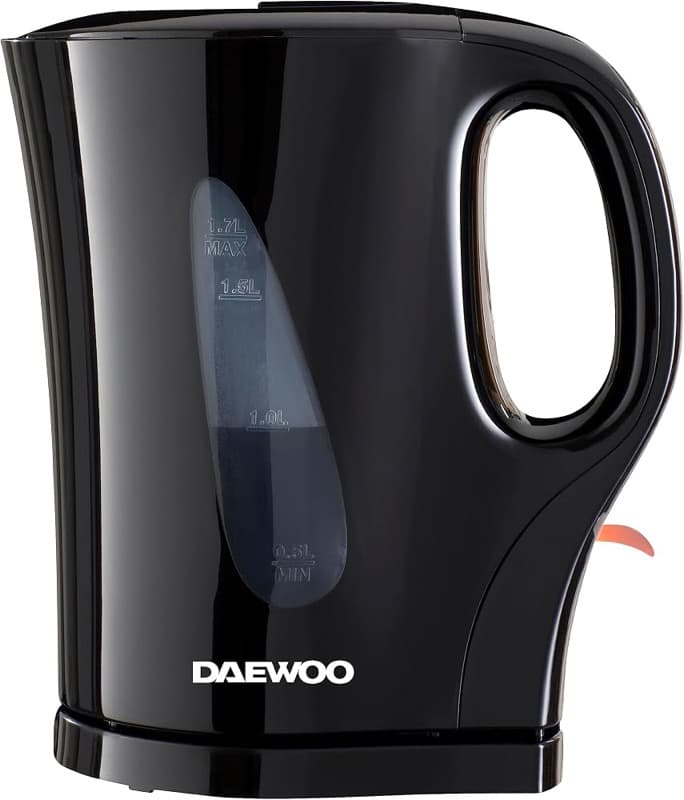
If even £18 is more than you want to spend, the Daewoo Essentials 1.7L is £10, boils water, switches itself off and has thousands of reviews. It's 2.2kW so a little slower, and the water window has a min line rather than proper cup markings. Buy it, fill it to the min line, and it'll cost exactly the same to run as the Bosch.
Buy this if: you want a kettle that works, from a brand that will honour the guarantee, and you'd rather keep the change.
Best for One Person: Russell Hobbs 0.85L Travel Kettle (£15)
Best for One Person
Russell Hobbs 0.85L Travel Kettle
£14.99The unglamorous answer for anyone who lives alone. It holds 0.85 litres, so a full kettle is about 2.4p rather than 5p and you physically cannot boil 1.7 litres for one cup. It's 1kW, which is slow for a big fill but perfectly quick for one mug, and it's dual voltage with two cups and spoons in the box because it's really sold as a travel kettle.
It's very well rated. It's small, light and cheap. It will not make tea for six.
If you want something a bit bigger and faster, the Aigostar 1 litre (£25, 1,100W) and the Tower 1 litre (£19, 2,200W) are both good small kettles.
Buy this if: you live alone, or it's for a bedroom, office or caravan.
Best Smart Kettle: WeeKett Alexa Kettle (£80)
Best Smart Kettle
WeeKett Alexa Smart Kettle 1.7L
£79.99We'll be straight: the energy case for a WiFi kettle is weak. Switching it on from bed doesn't save electricity, and if you fill it the night before, it's boiling the whole jug.
What the WeeKett does have is temperature control from 40°C to 100°C and a baby milk programme that boils, cools to 70°C and holds it for an hour, following NHS guidance on making up formula. For new parents doing night feeds, boiling from the bedroom and finding the water at the right temperature when you reach the kitchen is a genuinely useful thing, and the reviews are mostly telling that story. It's a 1.7 litre 3kW stainless kettle underneath.
Buy this if: you have a baby, or you really want to say "Alexa, put the kettle on". Otherwise buy the Ninja.
What NOT to Buy
- Anything sold on "eco" or "energy saving" at a premium. The Philips 5000 Series Eco (£55) is a perfectly nice kettle made from bio-based plastic with a one-cup indicator, and it uses exactly the same electricity per litre as the £18 Textures. If you like the look or the materials, fine. Don't buy it to cut your bill.
- A "rapid boil" upgrade for energy reasons. Rapid boil means 3kW. It's faster. It isn't cheaper.
- Keep-warm as an energy feature. Keep-warm holds water hot by switching the element on periodically. In a well-insulated kettle over 30 minutes it costs a fraction of a penny; in a thin glass kettle for two hours it can approach the cost of a fresh boil. Use it when you'll want a second cup soon, not by default.
- A kettle with a high minimum fill. Some jug kettles have a MIN line at 500ml or more, which means the smallest boil you can do is two cups' worth. Check the water window before you buy. The one-cup markings on the Russell Hobbs, Cosori, Bosch and Cuisinart kettles are the point.
- Boiling on the gas hob to save money. It saves about a penny and a half a boil, takes twice as long, and puts combustion fumes into your kitchen.
- Replacing a working kettle at all, for energy reasons. If your current kettle boils and switches off, keep it and fill it less. Every kettle here saves you money only if it changes how much water you boil.
How to Actually Cut the Kettle Bill
In order of how much they save per pound spent, which for most of these is nothing:
- Fill it for the cups you're making. Free. Worth £10 to £60 a year depending on how bad your habit is. If your kettle has no cup markings, measure a mug of water into it once and see where it comes to.
- Don't re-boil. If you've forgotten the kettle, the water is still 70°C ten minutes later and fine for most drinks. Reheating it costs a third of boiling from cold anyway.
- Boil to the temperature you need. Coffee and green tea don't want 100°C. A variable temperature kettle cuts about a quarter off each of those boils.
- Descale it. Limescale on the element slows the boil and wastes a little energy, but mostly it kills kettles. A cheap citric acid descaler every month or two in a hard water area pays for itself in kettles, not electricity.
- Move the big boils to cheap hours if you have them. On an Economy 7 or EV tariff, a flask filled from a kettle boiled at 6am costs a fraction of the daytime rate. Niche, but it works.
- Turn off keep-warm when you don't need it. The one kettle setting that actively spends money.
How to Descale a Kettle (and Why It Matters)
Limescale is the pale crust that builds up on the element and the floor of the kettle in hard water areas, which is most of England. It insulates the element, so the kettle takes a little longer to boil and wastes a little energy getting the heat through the crust. The energy loss is small. The bigger problem is that scaled elements run hotter, fail sooner, and shed flakes into your tea.
- Fill the kettle to about half with equal parts white vinegar and water, or use a sachet of citric acid descaler (about £1 each).
- Boil it, switch it off, and leave it for an hour. Longer for heavy scale.
- Pour it away, rinse two or three times, then boil a kettle of fresh water and discard it to get rid of the taste.
- Wash the spout filter under the tap while you're at it.
Once a month in a hard water area, every three months or so in a soft one. If your kettle has a concealed element (most modern ones do), scale mostly forms on the flat floor and this treatment lifts it easily.
When to Replace a Kettle, and What to Do With the Old One
Replace it when it stops switching itself off, when it leaks, when the lid or base connection gets flaky, or when descaling no longer clears the floor. Not when a newer one promises to save energy: it won't, unless it changes how much water you boil.
A dead kettle is electrical waste, not general rubbish. Any council recycling centre takes small electricals free, most large retailers take an old appliance back when you buy a new one, and some councils collect small electricals from the kerb. Don't bin it.
The Bigger Picture
A kettle is somewhere between 1.5% and 10% of a typical household's electricity, depending entirely on how you fill it, and even the worst overfilling habit costs less than £75 a year. It's worth fixing because it's free to fix. It is not worth spending £80 on a kettle to fix, and once you've filled it to the line there's nothing left to optimise.
If you're going through the house looking for savings, the kettle is a quick win on the way to the things that matter: draught proofing, loft insulation, and a heating system that isn't fighting the fabric of the building. Our home energy efficiency guide puts the kettle in context. And if you're weighing up a coffee machine, we've done the same running-cost maths for those.
Frequently Asked Questions
The Kettles We'd Actually Buy
Prices and stock come straight from Amazon. Remember the rule: every kettle costs the same per litre, so buy the one that makes it easiest to boil less.
Russell Hobbs Honeycomb 1.7L Kettle
£23.00The cup markings are the point. Fill it to the one-cup line and it is as cheap to run as any kettle at any price.
Breville HotCup 1.5L Hot Water Dispenser
£39.99It makes overfilling physically impossible, which is the only way most households ever actually save money on a kettle.
Ninja Perfect Temperature 1.7L Kettle
£69.99Stopping at 80°C for coffee or green tea uses about a quarter less energy than a full boil and makes a better drink.
Bosch Styline TWK8633GB Kettle
£84.00Insulation cuts re-boils and temperature control cuts the energy of each boil. The best kettle here if the price is not the deciding factor.
Russell Hobbs 0.85L Travel Kettle
£14.99For one person, a kettle that only holds 0.85 litres is the cheapest way to make overfilling impossible.
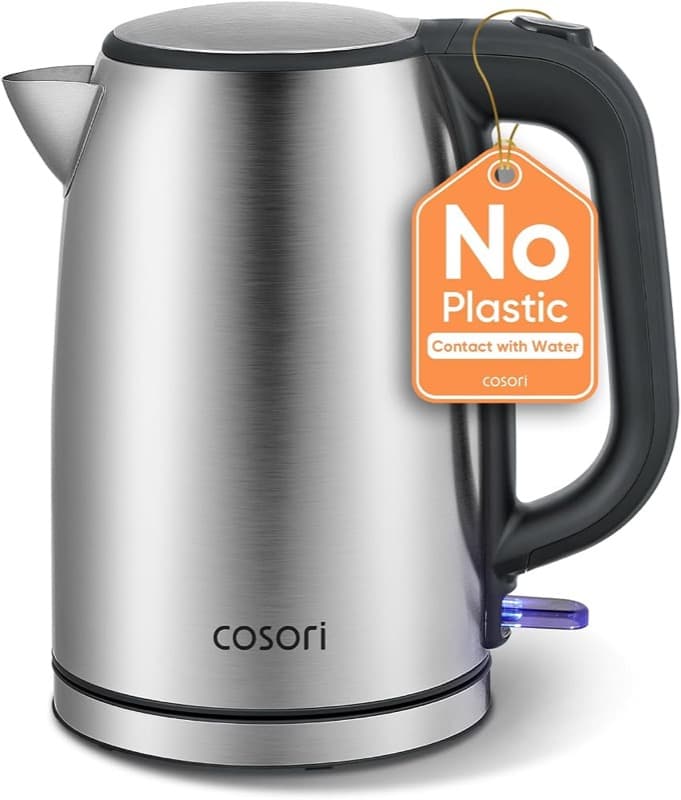
Cosori 1.7L Stainless Steel Kettle
£26.89The Honeycomb alternative for anyone who wants no plastic touching the water, with the same internal cup markings.
As an Amazon Associate we earn from qualifying purchases. Prices and stock are checked against Amazon every few hours and may have changed since.
