
The Short Answer
If you've got a power station and want to charge it from the sun, buy the Renogy E.FLEX-CORE 200W (£169.99). It's 200W for less than most brands charge for 100W, it has a standard MC4 output that works with almost any station, and USB-C on the panel charges a laptop with no station at all.
- ECO-WORTHY 120W kit (£109.99): the cheapest complete fixed kit for a shed or caravan roof. Add a 12V battery.
- Renogy 200W Solar Suitcase (£189.99): for a caravan leisure battery, no drilling, controller already wired in.
- Photonic Universe 25W Lighting Kit (£159.99): if the shed only needs lights, this is everything in one box.
Be realistic about the UK sun. On the EU's PVGIS model, a 200W panel in the Midlands averages about 760Wh a day in June and about 240Wh in December, at best. That's a useful top-up, not free power for the house.
All 10 Products Compared
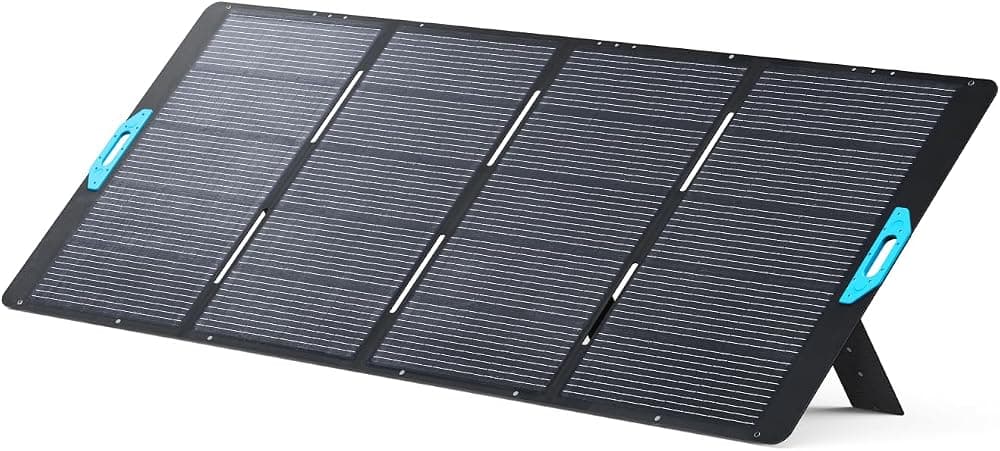
Anker SOLIX PS400 Portable Solar Panel
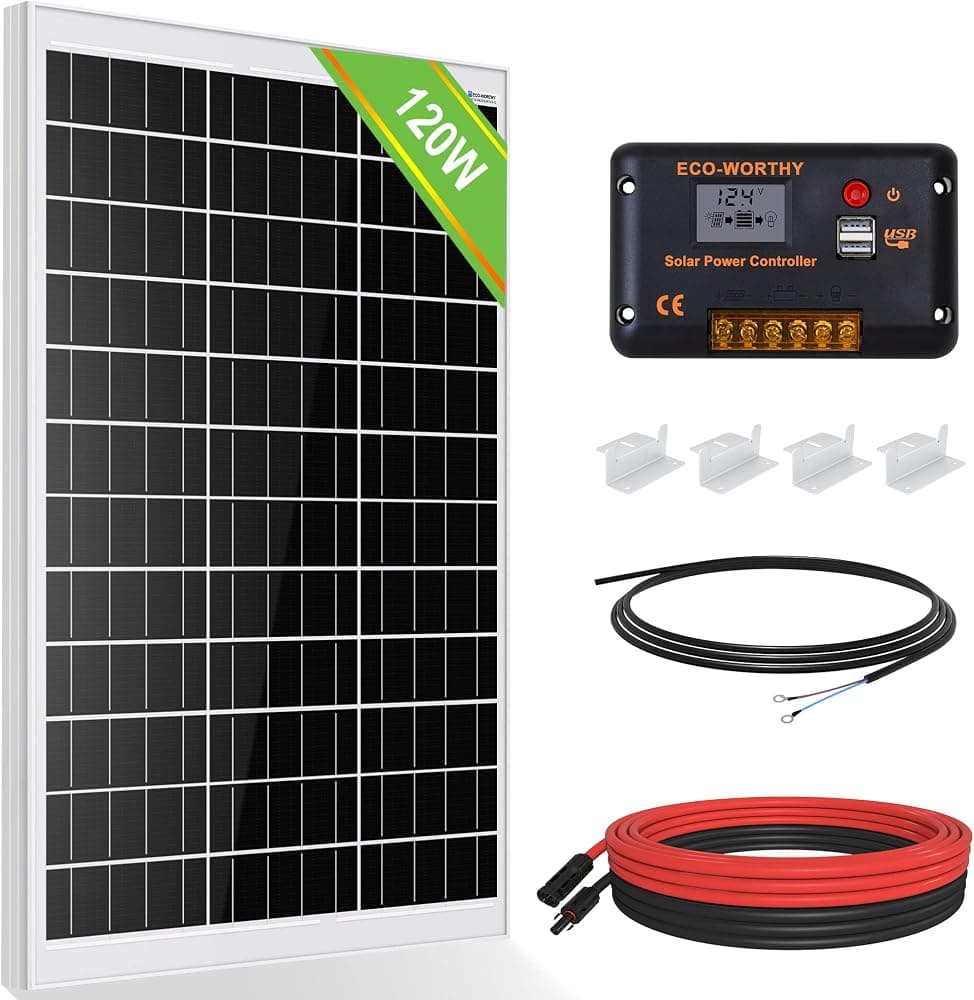
ECO-WORTHY 120W 12V Solar Panel Kit
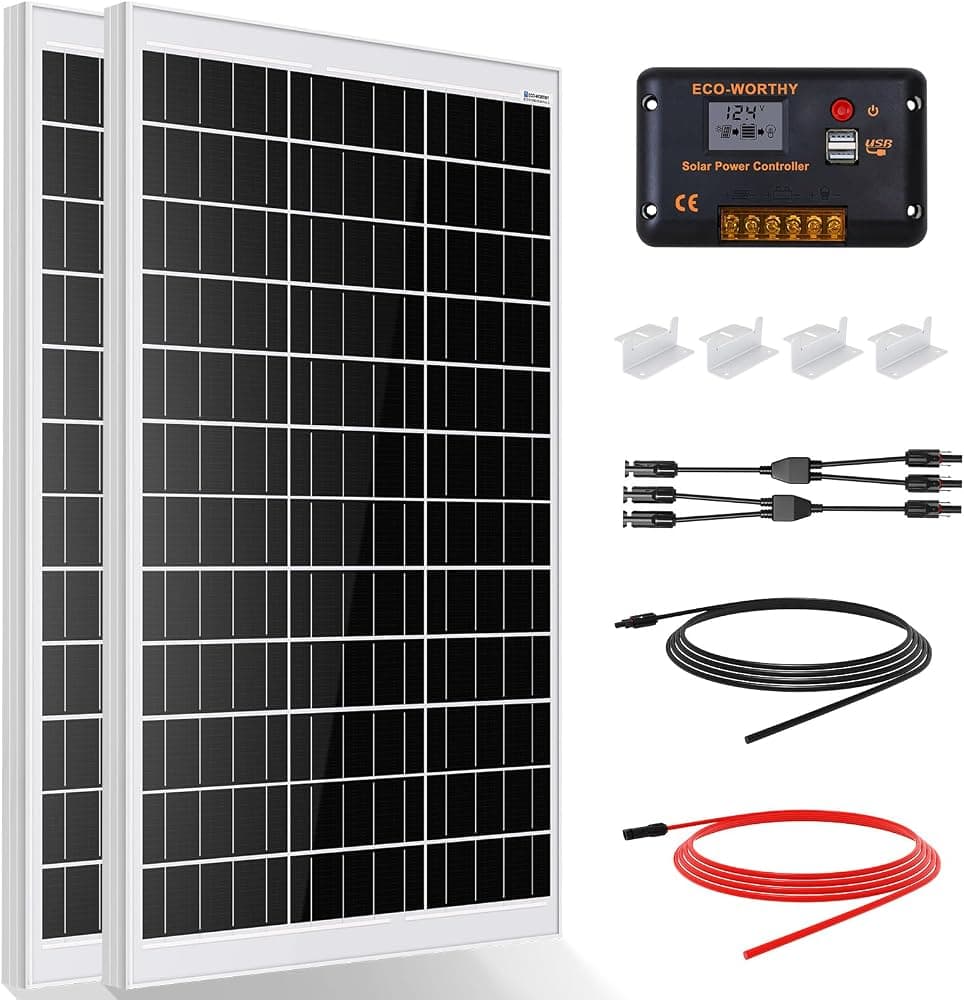
ECO-WORTHY 240W 12V Solar Panel Kit
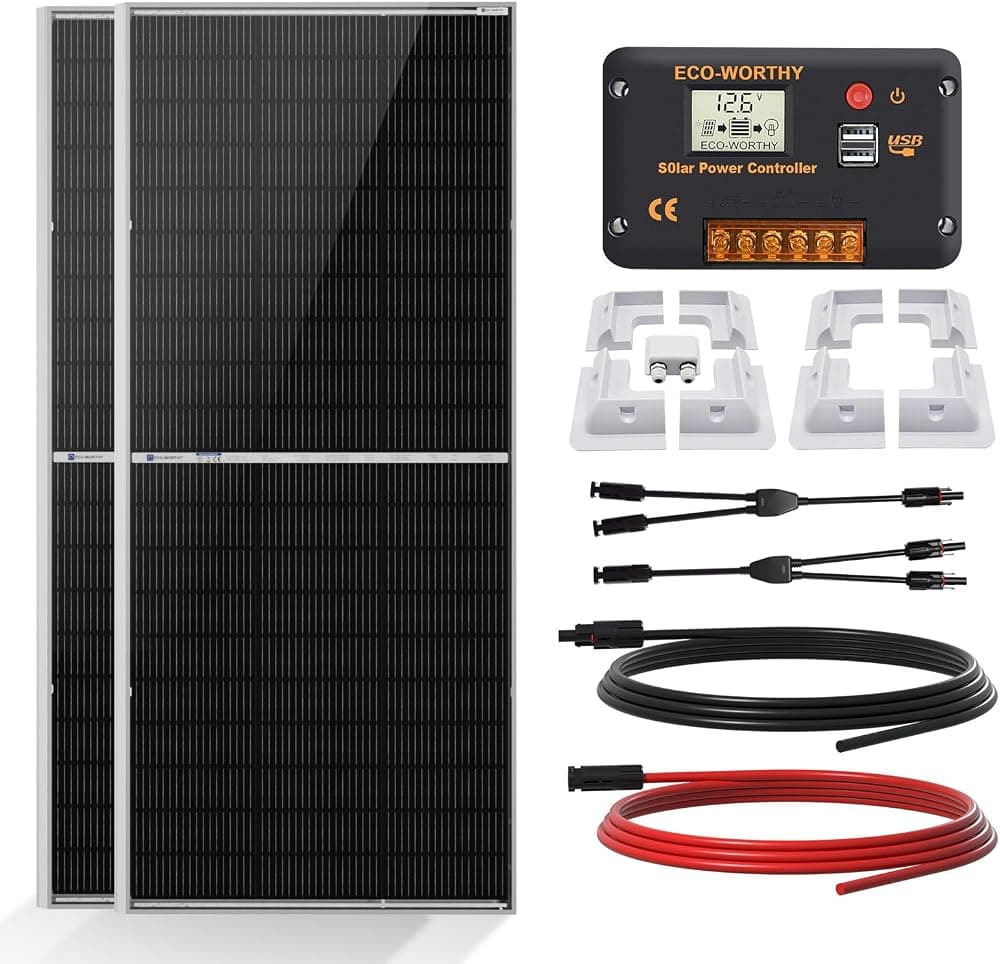
ECO-WORTHY 390W Bifacial 12V Solar Kit
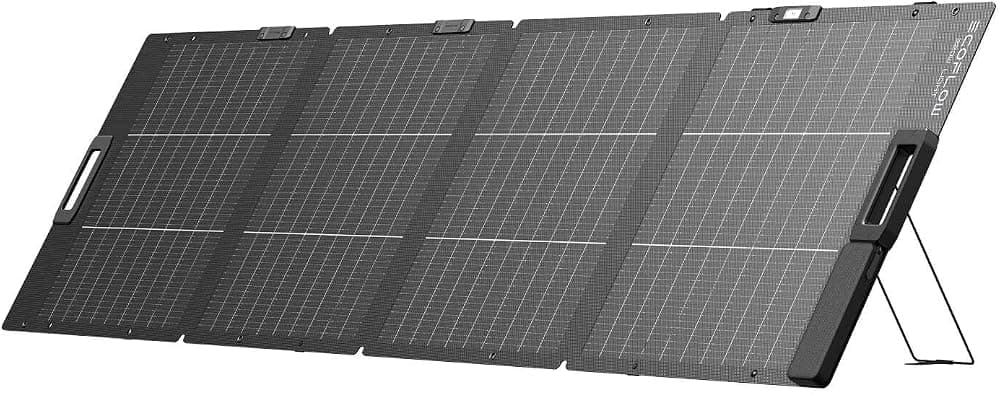
EcoFlow 220W Bifacial Portable Solar Panel
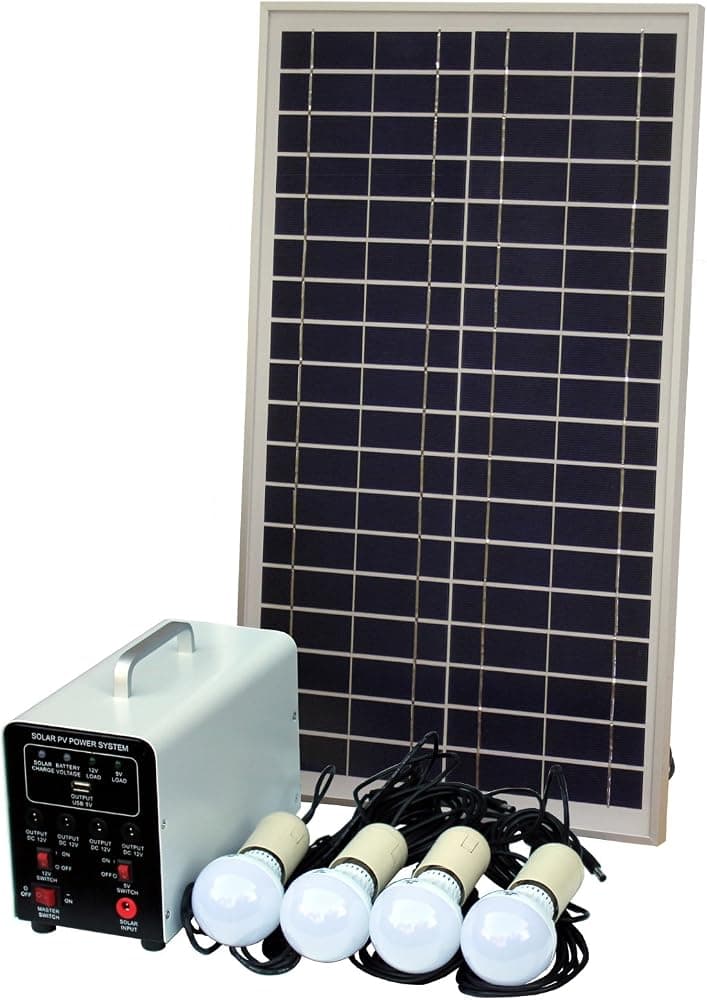
Photonic Universe 25W Solar Lighting Kit
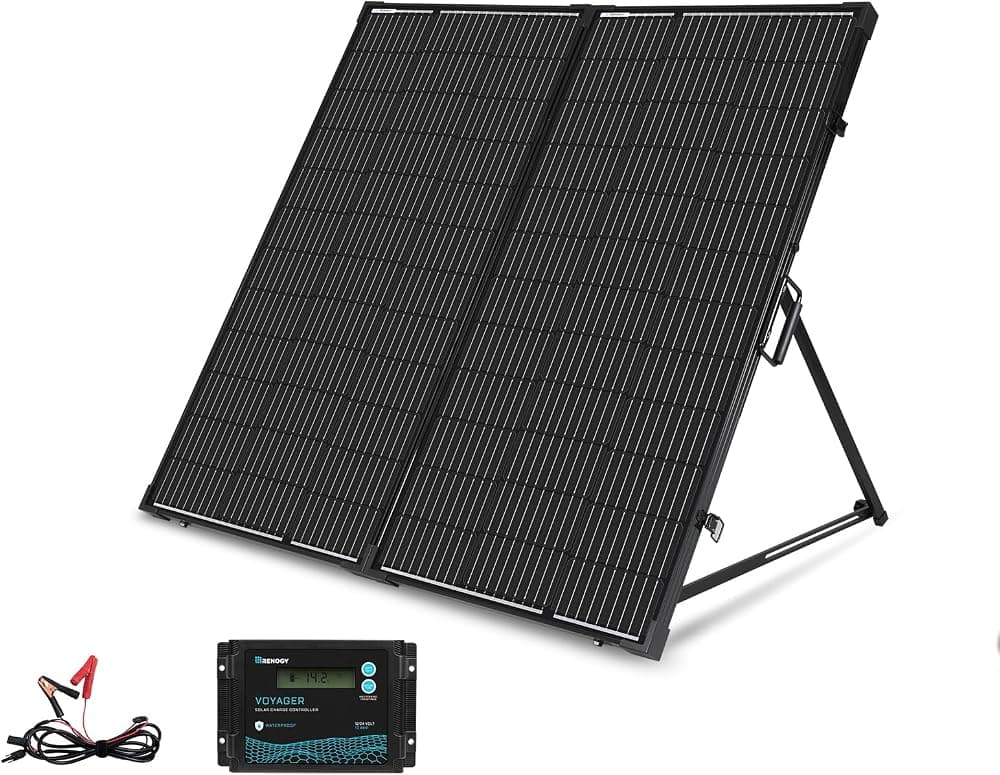
Renogy 200W Solar Suitcase with 20A Controller
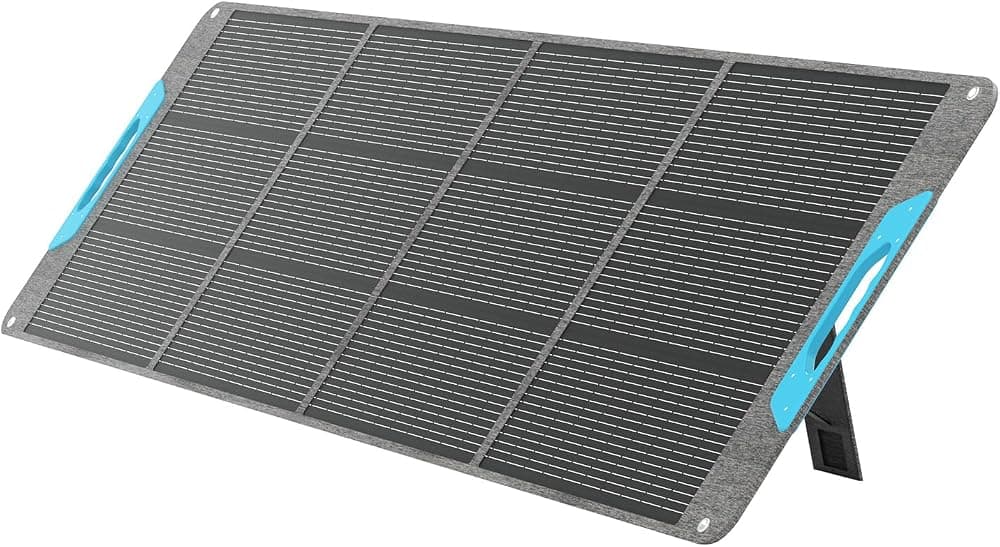
Renogy E.FLEX-CORE 200W Portable Solar Panel
As an Amazon Associate we earn from qualifying purchases. Prices correct as of 12 October 2026, checked against Amazon every few hours.
Portable Panel or Fixed 12V Kit?
These are two different jobs, and buying the wrong type is the most common mistake.
- A folding portable panel charges a portable power station (EcoFlow, Jackery, Anker, BLUETTI) or a phone directly. The power station holds the battery, the charge controller and the sockets, so the panel is the only extra you need. You put it out when the sun's up and pack it away after. This is the camping, festival and power-cut route.
- A fixed 12V kit is a rigid glass panel plus a charge controller that you mount permanently on a shed, caravan, boat or van and wire to a 12V leisure battery. It's cheaper per watt and works unattended, but you supply the battery, and you need a 12V-to-230V inverter if you want ordinary three-pin plugs.
Rule of thumb: if you already own a power station, buy a folding panel. If you're building something permanent with a 12V battery, buy a kit. If you own neither and only want lights in the shed, skip both and buy the all-in-one lighting kit.
How Much Power You'll Actually Get
The number on the panel is its output in lab conditions: full sun hitting it square on, with the cells at 25C. A British day almost never looks like that, so judge a panel by watt-hours per day for where you live and when you'll use it. The figures below come from PVGIS, the European Commission's solar model, for a panel fixed at 40 degrees facing due south. Pick your panel, region and month:
Portable Solar Output Calculator
How much a panel actually makes in a UK day, by month and region, from the EU's PVGIS solar model rather than the number on the box.
Realistic daily output
180Wh
Propped up by hand, on an average day
Best case (fixed, perfectly angled)
240Wh
June 760Wh vs December 240Wh
What a day of that sun buys you
- 3.0 hr of a laptop charging at 60W
- 4.5 hr of LED lighting for a whole room (40W)
- 3.0 hr of a mini fridge (60W average while cycling)
- 5.7 days to fill a 1,024Wh power station from empty
Best case is PVGIS v5.2 (European Commission Joint Research Centre) for a panel fixed at 40 degrees facing due south with 14% system losses, averaged over 2005 to 2020 weather. Realistic knocks a further 25% off for a panel that isn't re-angled through the day, the odd shadow and charging losses: that part is our assumption, not PVGIS. Bifacial panels can beat these numbers slightly over light-coloured ground. A single day can be far better or far worse than the monthly average.
Three things jump out once you play with it.
- Winter is roughly a third of summer. In Birmingham a 100W panel averages about 380Wh a day in June and 120Wh in December. In Inverness, December drops to about 50Wh. Short days and a low sun do that, not the cold (cold actually helps panels slightly).
- South beats north, but not by as much as you'd think. Plymouth to Edinburgh is a difference of about 16% over a year. Where you point the panel and whether it's in shade matters more.
- Angle matters for portable panels. A panel lying flat, or left facing where it was at 10am, loses a big chunk. Re-angle it towards the sun two or three times a day and you'll close a lot of the gap to the best-case figure.
Will It Work With My Power Station?
Two checks, and both are in your power station's manual.
1. Voltage. Every station has a solar input range (for example 12 to 60V). The panel's open-circuit voltage has to sit inside it. Go over it and the station may refuse to charge, or be damaged. The 400W Anker PS400 lists a maximum of 57.6V, which is more than some smaller stations accept. The Renogy 200W lists 21.6V, which nearly everything accepts. You can wire two identical panels in series to add their voltages, or in parallel to add their current, but check the station's limits first.
2. Connector. Most panels come with MC4 plugs. Stations use XT60 (EcoFlow and Anker both supply MC4 to XT60 cables), Anderson, a DC barrel socket or a brand-specific plug. An MC4 adaptor for your station costs a few pounds. The brand-matched panels (Jackery to Jackery, EcoFlow to EcoFlow) save you this step, and that convenience is most of what you're paying for.
And one sizing check: don't buy more panel than your station can take in. A station with a 200W solar input limit gets nothing extra from a 400W panel at midday. The extra watts do help on dull days and in the morning and evening, so a modest oversize (say 300W of panel on a 200W input) isn't wasted. Doubling it mostly is.
Our Top Picks in Detail
Folding Panels for Power Stations
The one we'd buy for almost any power station:
Best Overall
Renogy E.FLEX-CORE 200W Portable Solar Panel
£169.99The convenient choice if you're already a Jackery owner:
Best for Jackery Owners
Jackery SolarSaga 100W
£149.00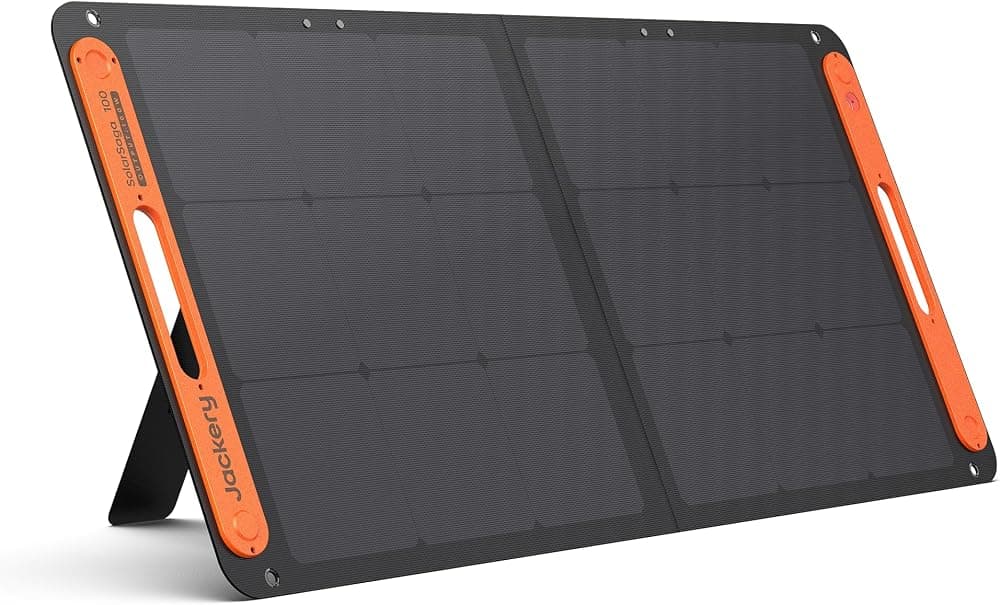
The tidy, built-in-cable option for EcoFlow owners:
Best for EcoFlow Owners
EcoFlow 220W Bifacial Portable Solar Panel
£349.00For big stations with a big solar input:
Best High Output
Anker SOLIX PS400 Portable Solar Panel
£427.00For phones only, when weight matters most:
Best for Phones and Hiking
Anker SOLIX PS30 30W
£49.00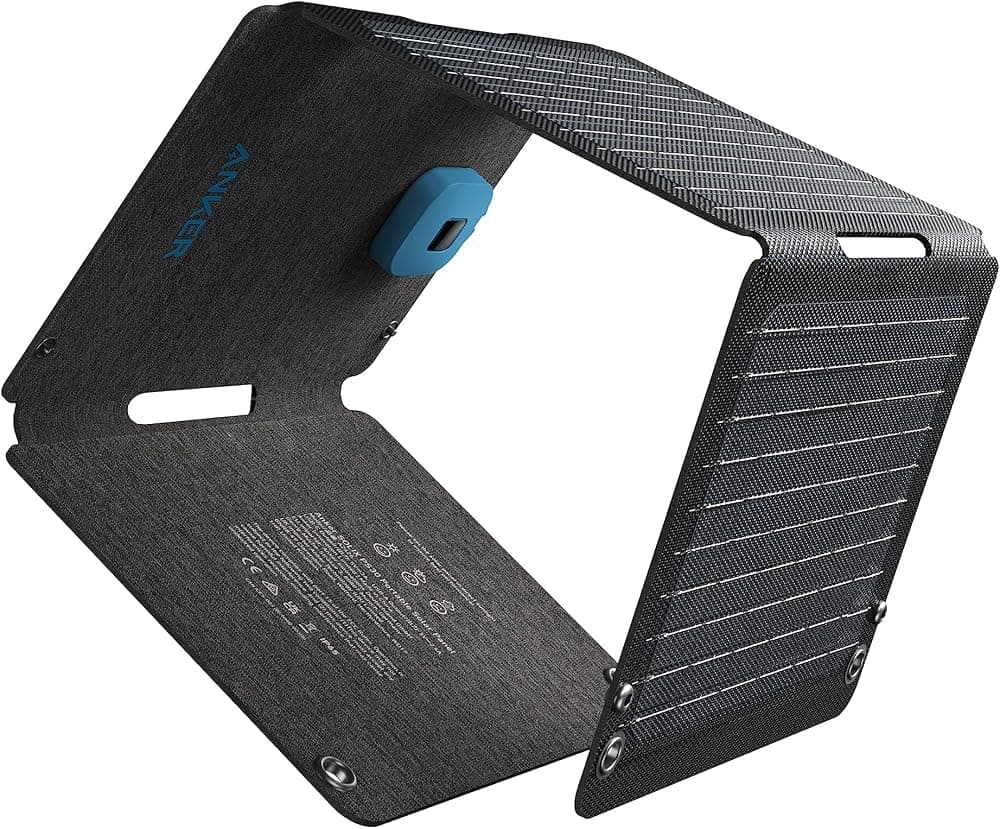
12V Kits for Sheds, Caravans and Vans
For a caravan with a leisure battery and no wish to drill:
Best for Caravans
Renogy 200W Solar Suitcase with 20A Controller
£189.99

The starter kit for a shed or small caravan roof:
Best Budget Shed Kit
ECO-WORTHY 120W 12V Solar Panel Kit
£89.99The right size for most campervans:
Best Campervan Kit
ECO-WORTHY 240W 12V Solar Panel Kit
£149.99The most panel for the money, for workshops and big vans:
Most Watts per Pound
ECO-WORTHY 390W Bifacial 12V Solar Kit
£209.99And the one for a shed that just needs to be lit:
Best for Shed Lighting
Photonic Universe 25W Solar Lighting Kit
£159.99Building Your Own 12V Shed System
If you'd rather choose each part, a simple off-grid shed or garden office system is four pieces. Here's what we'd buy:
| Part | What we'd buy | Price when checked | Why |
|---|---|---|---|
| Panel | Renogy 100W 12V panel (one or two) | £69.99 each | Rigid, 25% efficient, MC4 leads, over 1,400 reviews |
| Charge controller | Victron SmartSolar MPPT 75/15 | £48.99 | MPPT gets more from the same panel than the PWM units in cheap kits, and the Bluetooth app shows you exactly what you're making |
| Battery | ECO-WORTHY 12V 100Ah LiFePO4 | £179.99 | 1.28kWh, Bluetooth monitoring, and a low-temperature charge cut-off for winter |
| Inverter (optional) | A pure sine wave 12V inverter sized to your biggest load | Varies | Only needed for 230V plugs. Laptops, lights and phones can often run from 12V or USB directly, which wastes less |
Two 100W panels, the Victron and the battery come to about £370 before cables, fuses and an inverter, which is a lot more than the ECO-WORTHY 240W kit at about £164. What you get for the difference is a battery (the kits don't include one) and a better controller. If you're on a budget, buy the kit, add the battery, and swap the controller for the Victron later.
Do fuse it. A lithium battery can deliver an enormous current into a short circuit. Put a fuse on the positive battery cable as close to the battery as you can, sized to the cable. If you aren't confident with DC wiring, have an electrician look over it before you leave it running unattended.
Winter and lithium batteries. LiFePO4 batteries shouldn't be charged when the cells are very cold. Both the ECO-WORTHY and most decent rivals stop charging automatically when the cells drop below a set temperature (ECO-WORTHY lists -7C). An unheated shed in a cold snap can get there, so expect solar charging to pause on the coldest mornings.
Is It Worth It for the Money?
Not on electricity savings alone, and it's worth being straight about that. On PVGIS figures a 200W panel in the Midlands makes about 195kWh a year best case, closer to 145kWh in real portable use. At the current price cap of 26.32p/kWh that electricity is worth roughly £38 to £51 a year, and only if you'd otherwise have bought every unit of it from the grid.
Where these panels pay their way is in what they make possible: lights and a laptop in a garden office with no cable run from the house, a caravan that doesn't need a hook-up, or a power station that stays topped up through a two-day power cut. Buy for that, not for the bill.
If you want to cut your actual bills with solar, the maths is completely different with a roof system. A typical 4kWp system makes around 3,800kWh a year in central England, worth about £700 a year on our model. Our solar panel costs guide runs the numbers.
Want solar that cuts your bills?
A portable panel tops up a battery. A roof system typically makes around 3,800kWh a year on a 4kWp setup in central England. Get free quotes from MCS-certified installers to see what your roof could do.
Get free solar quotesCan I Plug a Solar Panel Into a Socket?
Not these ones. Since 27 August 2026, plug-in solar (sometimes called balcony solar) that feeds a normal household socket has been lawful in Great Britain, though not in Northern Ireland. It needs kit built for that route, and battery-integrated kits are excluded. A portable panel or a 12V kit is a completely separate thing: it charges a battery that you then use off-grid, and it should never be wired into your home's mains. Our plug-in solar guide explains what's allowed and what's worth buying.
Do I Need Planning Permission?
For a folding panel you put out on the grass and bring back in, no: it isn't an installation. For panels fixed to a shed, garage or garden office in England, the Planning Portal says solar on a house or on a building within its grounds may be permitted development, so no application is needed, as long as the limits and conditions are met. Check those with your council if you're unsure, especially if you live in a listed building. Wales, Scotland and Northern Ireland run their own planning systems.
What We'd Skip
- No-name "300W" folding panels at £100 or less. Some of these list efficiency figures and wattages that their size can't physically deliver, and they have tiny review counts. If a panel claims far more watts than a Renogy or Anker panel of the same size, believe the size.
- Brand-matched panels you don't need. A £349 EcoFlow 220W on a station that already has an XT60 input does the same job as a £170 Renogy plus a £5 adaptor. Pay for the brand only if the convenience is worth that much to you.
- Panels bigger than your station's solar input. Check the input wattage before you buy. A 400W panel on a 200W input station is mostly wasted money.
- Lead-acid leisure batteries for new builds. They're cheaper up front, but heavy, and LiFePO4 now costs little enough that we'd go lithium for a new shed or van system.
- Battery-integrated "plug-in" kits sold as if they can feed your home sockets. Battery-integrated kits are outside the GB plug-in solar route.
If you're still choosing the power station itself, start with our best portable power station guide, which has a runtime calculator for fridges, CPAP machines and routers. For what a full roof system can and can't run, see what solar panels can actually power.
Frequently Asked Questions
Parts for a DIY 12V System
If you're building your own shed or van system rather than buying a kit, these are the parts we'd start with.
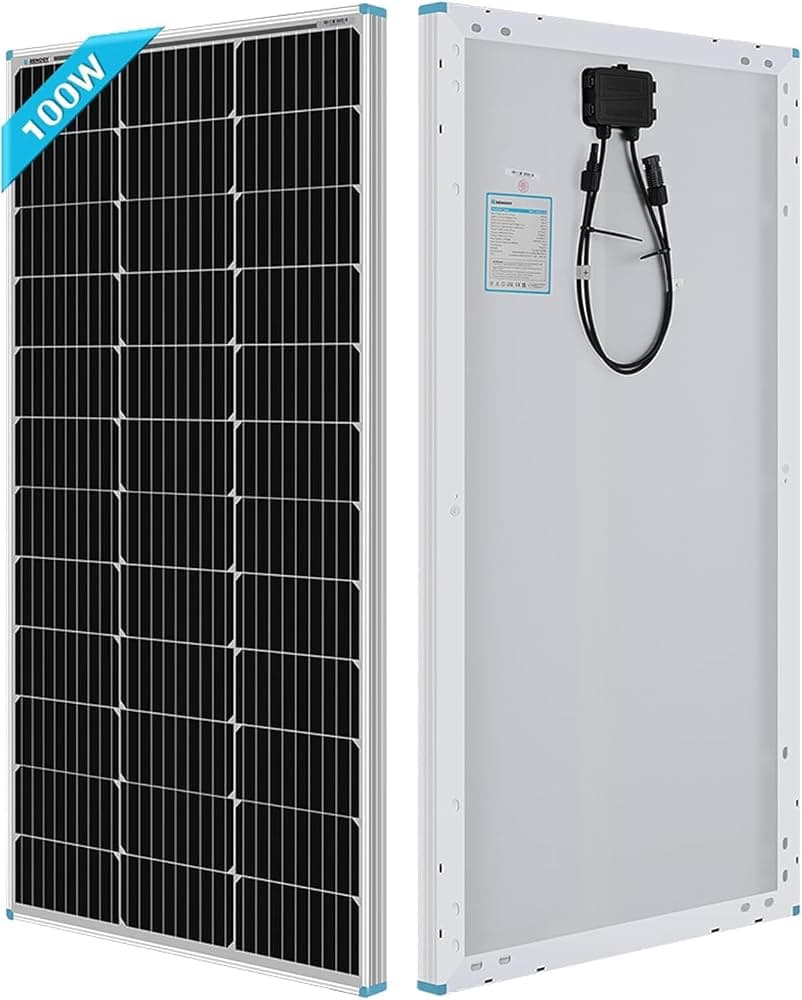
Renogy 100W 12V Monocrystalline Panel
£69.99The building block if you'd rather pick your own controller and battery.
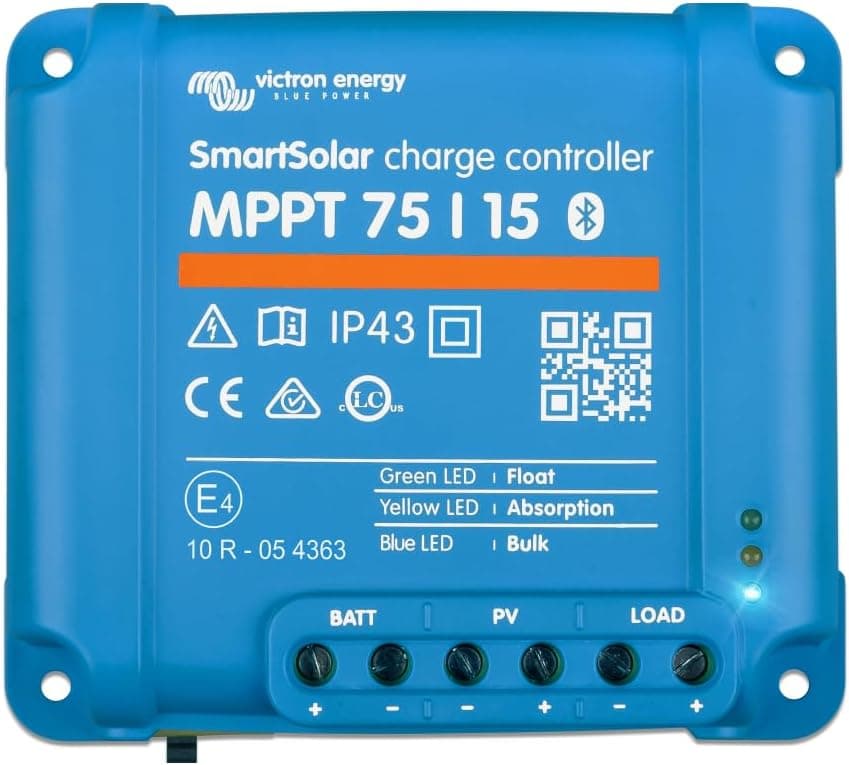
Victron SmartSolar MPPT 75/15
£48.99The controller to upgrade to. MPPT gets more out of the same panels than the PWM units bundled in cheap kits.
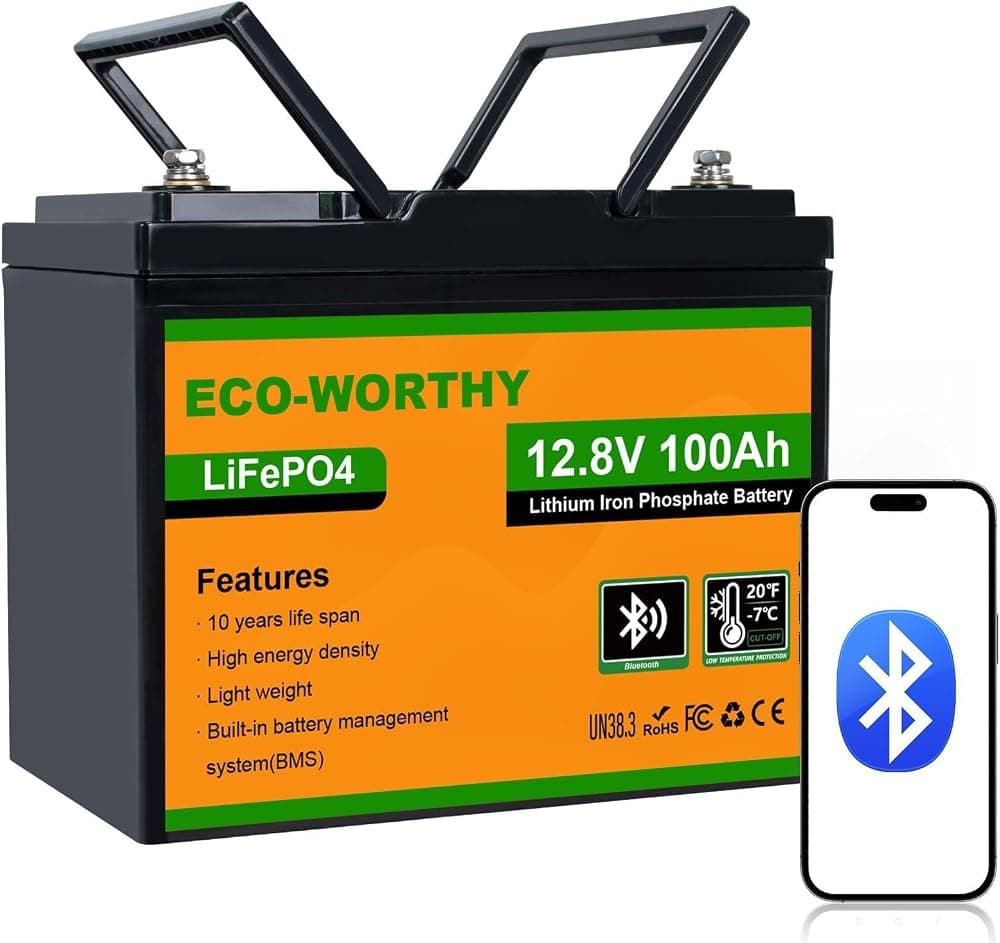
ECO-WORTHY 12V 100Ah LiFePO4 Battery
£179.99Half the weight of lead-acid and far more usable capacity. The battery to pair with a fixed 12V kit.
As an Amazon Associate we earn from qualifying purchases. Prices and stock are checked against Amazon every few hours and may have changed since.
