The Short Answer
If you're fitting air con, we'd buy a unit that heats as well as cools. In England and Wales, one that does both (an air-to-air heat pump, which is what many split air conditioners are) is usually permitted development, so you don't need to apply, as long as it meets the size, position and noise limits. A unit that only cools needs planning permission: it has never been covered.
Air conditioning isn't banned: the government said so in June 2026, after reports that it was. Listed buildings always need permission and consent, and in a conservation area we'd call the council first.
Check Your Install
Answer a few questions about your home and where the outdoor unit would go. It follows the permitted development rules for England and Wales line by line.
Air conditioning planning checker
Do you need planning permission?
Built on the permitted development rules for heat pumps in England and Wales, which are the rules that cover air conditioning.
Our reading of the rules
Probably permitted development: no application needed
It still has to meet the limits: an outdoor unit (with any housing) no bigger than 1.5 cubic metres, noise of no more than 37 dB a metre outside a neighbour's habitable room (bedroom or living room) window or door under the MCS planning standard, and sited to keep its effect on the building's look and the area to a minimum. Your installer should do the noise check. In England it also isn't permitted development if there's a wind turbine on the building or in the grounds, or on a scheduled monument.
In a flat or leasehold home, check your lease for whether you need the freeholder's consent too, whatever the planning answer.
Our reading, not legal advice. The government says there's no blanket rule and to check with your council, so if you're unsure, ask before you buy.
What We'd Do Before Buying
Planning trouble is cheapest to avoid before you've paid a deposit. In England and Wales, we'd do this, in order:
- Check the spec says heating and cooling. A cooling-only unit needs planning permission, full stop. A unit that heats but is only ever used to cool counts the same, because the rule is about use.
- Count the outdoor units there'd be after this install, including any air source heat pump already there. One on a house that isn't detached (or a whole block of flats) is the limit; two on a detached house.
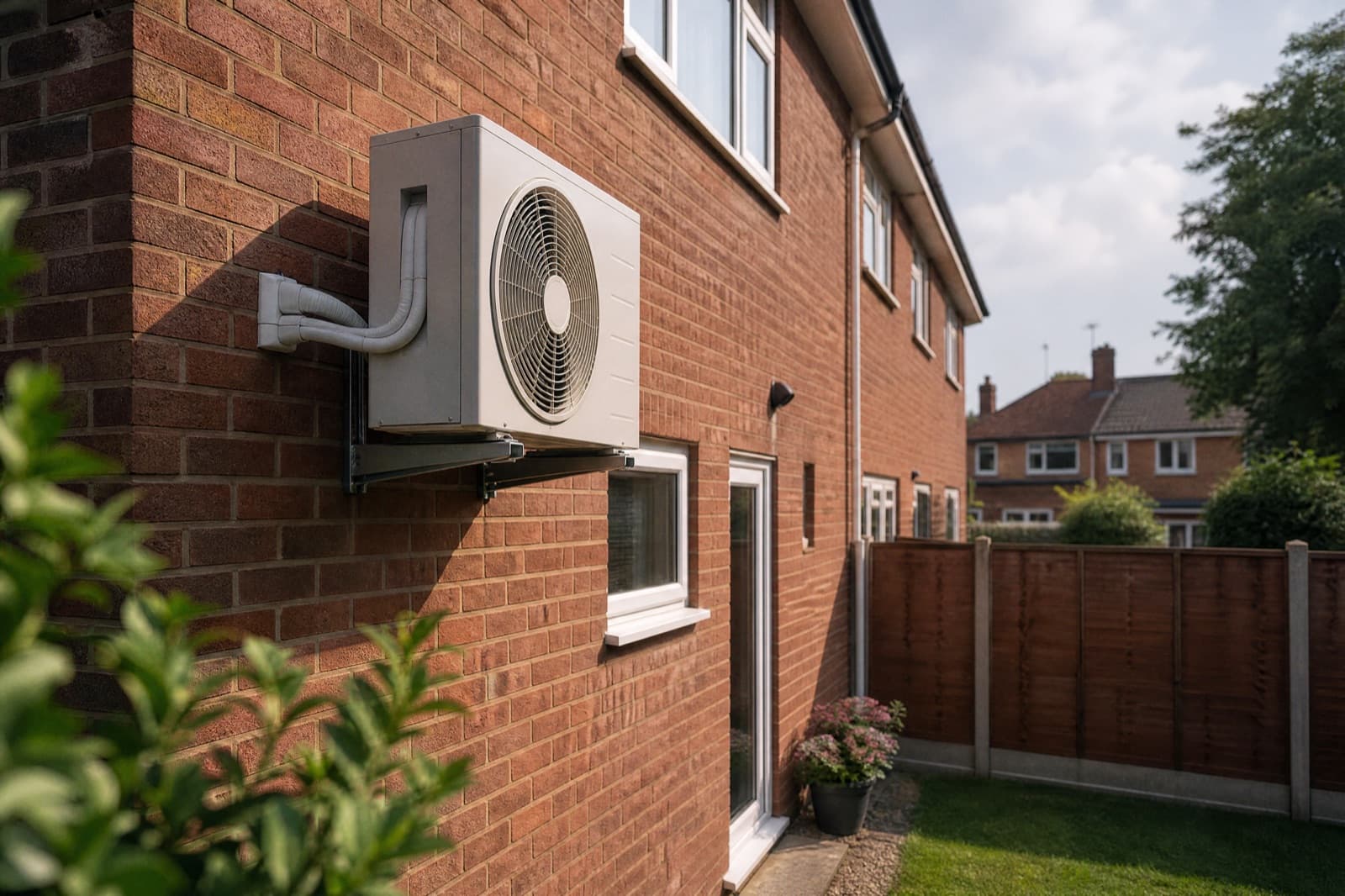
- Choose the outdoor spot. Not on a wall facing the road above the ground floor (in a conservation area, not on a wall or roof facing the road, or nearer the road than the house). In England, not on a pitched roof or within a metre of the edge of a flat roof. And not pointing straight at a neighbour's bedroom window.
- Ask the installer for the noise calculation in writing, to the MCS standard, before you sign.
- Listed building, conservation area, a flat, or Scotland or Northern Ireland? Ask the council (and in a flat, check your lease) before you pay anything.
Why Cooling-Only Units Need Permission
There's no separate planning rule for air conditioning. Split air conditioners and heat pumps are the same kind of machine (Daikin calls an air conditioner an air-to-air heat pump), so they're covered by the permitted development rights for air source heat pumps: Class G of Part 14 of the General Permitted Development Order in England, and its Welsh equivalent.
Until 28 May 2025, Class G's condition in England was that "the air source heat pump is used solely for heating purposes", which ruled out every air conditioner. From 29 May 2025 it reads that "the air source heat pump is not solely used for the purpose of cooling", and Wales's Order has said the same from 1 June 2026. So a unit that heats and cools is now covered, and one that only cools still isn't. The Planning Portal puts it plainly: the rights "only apply if the system provides a heating function (including if it can provide both heating and cooling). If the system only offers a cooling function, then the rights do not apply and an application for planning permission will be required."
So the type of unit matters more than anything else. Many wall-mounted split systems have a heating mode (Daikin's Perfera does), so check the spec says heating and cooling before you buy. The government said in June 2026 that "in most cases, planning permission is not required to install it for a small home if it would not materially affect the appearance of the building from outside", but also that "there is no blanket rule".
Portable air conditioners aren't fixed to the building, so in our reading these rules don't come into it: the hot air goes out of a hose through a window.
The Permitted Development Rules
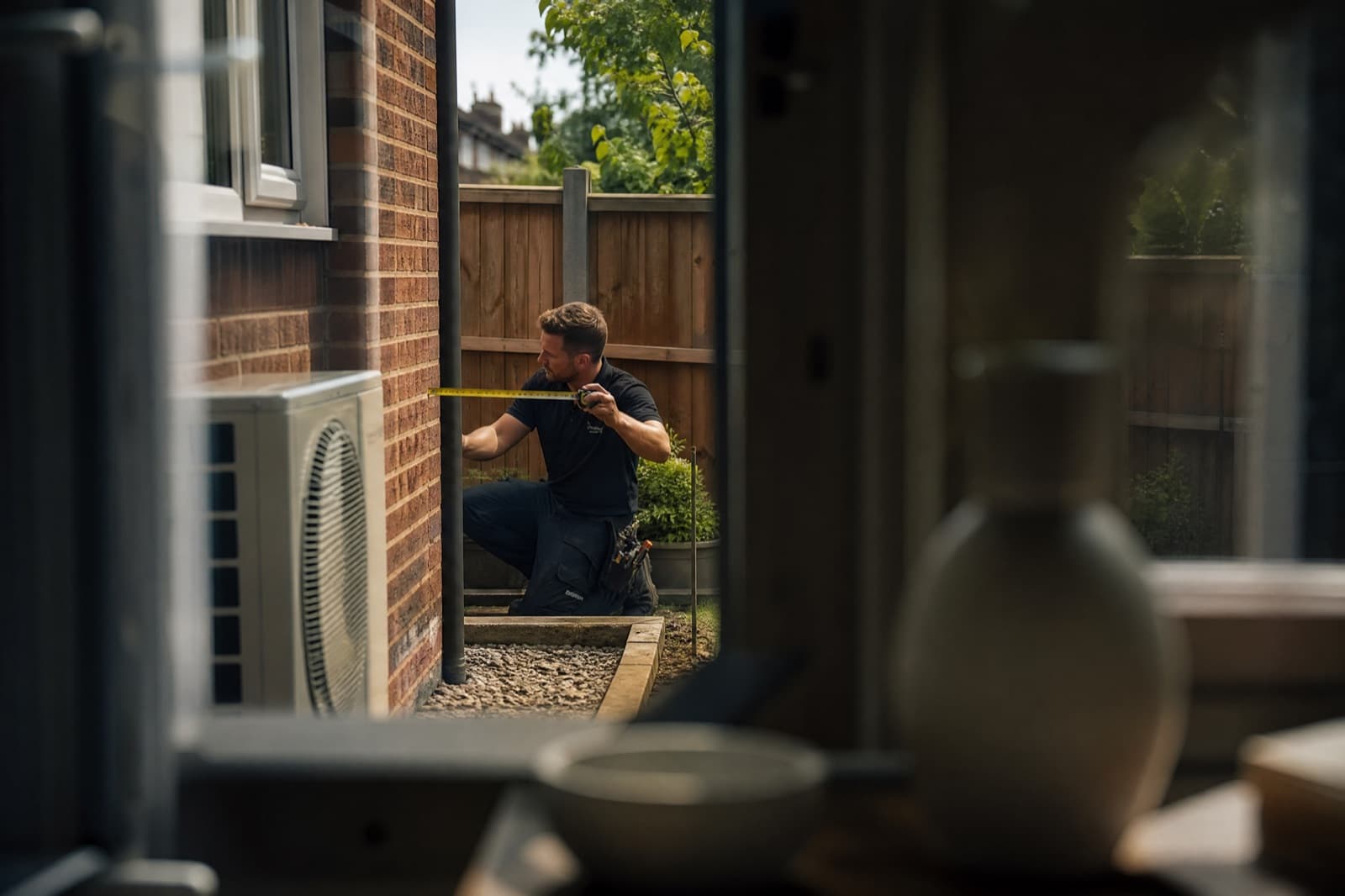
To be permitted development, an air conditioner that heats too must meet all of these. They're England's rules, with Wales's differences noted. We haven't checked Wales's roof, wind turbine, scheduled monument, siting or removal rules, so ask your council there.
- Not cooling only. It must not be used solely for cooling.
- How many. One outdoor unit on a house that isn't detached, or on a block of flats; two on a detached house. An existing heat pump counts towards this.
- Size. The outdoor unit, including any housing, no bigger than 1.5 cubic metres on a house, or 0.6 cubic metres on a block of flats (1 cubic metre in Wales).
- Walls facing a road. Outside conservation areas, a unit on a wall that fronts a road is only covered at ground floor level.
- Roofs. In England, not on a pitched roof, and not within 1 metre of the edge of a flat roof.
- Noise. It must meet the MCS planning standard (see below).
- No wind turbine, no scheduled monument. In England, not if there's a wind turbine on the building or in its grounds, and not on a scheduled monument.
- Siting. Placed, as far as practicable, to keep its effect on the look of the building and the area to a minimum, and removed when it's no longer needed.
Fail any one and you need to apply. That doesn't mean you'll be refused: it means the council decides.
Noise and Your Neighbours
Class G requires the unit to comply with the MCS planning standard. In England and Wales that standard, MCS 020 a), sets a limit of 37 dB at the assessment position, which is a metre outside the nearest neighbour's habitable room (a bedroom or living room, not a bathroom or utility room) window or door. Your installer does the calculation.
Our advice: put the outdoor unit where it isn't pointing straight at a neighbour's bedroom window, and get the noise calculation in writing before you sign. Meeting the limit on paper is one thing; a neighbour who can hear it at night is another.
Flats, Leasehold and Rented Homes
Permitted development covers a block of flats, with tighter limits: one outdoor unit for the whole block, and a smaller one (0.6 cubic metres in England). So if your block already has an outdoor unit (or a heat pump), yours needs an application.
Planning is only half of it. If you're a leaseholder, check your lease for whether you need the freeholder's consent to fix anything to the outside walls or drill through them. If you rent, ask your landlord before you do anything. The government says the £2,500 air-to-air grant will be available to eligible homeowners in England and Wales, including for privately rented properties, which gives landlords a reason to say yes. Our air-to-air heat pump guide covers the grant.
Conservation Areas and Listed Buildings

Listed buildings have no permitted development rights for air source heat pumps at all, so you need planning permission, and the Planning Portal says "consent will be required" as well.
In a conservation area (or a World Heritage Site, in England), the law rules out a unit on a wall or roof that fronts a road, or nearer to the road than the house. Somewhere else on the property can still be permitted development under the legislation, but the Planning Portal's air conditioning answer says that in a conservation area "permission will be required". With two official sources pointing different ways, ask your council before you buy.
Scotland and Northern Ireland
We've only checked the rules for England and Wales. Scotland and Northern Ireland have their own permitted development rules, so ask your council's planning department before you commit.
Building Regulations and Who Can Fit It
Whether or not you need planning permission, the Planning Portal says the installation must comply with building regulations, and suggests an installer who belongs to MCS or a relevant competent person scheme.
A split system isn't a DIY job. Anyone who installs one needs their own F gas qualification: the government says it's against the law to work with F gas without one, and a category 2 certificate covers systems holding less than 3kg of refrigerant. Daikin's RXM-A outdoor units, which pair with its Perfera, list 0.95 to 1.15kg, for example. If you want the £2,500 grant, the installer must also be MCS certified, and when we checked in October 2026, MCS said no installers were yet certified for air-to-air heat pumps.
Get air conditioning quotes
Compare fitted prices for split and multi-split systems from up to 3 local installers. Tell us how many rooms and where the outdoor unit can go. Free, no obligation, about 60 seconds.