The Short Answer
Use a fan first. It costs about a penny an hour or less to run, against about 19.9p for a split air conditioner and 35.5p for a portable at their rated output. But they don't do the same job: a fan cools you, by moving air over your skin, and doesn't lower the room temperature. Air conditioning cools the room.
We'd switch to air conditioning when a fan stops being the advice: UKHSA says use fans below 35C. If your home regularly gets hotter than that, or someone at higher risk sleeps in a room that stays hot even with a fan, cool the room: a portable for the odd hot week, a split if it's every summer.
Fan or Air Con: Check Yours
Pick how hot it gets and how long you'd run it. It shows what a fan, a split and a portable would cost for those hours, and which we'd use.
Fan or air conditioning?
What each costs to run, and which you need
From the makers' own power figures, at the 1 October to 31 December 2026 price cap rate of 26.32p per kWh.
8 hours a day for 30 days (240 hours)
- Tower fan£2.15
Meaco Sefte Smart 36" tower fan, top speed: 0.9p an hour
- Split air conditioner£48
Daikin Perfera 3.5kW, rated output: 19.9p an hour
- Portable air conditioner£85
Meaco Cirro 12000 BTU, rated output: 35.5p an hour
The fan on its top speed, the air conditioners at their rated output. The fan can run far lower (3.5 watts on its slowest speed), both air conditioners use less once the room is cool, and the split can boost above its rating on the hottest days.
Our view
Try a fan first
UKHSA and the NHS (writing for England) say electric fans help below 35C. A fan doesn't cool the room, it cools you by moving air over your skin, and for these hours it costs £2.15 to run against £85 for the portable. Don't point it straight at your body: UKHSA says that can lead to dehydration.
To buy
On Meaco's own site in October 2026: the tower fan £99.99, the Cirro portable £519.99 (both out of stock then). A one-room split is about £1,500 to £3,500 fitted, on our estimate from published UK prices. See our tower fan and portable air conditioner guides for live prices.
Electricity only. Our figures for these models; the Energy Saving Trust's own typical costs are in the table below.
What a Fan Does, and Doesn't Do

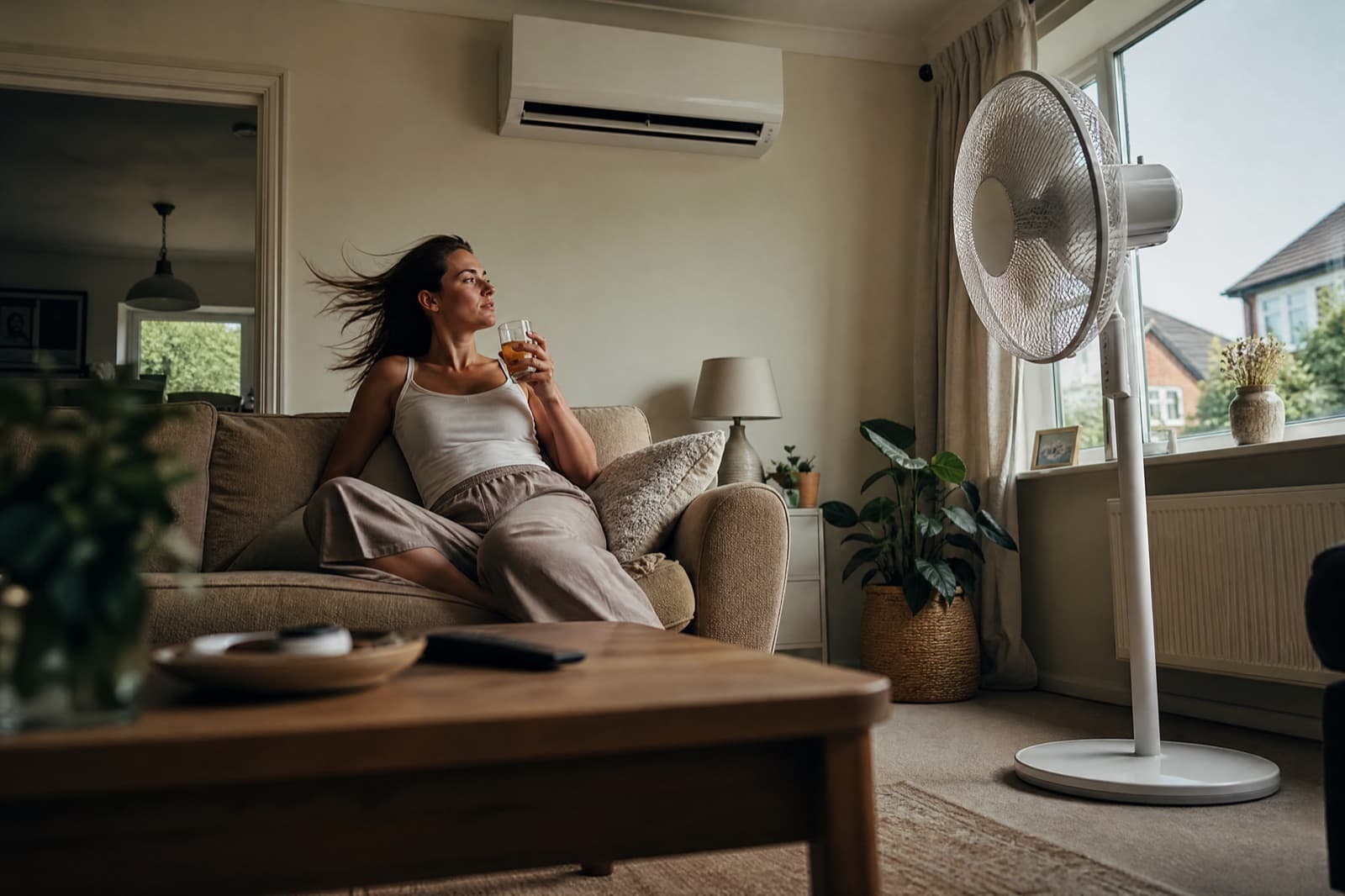
A fan doesn't lower the room temperature (the Energy Saving Trust is clear on this). It moves air over your skin, which helps sweat evaporate, so it cools the people in its breeze and nobody else. That's why there's no point leaving one on in an empty room, and why no number of fans in a closed room adds up to an air conditioner.
Where moving air does help the whole house is at night: once it's cooler outside than in, open windows on different sides of the home and let it flow through. Our guide to keeping your house cool has the full plan, and it costs nothing.
When We'd Switch to Air Con
UKHSA's advice (for England) is to use electric fans if the air temperature is below 35C, the NHS says the same, and Public Health Wales says above 35C they may not help to cool the space. So we'd look at air conditioning if:
- your home still gets hotter than 35C indoors after you've kept the heat out
- someone at higher risk (UKHSA's list, for England, includes people aged 65 and over, children aged 5 and under, people with heart or breathing problems and pregnant women) sleeps in a room that stays hot even with a fan
- it happens most summers, not just in the odd heatwave
For anyone with signs of heat exhaustion (tiredness, feeling faint, a headache, cramps, heavy sweating, intense thirst), UKHSA's advice (for England) is to move somewhere cooler, such as a room with air conditioning or somewhere in the shade, and contact NHS 111 if it gets worse. Heatstroke is an emergency: call 999. Without air con, public buildings such as libraries or supermarkets may be cooler than your home.
Running Costs Side by Side
What each costs to run is the power it draws times your unit rate. These are the makers' figures, at 26.32p per kWh (the Great Britain average direct debit rate under the price cap): the fans on their top speed, the air conditioners at their rated output.
| Power | Per hour | 8 hours | |
|---|---|---|---|
| Meaco Sefte Smart 36" tower fan (top speed) | 34W | 0.9p | 7.2p |
| MeacoFan 1056P pedestal fan (top speed) | 24W | 0.6p | 5.1p |
| Daikin Perfera 3.5kW split (rated output) | 756W | 19.9p | £1.59 |
| Meaco Cirro 12000 BTU portable (rated output) | 1,350W | 35.5p | £2.84 |
So the portable draws about 40 times the power of the tower fan on its top speed, and far more than that against the fan's lowest (3.5 watts). The air conditioners use less once the room is cool, and Daikin's split can boost above its rating on the hottest days. Our running costs guide goes into that.
When we checked in October 2026, the Energy Saving Trust put these typical costs on a full 24 hours:
| 24 hours' use | Great Britain | Northern Ireland |
|---|---|---|
| Fan (tower, desktop, pedestal) | 14p to 30p | 17p to 37p |
| Evaporative cooler | 27p to 39p | 34p to 48p |
| Portable air conditioner | £4.62 to £5.00 | £6.00 to £7.00 |
Energy Saving Trust, 16 October 2026. It doesn't say what unit rate or settings these assume, and says a portable costs "up to 20 times more" than a fan. Our portable figure is higher because we cost it at its full rated power (£8.53 for 24 hours, against its £4.62 to £5.00). Our fan figure sits inside its range. Northern Ireland isn't covered by Ofgem's price cap.
Which Fan We'd Buy
Don't pay extra expecting lower bills: the Energy Saving Trust says dearer fans aren't necessarily cheaper to run, and bladeless ones, often the dearest to buy, cost about the same to run as any other. What we'd pay for instead, for a bedroom, is a quiet low setting: Meaco gives its tower fan as "from 20 dB" and 3.5 watts at its slowest. Our tower fan guide has the ones we'd buy, with live prices.
For noise against air con: Meaco gives its Cirro portable as 45 to 51 dB. Daikin rates the indoor unit of its 3.5kW Perfera split, the one costed above, at 19 dB(A) on silent and 45 on high. So on full blast the split is about as loud as the Cirro at its quietest; the difference is the silent setting. Makers don't all measure noise the same way, so treat these as a rough guide.
The Mistakes to Avoid
- Pointing the fan straight at you. UKHSA warns it can lead to dehydration. Sit in its breeze instead.
- Leaving a fan on in an empty room. It cools people, not rooms.
- Relying on a fan above 35C. That's where the public health advice stops recommending them; Public Health Wales says above it they may not help.
- Leaving a portable's hose loose. The Energy Saving Trust says gaps where the hose goes out of the window let warm air back in; keep internal doors closed too.
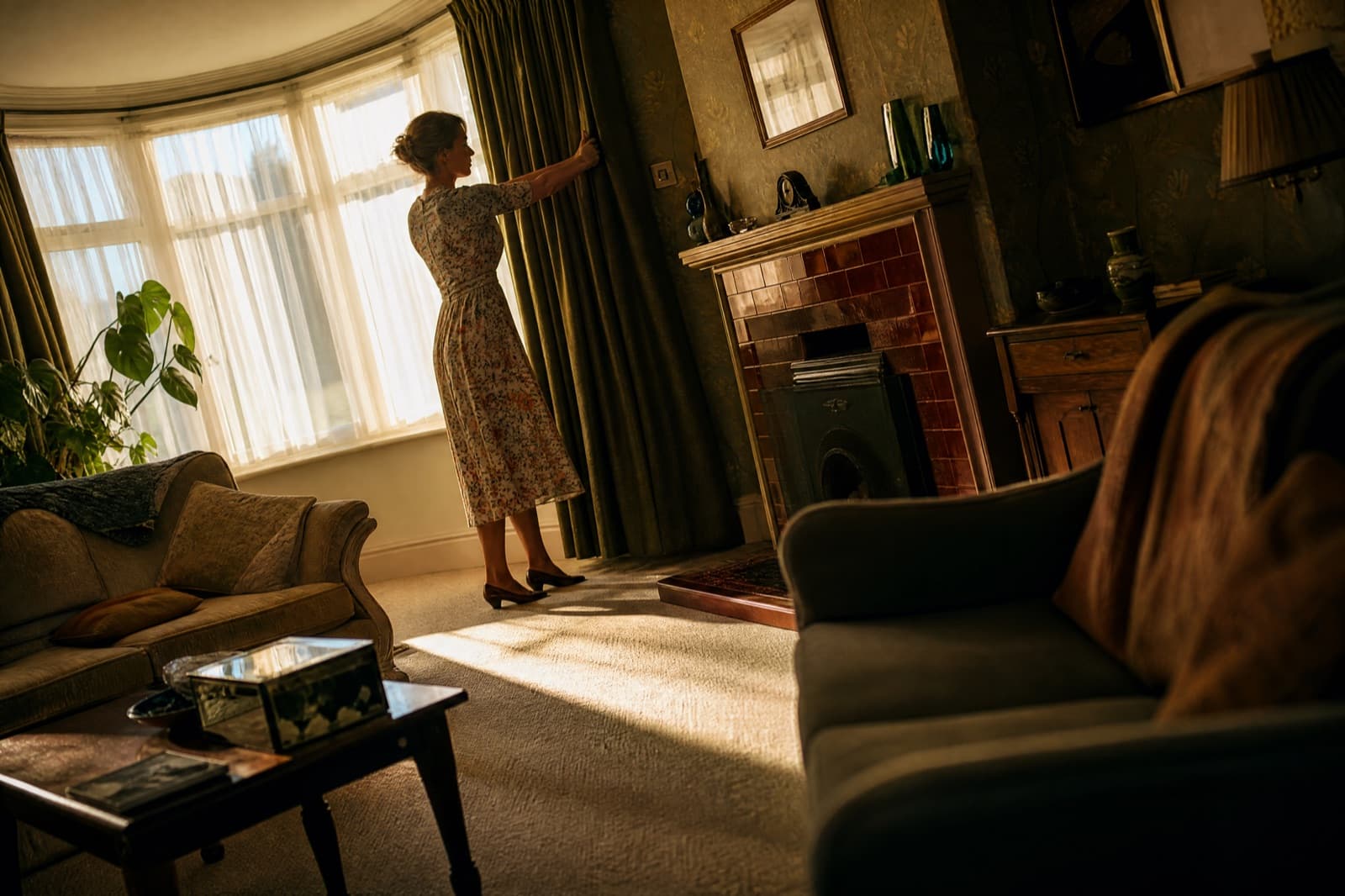
- Buying air con before keeping the heat out. Curtains shut on sunny windows and windows shut while it's hotter outside cost nothing, and make whatever you run work less hard.
If You Need Air Con: Portable or Split?
A portable needs no installer, just its hose out of a window: Meaco's Cirro was £519.99 on its own site in October 2026, out of stock then. A split costs about £1,500 to £3,500 fitted for one room on our estimate, but the portable draws 1.8 times the power for similar rated cooling (1,350W against 756W on the makers' figures; they're tested to different standards, so that's approximate). And a split that heats too (Daikin's Perfera does) can heat the room in winter.
Our view: for a few hot weeks a year, a portable is the cheaper way in. If your bedroom is too hot to sleep in every summer, we'd fit a split. Our split air conditioning guide has a system chooser, the installation cost guide prices your job, and the planning guide checks whether you need permission.
Get air conditioning quotes
Compare fitted prices for split and multi-split systems from up to 3 local installers. Tell us how many rooms and where the outdoor unit can go. Free, no obligation, about 60 seconds.